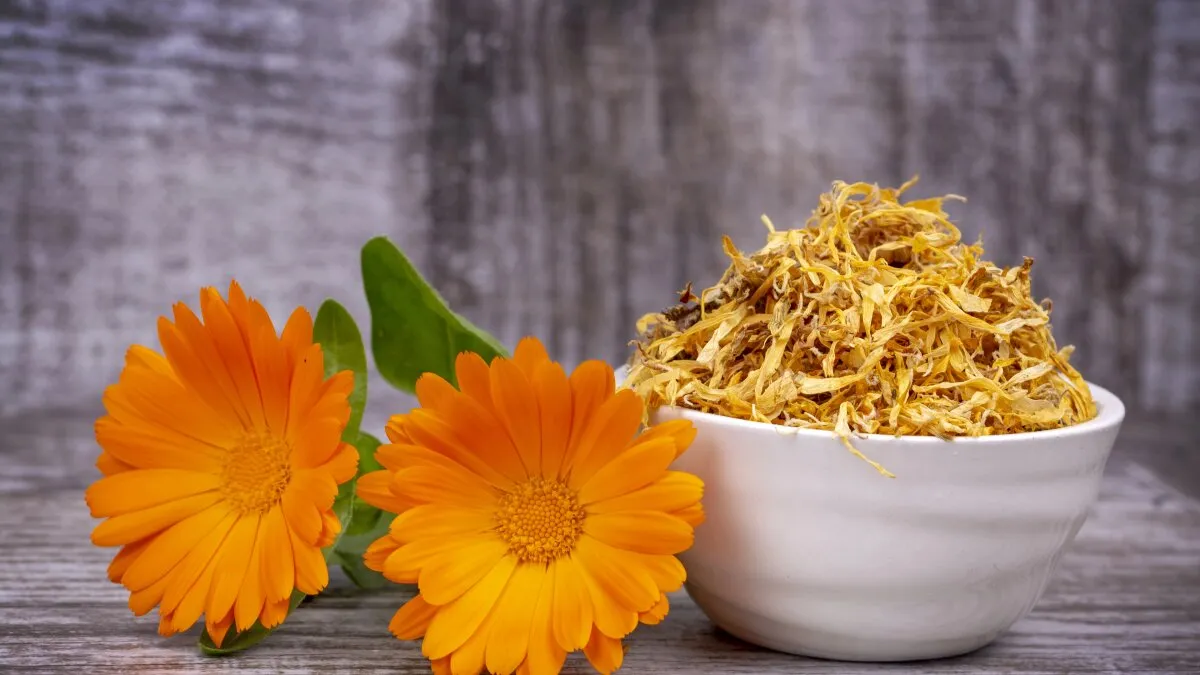
You know that cheerful orange flower, the marigold? The one that brightens up gardens and occasionally shows up in a fancy salad? Turns out, it's been holding out on us. Scientists just discovered it's absolutely packed with protein, potentially changing how we think about what's edible and what's just, well, pretty.
Researchers at the University of Georgia took a closer look at Calendula officinalis, your common garden marigold, and found it's a protein powerhouse. We're talking quinoa-level protein here, which, if you think about it, is both impressive and slightly terrifying for a plant we mostly just look at. Even better, marigold extract can apparently take the heat in the kitchen better than pea or chickpea proteins, making it a surprisingly robust contender for your next plant-based burger.
Anand Mohan, one of the lead authors, made a rather excellent point: billions of dollars worth of flowers are tossed every year. What if we just… ate them instead? Because apparently, that's where we are now. And while Americans mostly keep marigolds for decoration, other cultures have been ahead of the curve for centuries. They're part of Indian wedding ceremonies and Mexico's Día de los Muertos celebrations. They knew. They always know.
We're a new kind of news feed.
Regular news is designed to drain you. We're a non-profit built to restore you. Every story we publish is scored for impact, progress, and hope.
Start Your News DetoxMore Than Just Muscle
But wait, there's more. Beyond the protein punch, marigolds might also bring some serious umami to the table thanks to their amino acids. Some compounds in the flower could even help bind ingredients in things like condiments. Basically, your marigold could be the unsung hero of your next stir-fry and your ketchup.
They're also loaded with antioxidants, fiber, and minerals like calcium, potassium, and iron. Which is a lot for a plant whose main job, we thought, was to look good and maybe ward off some garden pests. Fidele Benimana, a doctoral student on the team, is clearly enjoying blowing our minds, noting that marigolds offer unique properties for nutrition, texture, and stability.
Now, before you raid your neighbor's flower bed, a quick disclaimer: not all marigold species are edible. But C. officinalis, the star of this study, has a long and safe history of human consumption. So you can breathe easy, or at least, you can start looking at your flowerbeds with a new, protein-hungry glint in your eye.
The researchers suggest you can eat the petals raw or cooked, or dry them for tea and soups. They can even add a "tarragon-esque" flavor to your cooking. Which means your garden isn't just a garden anymore. It's a pantry. And a very pretty one at that.
Mohan wonders if marigolds are "super flowers," and suspects many other beautiful blooms might be, too. He points out that we know shockingly little about the flowers in our own yards. Maybe it's time we started asking them what else they've been hiding.