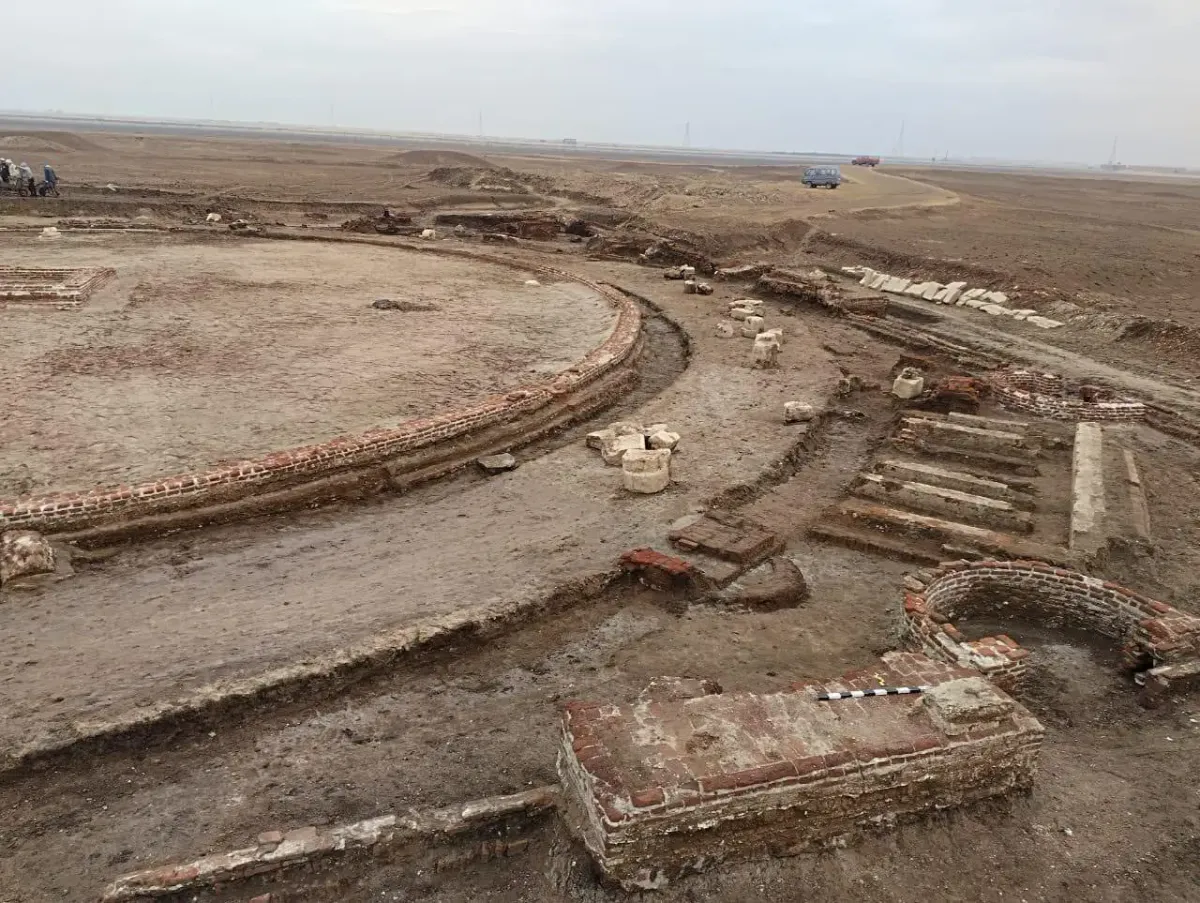
Archaeologists in northern Sinai just unearthed a temple complex unlike anything they'd seen before. It's tucked away in Tell el-Farama, which was once the ancient city of Pelusium, a place so old it makes your average Roman ruin look like yesterday's news.
This isn't your grandma's dusty old pyramid. This complex features a massive circular basin, roughly 100 feet across, that used to be fed by a now-dry branch of the Nile. Think of it as an ancient, incredibly elaborate swimming pool, complete with drainage channels surrounding it. Right in the middle, a square base hints at a statue that once stood guard — likely of the local deity, Pelusius.
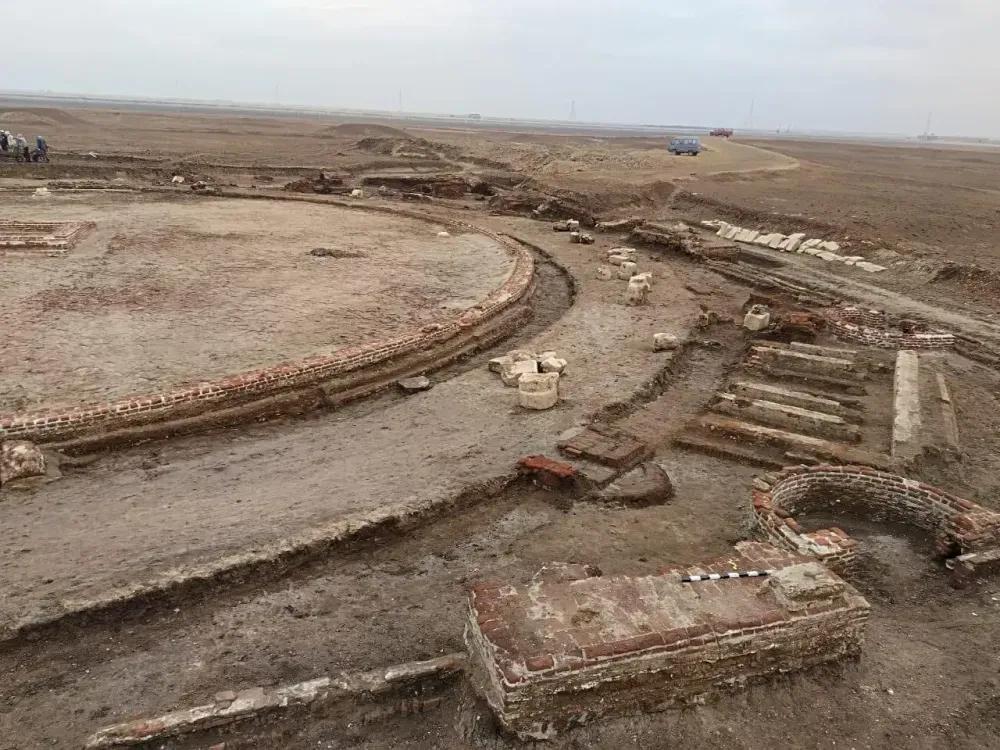
When they first stumbled upon it in 2019, the excavators thought it was just another civic building, maybe a really fancy town hall. But after some serious archaeological head-scratching, Dr. Hisham Hussein, who's leading this whole fascinating endeavor, confirmed it: this was a sacred water installation. For religious rituals. Not for debating city taxes, which, frankly, sounds like a much more interesting use of a giant basin.
We're a new kind of news feed.
Regular news is designed to drain you. We're a non-profit built to restore you. Every story we publish is scored for impact, progress, and hope.
Start Your News DetoxThe temple was in business from the 2nd century BC straight through to the 6th century AD. And because ancient Egypt was basically the ultimate cultural melting pot, its design is a glorious mashup of Egyptian, Greek, and Roman styles. It's a design common for buildings from the time Alexander the Great decided to drop by in 332 BC, all the way until Roman rule ended in 642 AD. Because apparently, blending architectural styles was the original viral trend.
The Mystery of Pelusius
Pelusium itself was founded around 800 BC, strategically placed between the sea and the Nile Delta marshes. It was basically ancient Egypt's bouncer and customs officer on the border with Asia. Later, it got a promotion to Roman provincial capital, because clearly, it was a city that knew how to hustle.
The city is named after the god Pelusius, a deity so obscure even ancient historians barely gave him a shout-out. We mostly know about him from a single mention by Greek-Roman philosopher Plutarch, who vaguely linked him to the goddess Isis as a child. Which, if you think about it, is both impressive and slightly terrifying for a god whose entire PR strategy seems to have been 'mysterious cameo.'
So, if this Roman-era structure is indeed confirmed to be dedicated to Pelusius, it's a pretty big deal. Egyptologist Steve Harvey (not that Steve Harvey, presumably) called it a "stunning example" of a temple for a god previously known only from ancient texts. Imagine building an entire complex for a deity who barely made it into the footnotes. Now that's dedication.