Scientists at the University of Massachusetts Amherst have found a new way to create plastic that blocks heat without losing strength. This method changes how heat moves through a material at the atomic level.
Most insulating materials use trapped air to block heat. But adding air pockets to plastics can make them weaker, heavier, or harder to produce. The UMass team focused on stopping the tiny vibrations that carry heat through solid materials instead.
This work could lead to new plastics that are light, flexible, fire-resistant, and better at blocking heat. These materials could be used in spacesuits, spacecraft, energy-efficient buildings, and electronics.
We're a new kind of news feed.
Regular news is designed to drain you. We're a non-profit built to restore you. Every story we publish is scored for impact, progress, and hope.
Start Your News DetoxRethinking Heat Movement
Thermal conductivity shows how easily heat travels through a material. Metals conduct heat well because energy moves quickly through their atoms. Insulating materials slow this process down.
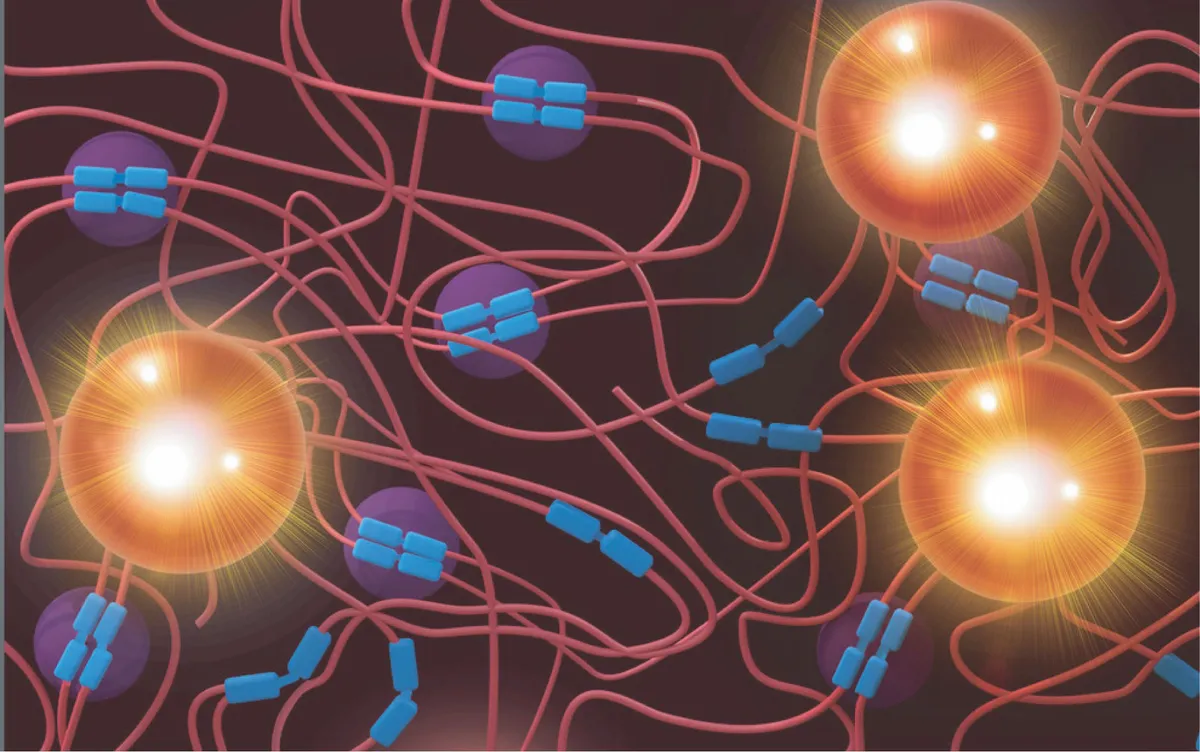
Instead of adding pores or air pockets, the UMass researchers looked at heat transfer at the atomic level. In solids, heat mainly travels through vibrations that pass from one atom to another. The more organized these vibrations are, the faster heat moves.
Yanfei Xu, a professor at UMass Amherst, and her team wanted to disrupt these pathways. Xu compared normal heat transfer to a bucket brigade, where firefighters quickly pass buckets of water. The firefighters are like atoms, and the buckets are like heat. When everyone works together, heat moves fast.
The researchers wanted the opposite effect.
Creating "Slow Chaos"
To slow heat transfer, the team used "vibrational engineering" to break up this coordination. Instead of an organized line, the polymer acts like a group of disorganized toddlers. Each moves differently and can only carry small cups, not large buckets. This makes heat transfer much less efficient.
This disrupted motion causes heat to move more slowly through the material. In an early test, a hybrid plastic made from polyurethane and tetrahydroxy deoxybenzoin triazole (THDBT) reduced heat conductivity by 17%. The material also resisted fire.
Even though the heat reduction was small in this first study, Xu believes these findings show a new way to control heat flow in materials.
She noted that there is "a lot of potential." By reducing the number of vibrational channels available for heat, thermal conductivity is lowered. The materials stay dense, flexible, and fire-resistant.
Deep Dive & References
Suppressing thermal transport in nonporous polymer hybrids by limiting thermally accessible vibrational modes - Materials Horizons, 2026