Parkinson's disease is a relentless beast, slowly eroding the brain cells that keep us moving. Current treatments are really just managing symptoms, like putting a band-aid on a bullet wound. But now, a team of Brazilian scientists has found a tiny, naturally occurring peptide that could actually protect the brain from the damage itself. Because apparently, that's where we are now: tiny peptides doing the heavy lifting.
Researchers at the Federal University of São Paulo (UNIFESP) published their findings in Neuropharmacology, focusing on a peptide called Ac2-26. This isn't some lab-created Frankenstein; it's a piece of a protein called Annexin A1, found in both humans and rodents. And it seems Annexin A1 is pretty good at taming the brain inflammation that's a hallmark of Parkinson's.
A New Angle on an Old Problem
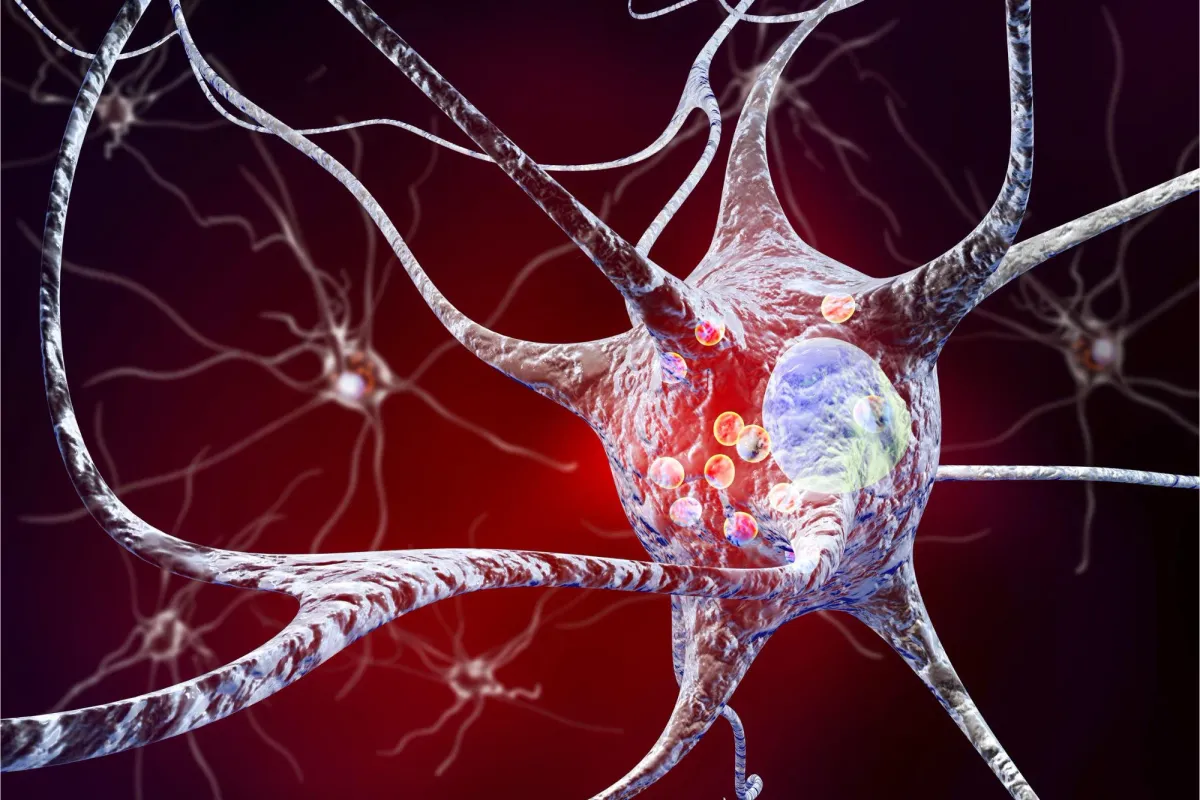
Parkinson's is infamous for its attack on dopamine-producing neurons — the ones crucial for movement, motivation, and, well, pleasure. When those cells go, dopamine levels plummet, and suddenly, tremors and walking difficulties become part of daily life. Most treatments try to replace that lost dopamine, which works for a while, but eventually, the body pushes back.
We're a new kind of news feed.
Regular news is designed to drain you. We're a non-profit built to restore you. Every story we publish is scored for impact, progress, and hope.
Start Your News DetoxEnter Ac2-26. Instead of just replacing what's lost, this peptide goes after the inflammation that's actively killing brain cells. Cristiane Damas Gil, a study author, notes this is a very early experimental study, but the strategy is fundamentally different. It's like switching from constantly bailing out a leaky boat to patching the hole.
Luiz Philipe de Souza Ferreira, who led the research, points out that while current meds like levodopa are effective, their benefits fade, and they can even cause other movement issues. Which is exactly why a new approach that actually protects neurons is such a big deal.
Male Mice, Female Mice, and Brain Protection
The team induced Parkinson's-like conditions in mice and then injected them with Ac2-26. The results were fascinating, and, as often happens in science, slightly complicated by gender. Female mice showed better initial movement after injury, but that benefit didn't stick around. Male mice, however, showed clearer neuron loss, which made it easier to see how Ac2-26 was protecting against degeneration.
They also discovered that the disease messed with the female mice's reproductive cycles, suggesting Parkinson's might have broader, hormone-related impacts. Ferreira stressed that this means we'll likely need sex-specific treatment plans down the line. Because, of course, nothing is ever simple.
The next steps involve seeing if this peptide can not just prevent damage, but reverse it. If it can, we're talking about a whole new ballgame for Parkinson's treatment — a truly hopeful one. And who knew a tiny peptide from Brazil could be the one to kick it off?