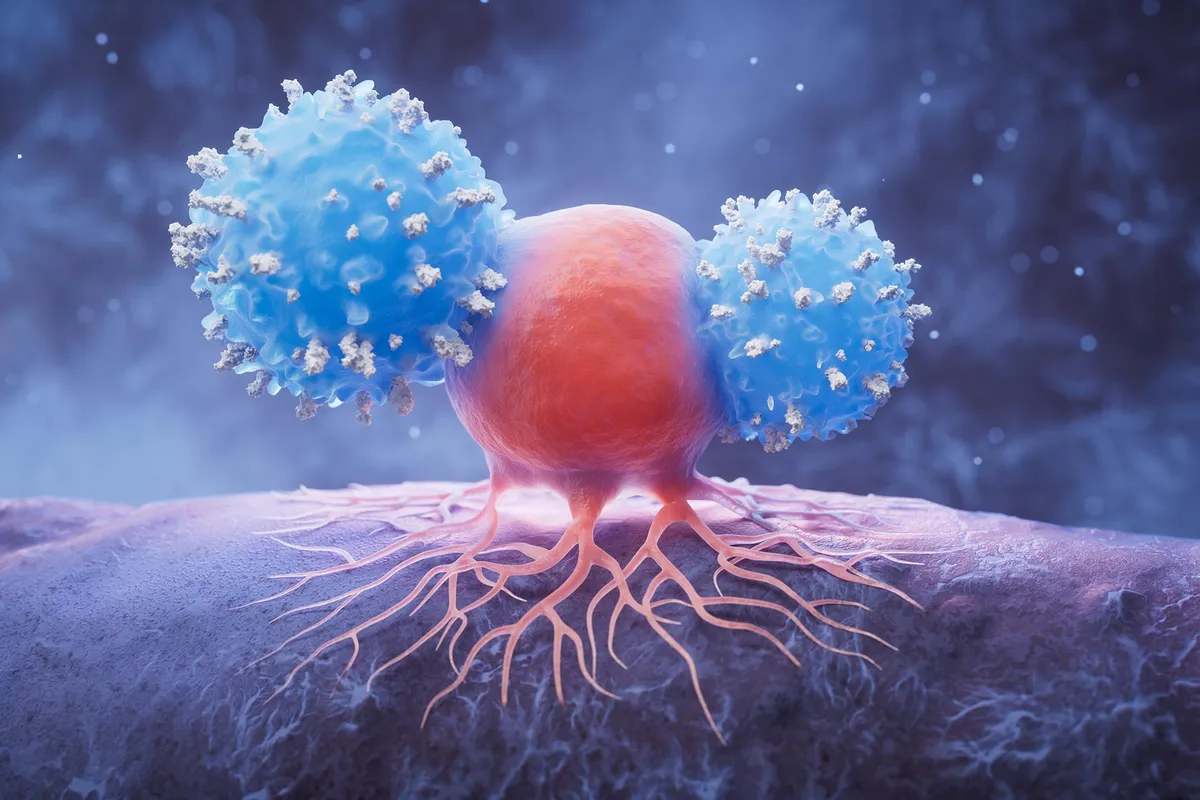
Your body already makes a molecule called IL-15 that's supposed to help your immune system spot and destroy cancer cells. It works by activating Natural Killer cells — specialized defenders that hunt down abnormal cells before they become a problem.
But cancer is good at cheating. Tumors can silence these NK cells, even when the cancer itself is producing IL-15. It's like the alarm system gets disabled right when it's needed most.
Doctors have tried giving patients drugs to boost IL-15 signals, but there's a catch: the drugs activate immune cells everywhere in the body, not just where the cancer is. This causes serious side effects. Now researchers at Monash University and oNKo-Innate in Melbourne have found something better — a genetic switch they can flip to make NK cells far more responsive to the IL-15 your body naturally produces.
We're a new kind of news feed.
Regular news is designed to drain you. We're a non-profit built to restore you. Every story we publish is scored for impact, progress, and hope.
Start Your News DetoxHow It Works
Professor Nick Huntington's team used CRISPR screening (think of it as a genetic search engine) to find genes that control how immune cells respond to growth factors. They discovered that disabling one particular gene makes NK cells dramatically more sensitive to even tiny amounts of IL-15. In lab tests with colorectal cancer, these souped-up cells slowed tumor growth significantly.
What makes this clever: the gene produces an enzyme, and enzymes are relatively easy to target with drugs. A medication that blocks this pathway has already been tested safely in patients with a blood cancer. "Which gives us some confidence that more specific inhibitors can be discovered with improved safety profiles," Huntington said.
Colorectal tumors naturally produce high levels of IL-15 — higher than most healthy tissue in your body. By making immune cells more sensitive to that signal, you could theoretically trigger a powerful immune response right where the cancer is, while sparing healthy organs where IL-15 levels stay low. It's targeted amplification instead of blanket bombardment.
Huntington also noted this approach could work alongside checkpoint inhibitors, the immunotherapy drugs already in wide use. Combining them could create a stronger one-two punch against advanced tumors.
The findings were published in Cancer Cell in June 2025. The next step is developing drugs that can safely block this genetic pathway in human patients — likely still years away, but the mechanism is now clear.