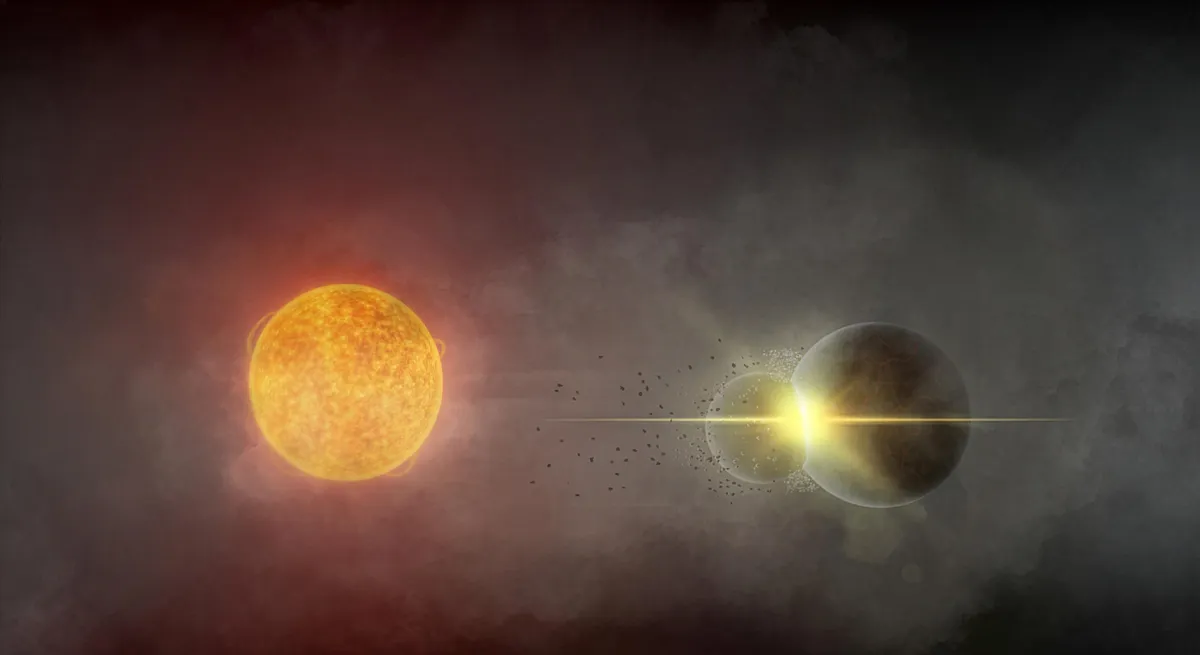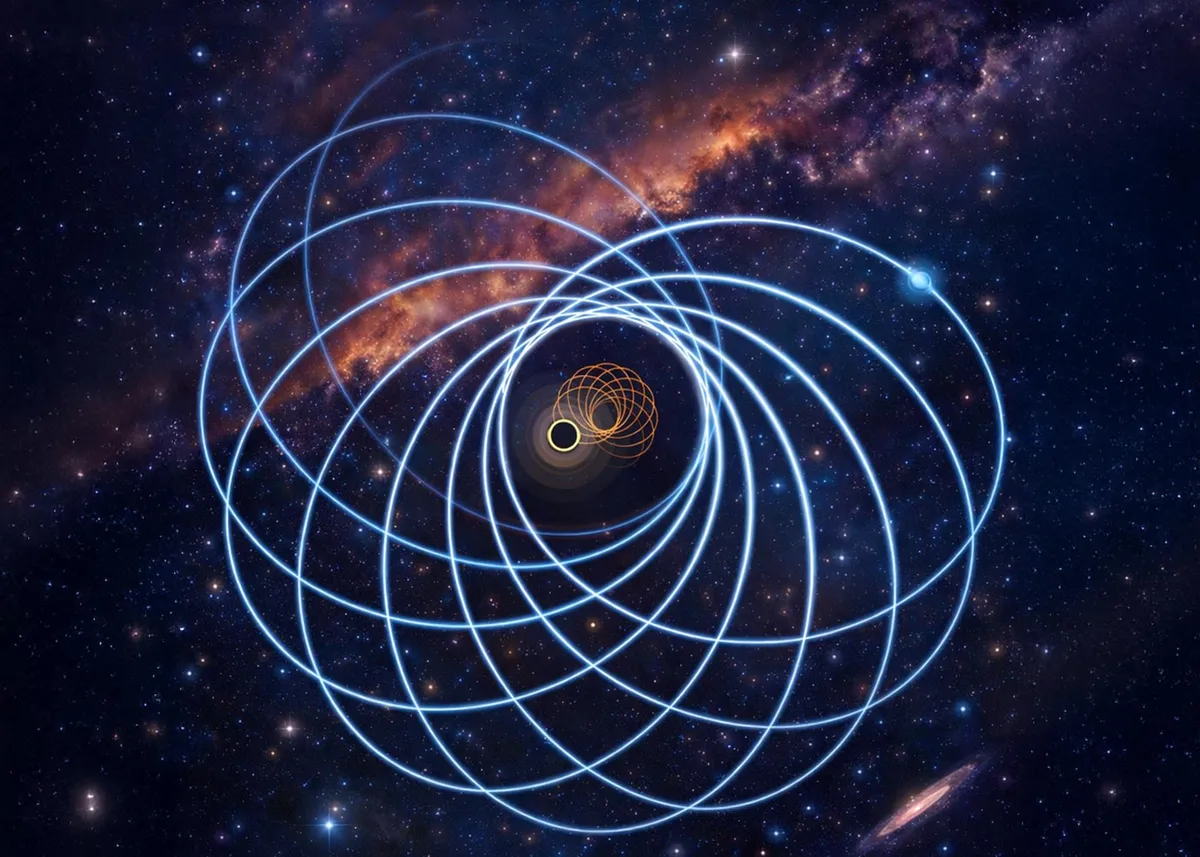
Get this: scientists just saw a black hole and a neutron star crash into each other, but not in the way everyone thought. Instead of circling each other perfectly, they were doing this seriously lopsided, oval-shaped orbit right before they merged. It's like finding out the moon isn't actually round, but a bit squished. And it flips a lot of what we thought we knew about these cosmic tango partners.
For ages, the smart money said that black holes and neutron stars, before they finally smoosh together, would settle into super neat, almost perfectly round orbits. Like planets around the sun, but way more intense. This new observation, from a gravitational wave event called GW200105, just blew that idea out of the water.
The Cosmic Twist
When the LIGO and Virgo detectors picked up GW200105, they sensed ripples in space itself. But a new way of looking at the data, from the University of Birmingham, showed something different. These two super-dense objects — a black hole about 13 times the mass of our sun and a neutron star — were on an elliptical, or oval, path.
We're a new kind of news feed.
Regular news is designed to drain you. We're a non-profit built to restore you. Every story we publish is scored for impact, progress, and hope.
Start Your News DetoxDr. Patricia Schmidt from the University of Birmingham put it simply: this is a huge clue. It means our current ideas about how these extreme systems form are missing a piece. It's like finding a new puzzle piece that doesn't quite fit the picture you've been working on.
They used a clever new model to measure how stretched out the orbit was, which they call 'eccentricity.' They also checked for any wobble from spinning objects, called 'precession.' This is the first time anyone has measured both things at once in a black hole-neutron star merger. Pretty nuts, right?
Geraint Pratten, also from the University of Birmingham, thinks this wobbly orbit means these two weren't just chilling on their own. Instead, something else, like the gravity from other stars or even a third hidden star, must have pulled them into this weird dance early on. It's like a cosmic bully pushed them off their perfect path.
This discovery suggests that not all black hole and neutron star pairs are born the same way. It challenges the old idea that there's just one main path for them to form. Instead, there might be a whole bunch of different ways these cosmic heavyweights end up colliding. And the more gravitational wave events we catch, the more wild stories we're likely to uncover.