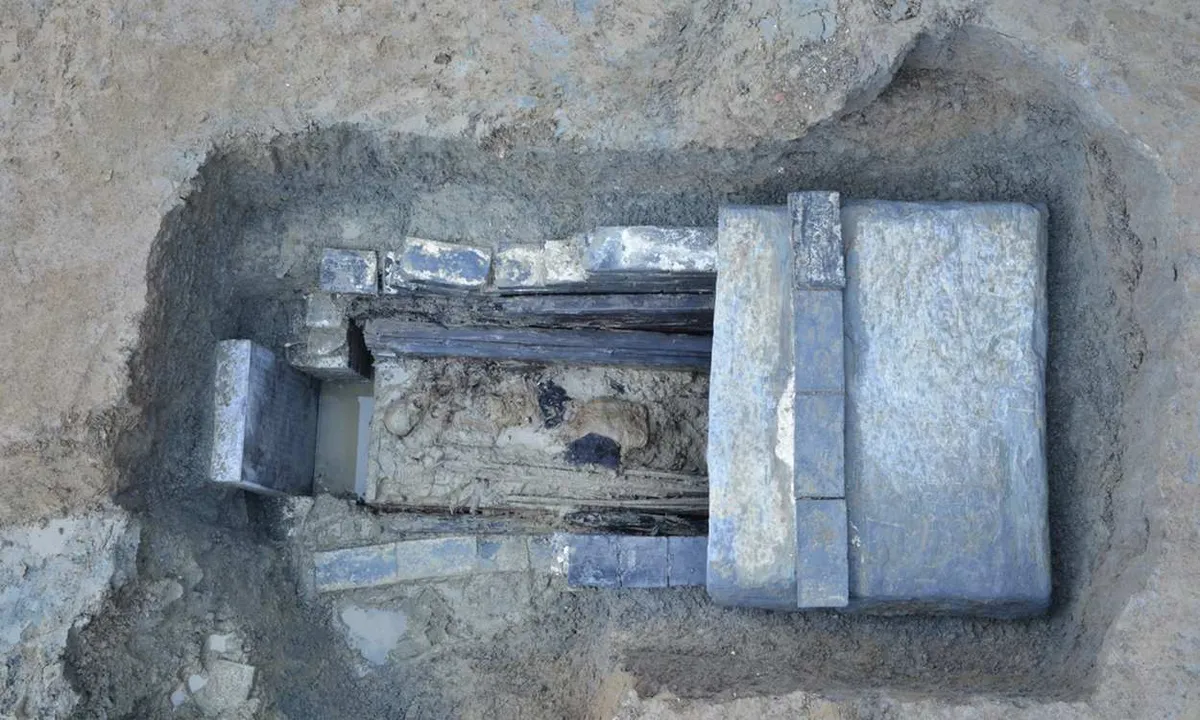
An 13th-century Song Dynasty nobleman has been telling scientists his story across eight centuries—through his remarkably intact remains, which still emit a faint, pleasant fragrance.
A team of Chinese researchers recently completed a comprehensive analysis of the Changzhou Mummy, one of China's most famous archaeological finds, using DNA sequencing, radiological imaging, and detailed autopsy. What they discovered wasn't just about how well he was preserved. It was about how deliberately, ingeniously, and globally that preservation was engineered.
A recipe from the Silk Road
The mummification process used on this nobleman was distinctly Asian—a reflection of medieval China's connection to the world. Rather than the drying techniques of Egyptian mummies, Chinese embalmers took a different approach. They left his organs in place but filled the intestinal cavity with a carefully chosen mixture: mercury, cinnabar, and fragrant oils derived from frankincense, ambergris, and agarwood. Researchers believe mercury and cinnabar were introduced directly through an enema, a technique that speaks to both chemical sophistication and practical ingenuity.
We're a new kind of news feed.
Regular news is designed to drain you. We're a non-profit built to restore you. Every story we publish is scored for impact, progress, and hope.
Start Your News DetoxThese weren't random ingredients. The spices and compounds came from the flourishing Maritime Silk Road trade routes—the network that connected China to the Arab world, India, and beyond. Medieval embalmers were, in effect, using a global pharmacy, selecting preservatives based on both their antimicrobial properties and their availability through long-distance trade.
"We have found that mercury and cinnabar were directly introduced into the intestinal cavity of the corpse through an enema," explained Wang Bangyan, a postdoctoral researcher involved in the study. The technique worked. Eight hundred years later, the body remained so well-preserved that it still carried a subtle fragrance—a testament to the enduring power of those ancient compounds.
What the mummy revealed
Beyond the preservation method, the analysis uncovered details about the man himself. His genetic profile and dietary patterns showed risk factors for atherosclerosis—a finding that challenges the modern assumption that heart disease is purely a product of Industrial-era excess. This nobleman, living in the 13th century on a diet shaped by his wealth and status, carried the same biological vulnerabilities we associate with contemporary life.
The research also illuminated how Chinese embalmers worked around a fundamental challenge: humidity. Unlike Egypt's dry climate, China's moisture-rich environment constantly threatened to degrade the embalmer's work. The chemical approach—internal preservation rather than external desiccation—was a practical adaptation to geography.
This mummy is less a curiosity than a window into medieval craftsmanship, trade networks, and human biology across time. The next phase of research will likely continue to extract insights from his remains, each analysis adding another layer to the story of how one man was preserved so carefully that he could still speak to us eight centuries later.