We've been massively underestimating how much plastic is floating in the air above our cities. Researchers in Guangzhou and Xi'an found atmospheric plastic concentrations two to six times higher than previous studies suggested — a gap so large it suggests our old detection methods were missing most of what was actually there.
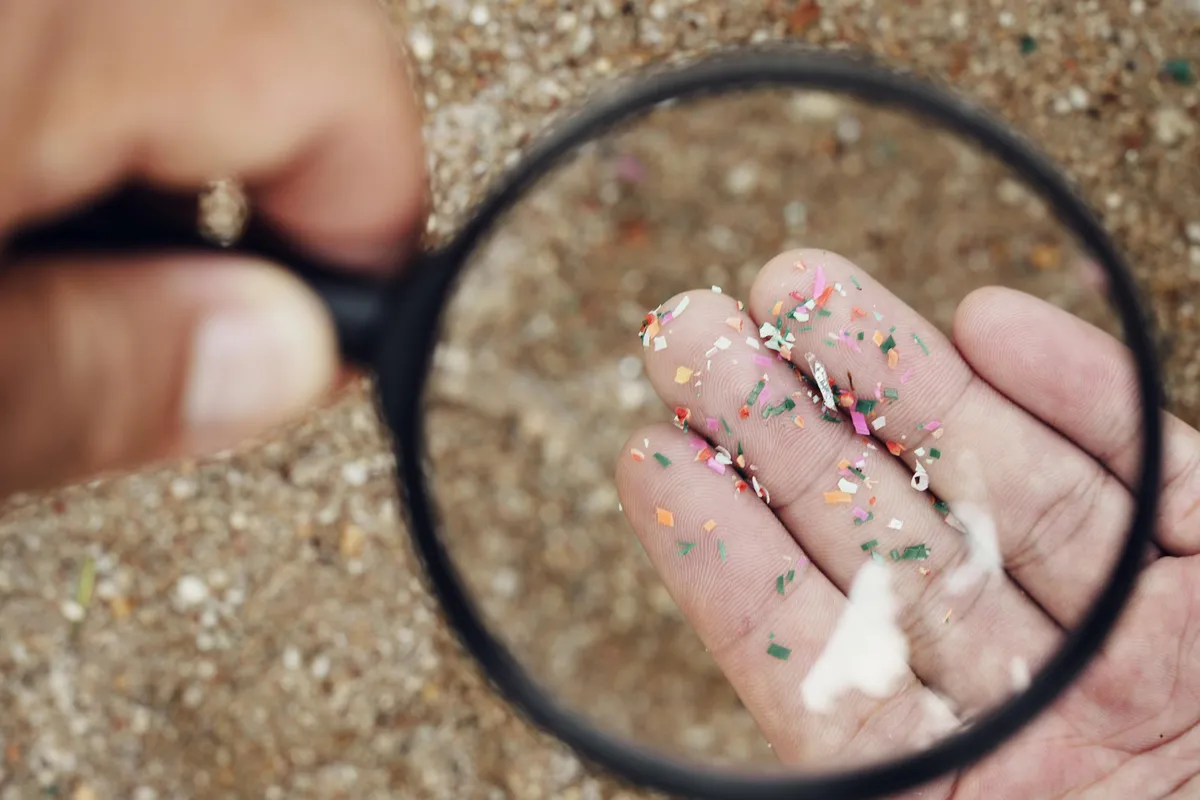
The problem has always been technical. Microplastics and nanoplastics are so small — some just 200 nanometers across — that traditional visual identification methods struggle to spot them consistently. It's like trying to count grains of sand in a dust storm using the naked eye.
A clearer picture emerges
Scientists at the Institute of Earth Environment of the Chinese Academy of Sciences developed a semi-automated approach using computer-controlled scanning electron microscopy. Instead of humans eyeballing samples, the system detects and analyzes plastic particles with far greater precision and consistency. When they applied it to air samples from two major Chinese cities, the numbers jumped dramatically.
We're a new kind of news feed.
Regular news is designed to drain you. We're a non-profit built to restore you. Every story we publish is scored for impact, progress, and hope.
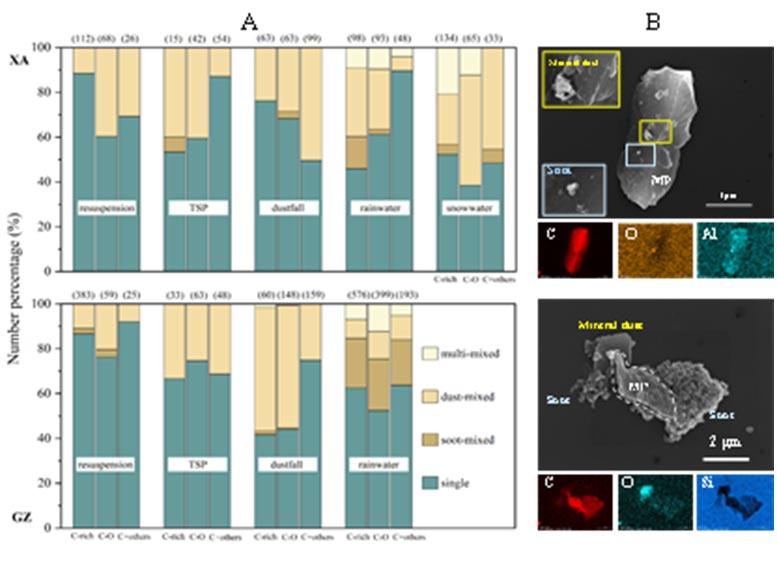
Start Your News DetoxWhat's particularly striking is how the plastics behave differently depending on how they travel through the atmosphere. Particles suspended in the air look different from those that have settled in dust or been washed down by rain. The settled samples showed more diverse mixtures of plastic types, suggesting that as particles bounce around the atmosphere, they clump together and get removed more easily.
This matters because we still don't fully understand what all this airborne plastic actually does. We know microplastics are everywhere — in our lungs, our water, our food — but the atmospheric pathway remains one of the least understood parts of the global plastic cycle. These particles could affect cloud formation and rainfall patterns. They could alter how much sunlight reaches the Earth's surface. They're definitely reaching human lungs. But without accurate measurements, we're essentially working blind.
The research, published in Science Advances, represents the first time nanoplastics this small have been reliably detected in complex environmental samples like real city air. It's a methodological breakthrough that should let other researchers worldwide replicate the findings and start building a more complete picture of what's actually in the air we breathe.
The next step is obvious: apply this technique more widely. If two Chinese cities show this much plastic, what does the air look like over other industrial regions, coastal areas, or cities downwind from major waste sites. For the first time, we have a tool that might actually tell us.