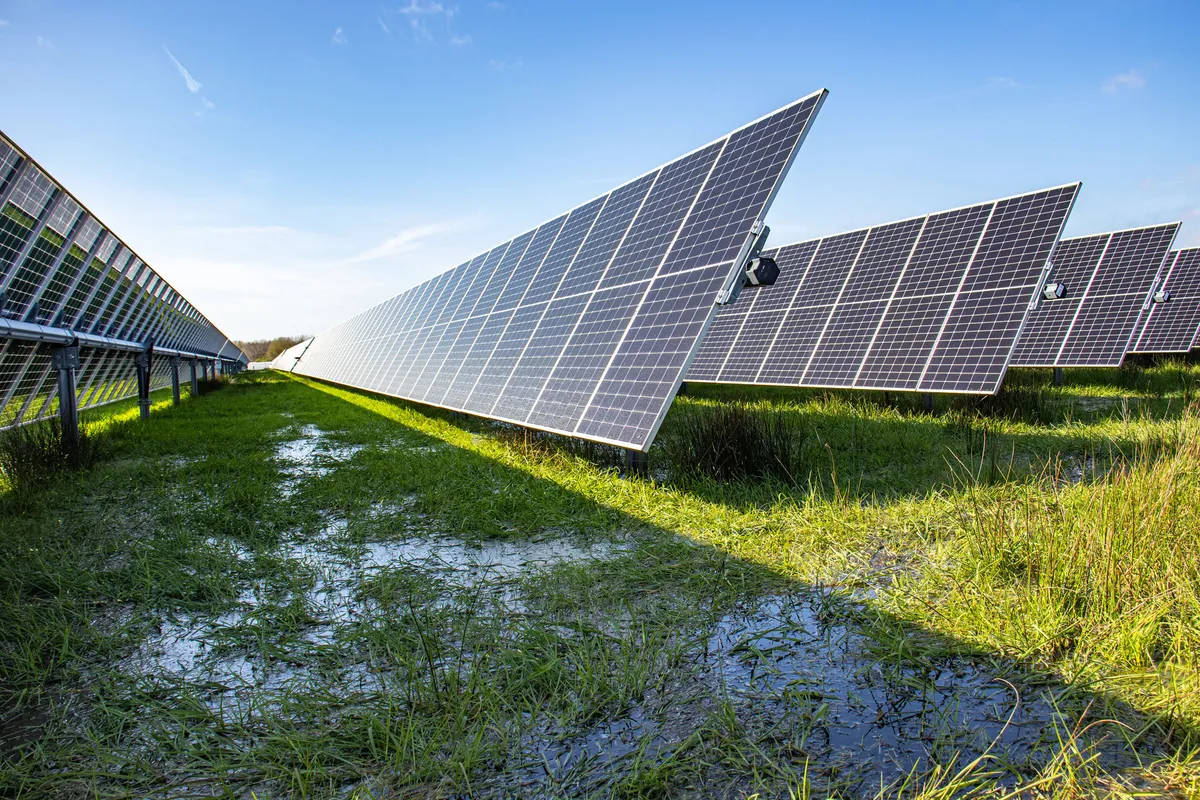
Turns out, putting solar panels on soggy, rewetted peatlands isn't just a win for green energy and carbon capture. It's also apparently a five-star resort for birds, which, if you think about it, is both impressive and slightly adorable.
Researchers in Germany stumbled upon this delightful surprise, discovering that solar parks built on once-drained peat bogs are creating unexpected havens for threatened bird species. It's like finding a luxury eco-lodge in the middle of nowhere, but for feathered friends.
The Unexpected Avian Airbnb
The University of Greifswald team looked at a solar park in Northern Germany, surrounded by what was once heavily farmed, dried-out peatland. What they found was a bird party featuring an unusual guest list: wetland birds like reed buntings and endangered meadow pipits mingling with species you'd usually find on farms or even in woodlands.
We're a new kind of news feed.
Regular news is designed to drain you. We're a non-profit built to restore you. Every story we publish is scored for impact, progress, and hope.
Start Your News DetoxHanna Rae Martens, a peatland ecologist and the lead author, observed meadow pipits using the panels as their personal perches. They'd sit there, fly off to snatch some insects, and then return to their elevated sunbeds. Because apparently, that's where we are now: solar panels as bird-watching platforms.
This diverse mix suggests the peatland is genuinely rewetting, bringing back its original inhabitants. But it's also attracting some unexpected visitors, proving that sometimes, even industrial infrastructure can be surprisingly hospitable.
Fixing a Soggy Problem
Peatlands are basically the planet's unsung carbon heroes, storing vast amounts of CO2. The problem? Most of them are in rough shape. In the UK, 80% are degraded; in Germany, a staggering 95%. This isn't just bad for the bogs; drained peatlands globally contribute a whopping 5% of all greenhouse gas emissions. Let that satisfying number sink in.
Rewetting these bogs could slash emissions and bring back biodiversity, but it's a slow process. Most crops don't grow on wet land, and full restoration can take decades. Enter the solar panel, stage left.
This German study site is one of the first to combine solar panels with rewetted peatlands. A government program even pays landowners to do it, offering a new income source. And now, we know it might also be a biodiversity booster in the short term. Martens clarifies that this isn't a call to pave all peatlands with panels; healthy bogs should be left alone. But for those intensely farmed, drained, and generally sad peatlands, it's a viable option.
For the study, which ran from March to October 2024, researchers employed audio recorders and machine learning. They compared the bird chatter at the solar park with nearby drained peatland (the kind used for livestock feed, which is about as exciting as it sounds).
Naturally, there's a caveat: this is just one site. There are only about five such rewetted peatland solar parks currently in existence, so more research is needed to see if this bird bonanza is a universal phenomenon. The team plans to expand their research, even monitoring bats and insects. Because if birds are living it up, who knows what other creatures are enjoying the new, surprisingly scenic, solar-powered wetlands?