A gentle rain was falling in Great Smoky Mountains National Park, but that wasn't stopping the Gang of Retirees in Search of Life's Diversity. Deep in a spruce-fir forest, they ducked under bright green plants, stepping off the path and into the quiet calm of their mission.
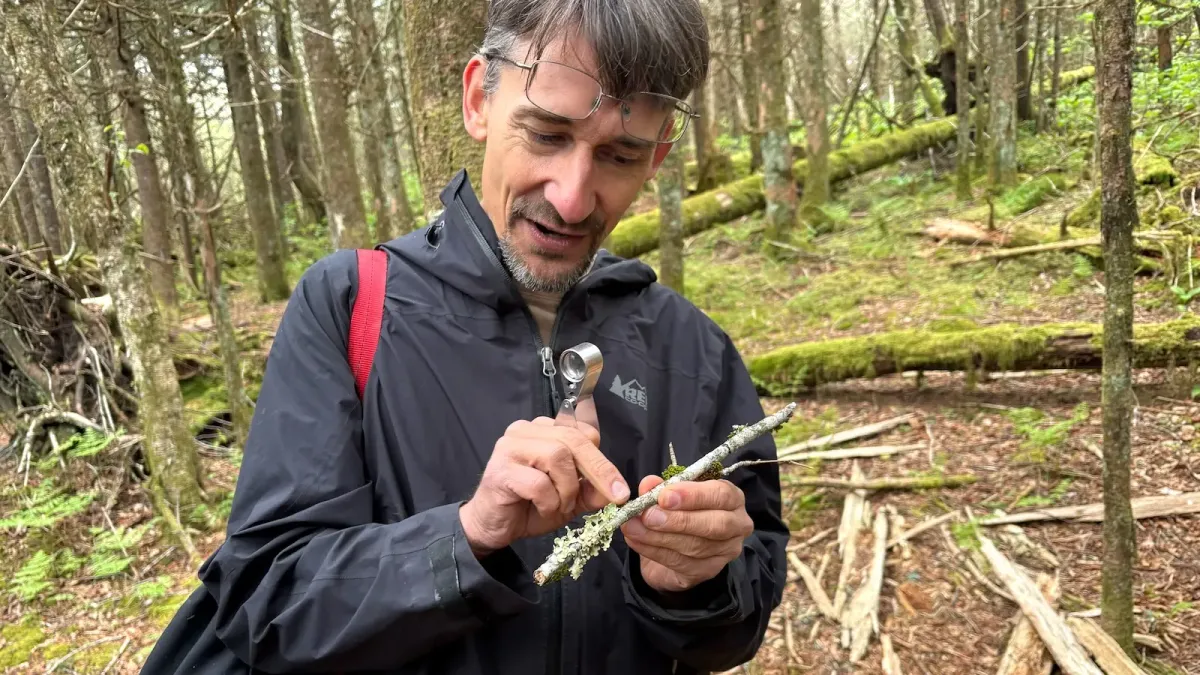
Just a few steps in, an old yellow birch tree, thick with moss, caught their eye. But it wasn't just moss. James Hollinger, a retired computer scientist turned amateur lichen whisperer, leaned in. Bingo. He'd found a rare, spongy lichen, documented only a dozen times in the park's history. He’s pretty sure it’s not even in the guidebooks.

“So, we could, right here right now, come up with a common name for it,” Hollinger said, barely containing his excitement. Fellow volunteer Laura Boggess pulled out her magnifying lens, carefully counting over 17 other moss and lichen species on just one side of the tree. Let that satisfying number sink in.
We're a new kind of news feed.
Regular news is designed to drain you. We're a non-profit built to restore you. Every story we publish is scored for impact, progress, and hope.
Start Your News DetoxThe Urgent Hunt for the Unseen
Most visitors come for the sweeping vistas, missing the miniature worlds teeming with life: lichens on bark, fungi in fallen logs, salamanders under damp leaves. But these small creatures are exactly what scientists and volunteers like GRISLD are obsessively tracking. Why the urgency? Climate change is rewriting the park's ecosystems, and federal budget cuts mean fewer eyes on the ground.
GRISLD (not all are technically retired, but they all commit hours) slowly combs remote corners of the park, documenting species few others will ever see. They're part of the all taxa biodiversity inventory (ATBI), a massive, ongoing project with the park.
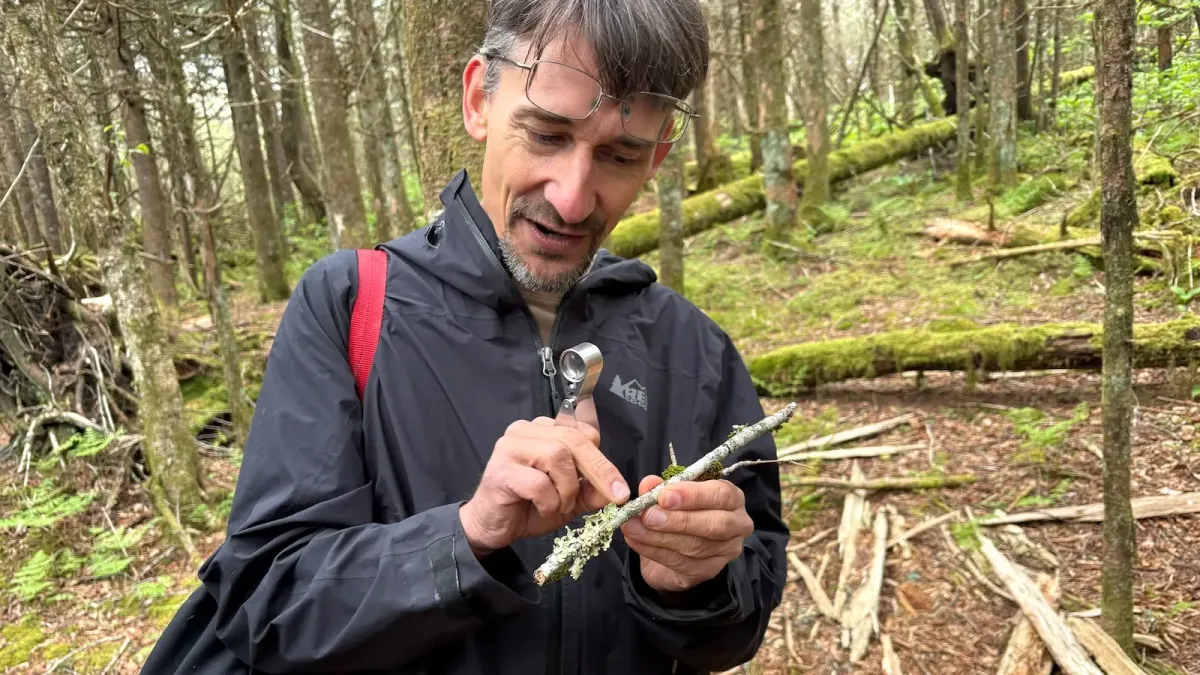
“We’ll hike into these places that other researchers don’t have the resources, the funding to,” Hollinger explained. “We watch all these things and keep an eye on how things are changing.”
The Smokies project is one of the oldest and longest-running biodiversity inventories in the country, and for good reason: it’s the most biodiverse site in the national park system. It’s a global hotspot for salamanders, fungi, and mosses – basically, all the cool stuff that doesn't get a lot of press.
Its varied elevations and microclimates might offer some species a fighting chance in a warming world. But even here, climate change is undeniable, bringing invasive insects, dying trees, floods, fires, and stronger storms. Discover Life in America, a nonprofit, manages the inventory. Will Kuhn, another hiker, leads their research.
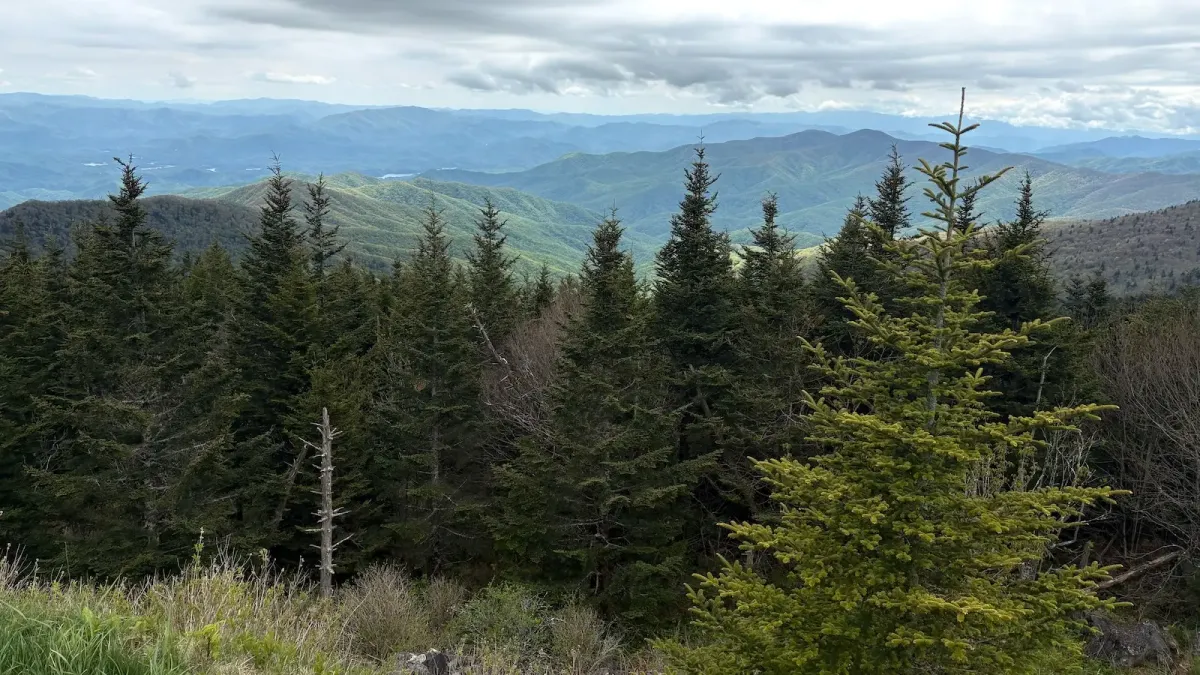
“We’re up to over 22,000 species of everything that has been documented here,” Kuhn said. Over 1,000 of those, found since 1998, are new to science. And that's just a fraction of the total. “That is maybe a third to a quarter of the actual diversity here.”
Finding a new species might sound like a once-in-a-lifetime event, but for these folks, it’s a Tuesday. While big, charismatic animals are well-documented, the smaller, weirder stuff – mites, mosses, microscopic rotifers – often fly under the radar.
The Unsung Heroes of Biodiversity
Academic researchers typically visit in spring and summer, but GRISLD is there year-round, tracking species active in colder months or migratory birds. “The park’s really known during that time of the year, but what about the things that are off-period?” Hollinger asked, flipping over a log to reveal a red-cheeked salamander darting into the wet leaves.
The Park Service relies on these local nonprofits and volunteers to fill critical gaps. These groups can also fundraise, even keeping the park operational during government shutdowns. “Ultimately, we’re able to spend money on things that benefit the park but that a federal agency just can’t do,” Kuhn noted.
Paul Super, a retired biologist, spent two decades coordinating research in the park. He’s fascinated by how lichens, mosses, and insects hold moisture, keeping the mountains cool and foggy. Lose them, and the water cycle changes. “We’re at the top of the watershed, and everybody’s drinking water is downhill from here,” he said, a dry observation that hits home.
He’s seen the long-term changes firsthand: warming temperatures boost invasive parasites like the woolly adelgid, which has wiped out thousands of hemlocks (the "redwood of the East"). Other pests attack Fraser firs, elms, and ash trees, all crucial for keeping streams cool for sensitive aquatic species like brook trout.
The Smokies' high-elevation ecosystems are like “sky islands,” isolated havens for unique species that need cool, wet conditions. If the climate warms, these species have nowhere to go. Many could vanish before we even know they exist. For Super, documenting them means noticing tiny shifts that, over time, become enormous.
Laura Boggess, who grew up climbing remote cliffs in western North Carolina, sees these trips as vital, ground-up climate change monitoring. “The naming of a species, which isn’t a small thing, but it’s like an accumulation of small, cooperative creation,” she said. “It is even more important as we enter into even more rapid change.”
There's so much to see that the volunteers took two hours to cover half a mile. Even as they headed back to the road, they found a rare parasitic fungus. The magnifying glass came out again. Everyone leaned in for a closer look. Because apparently, that's where the real action is.