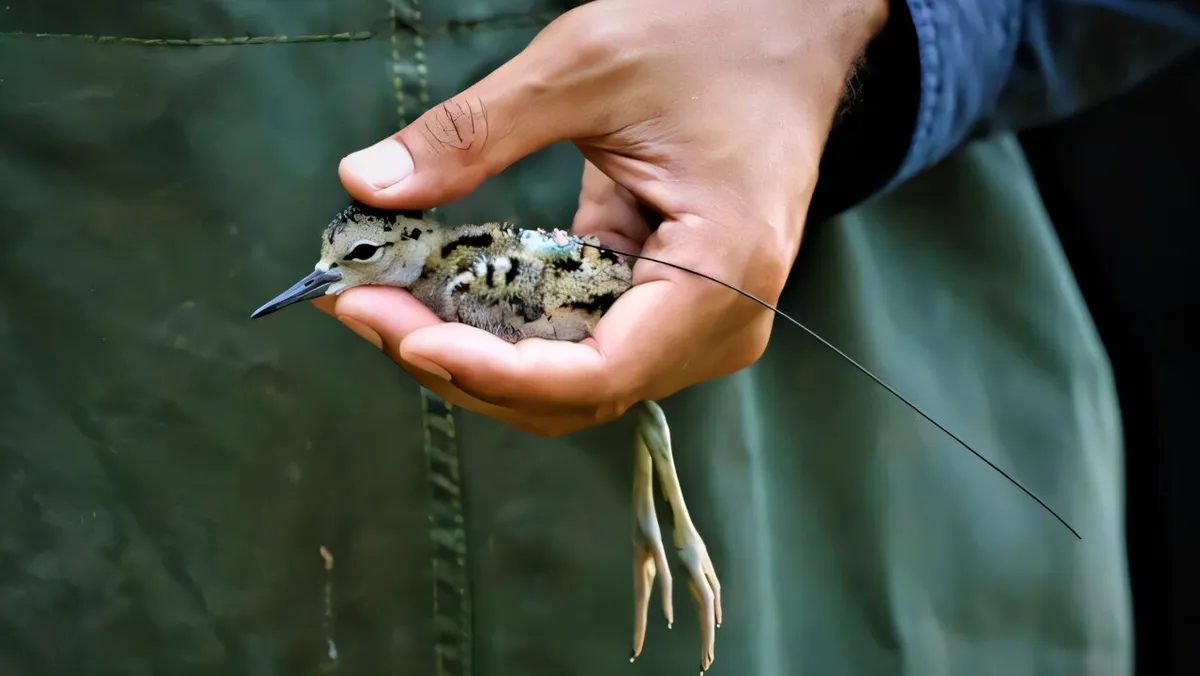
The Hawaiian stilt, known locally as the Aʻeo (Himantopus mexicanus knudseni), has been reclassified from endangered to threatened. This change comes after more than 50 years of conservation efforts. The U.S. Fish and Wildlife Service announced this rare milestone for a native Hawaiian species.
This recovery is detailed in a new study. Researchers from the University of Hawaiʻi at Mānoa's College of Tropical Agriculture and Human Resilience (CTAHR) led the work. Their findings were published in Ornithological Applications.
The Aʻeo population once thrived across the Hawaiian Islands. However, by the 1940s, only about 200 birds remained. This decline was due to overhunting, loss of wetlands, and invasive predators. After being listed as endangered in 1973, conservation efforts helped the population grow. Today, there are more than 1,500 birds.
We're a new kind of news feed.
Regular news is designed to drain you. We're a non-profit built to restore you. Every story we publish is scored for impact, progress, and hope.
Start Your News DetoxCommunity Partners with Conservation Managers
The research team looked at over five decades of data. They analyzed more than 2,000 nests from nine wetlands on Oʻahu between 1963 and 2020. They found that nesting success and chick survival improved significantly over time. This shows that management actions like predator control and habitat restoration are working.
Melissa Price, an associate professor at CTAHR, called this a "bright spot story." She noted that many Hawaiian species are declining. The Aʻeo shows how communities and conservation managers can work together. This partnership helps achieve recovery and rebuild connections with native species.
A Promising Path
Expanding managed wetland habitats is crucial for increasing the Aʻeo population. The birds readily move into restored wetlands. Recent studies show them nesting in restored Indigenous wetland farms. As rising sea levels threaten existing coastal wetlands, these community-led restoration efforts offer new habitats. They also provide a model for environmental care.
A new rule supports the reclassification. It allows activities that help the Aʻeo to continue. This includes habitat management and restoration. These activities might otherwise be restricted. This flexibility aims to keep partnerships strong and ensure ongoing care for the species. This care is still vital for the bird's full recovery.
The authors describe the Aʻeo's story as a "conservation success story in progress." Like many native Hawaiian species, it still relies on ongoing predator control, water management, and habitat protection.
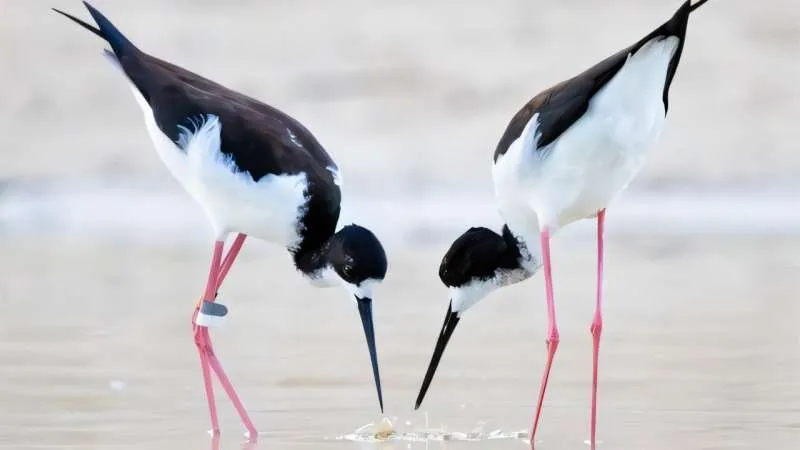
Jessica Idle, the lead author and a manager with the UH Mānoa Pacific Cooperative Studies Unit, explained that downlisting doesn't mean the work is finished. It means the efforts are paying off. Continued monitoring and management, especially expanding protected wetland habitat, will be key to population growth.
This research was a joint effort. It involved UH Mānoa, the U.S. Fish and Wildlife Service, the Hawaiʻi Department of Land and Natural Resources, and Tufts University. This collaboration highlights the coordinated work behind the bird's recovery.
Deep Dive & References
Fifty years of conservation under the Endangered Species Act: Himantopus mexicanus knudseni (Ae'o or Hawaiian Stilt), a conservation success story in progress - Ornithological Applications, 2026