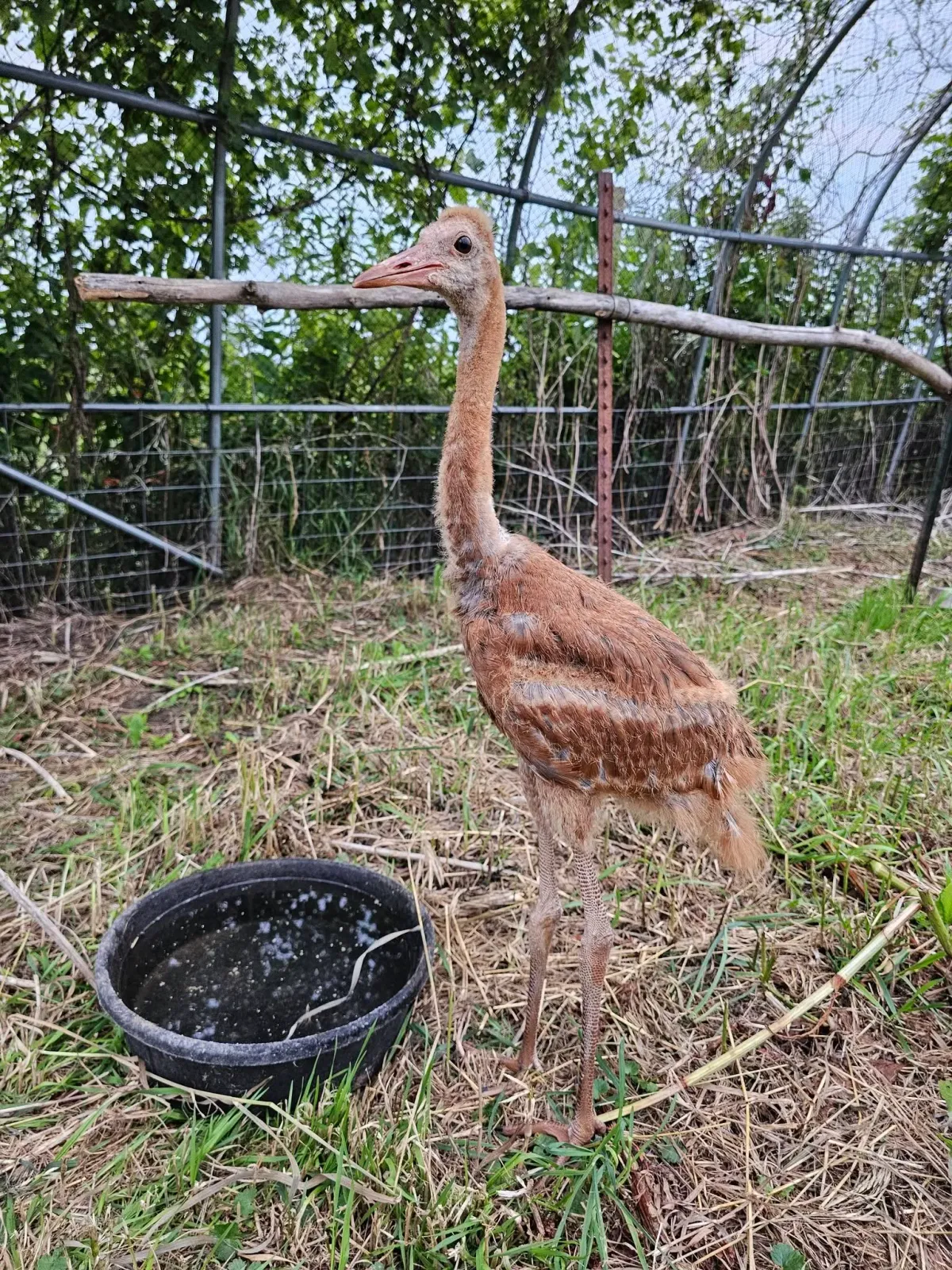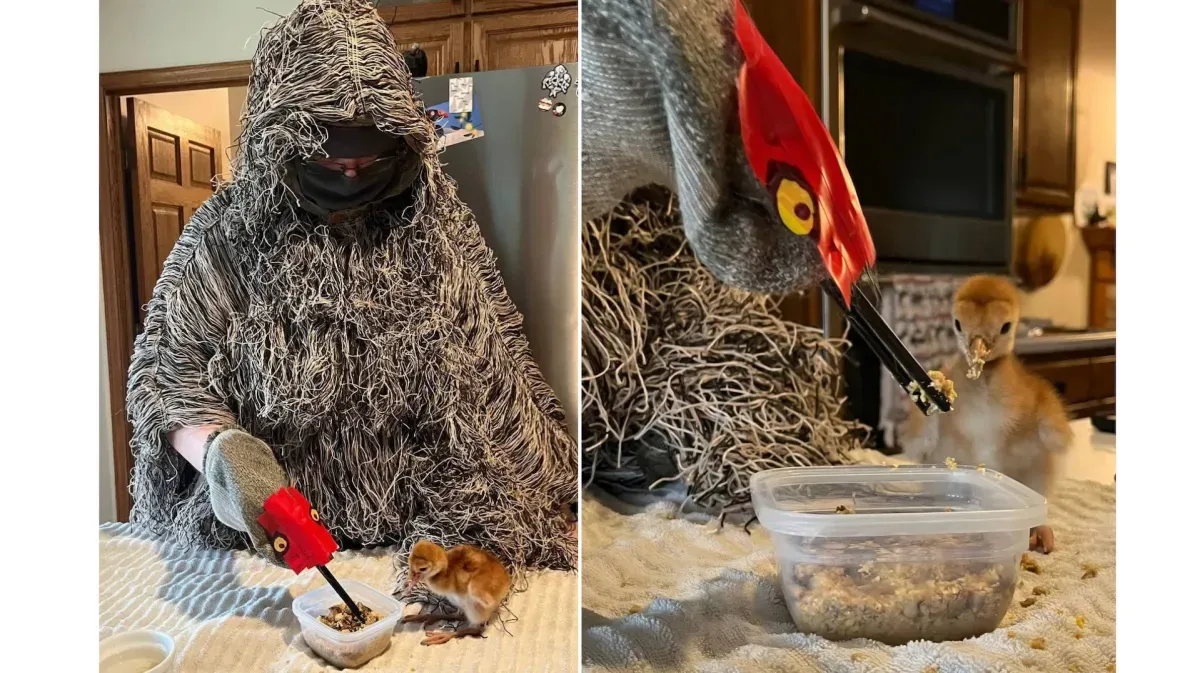
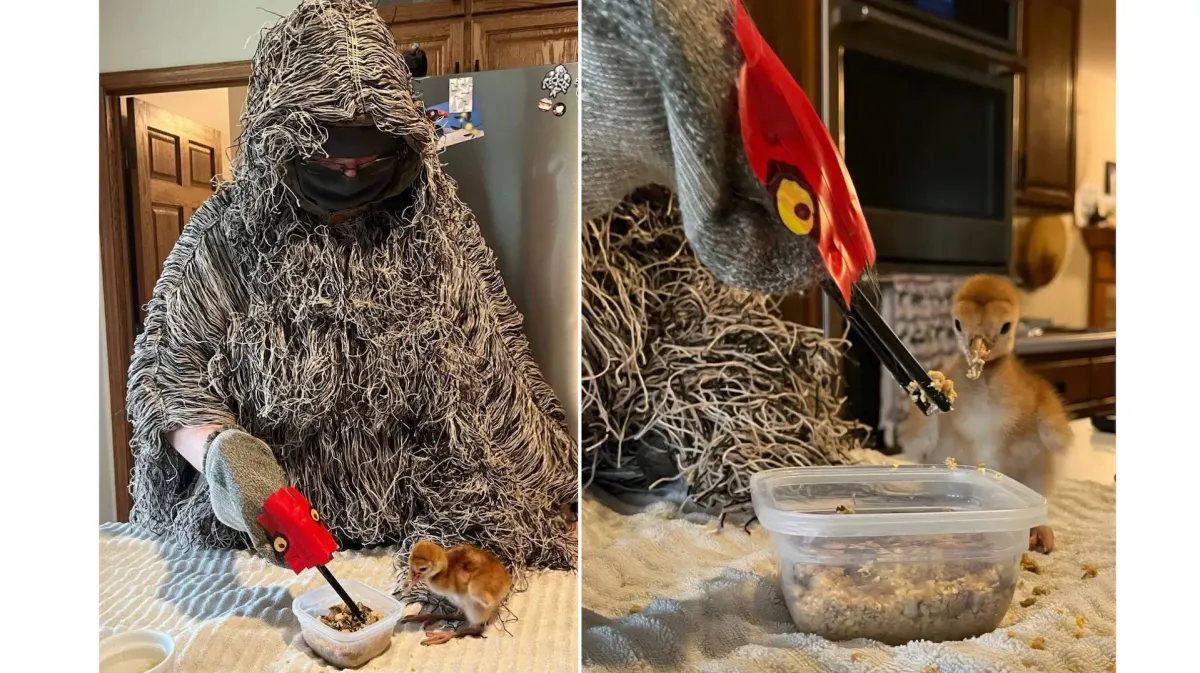
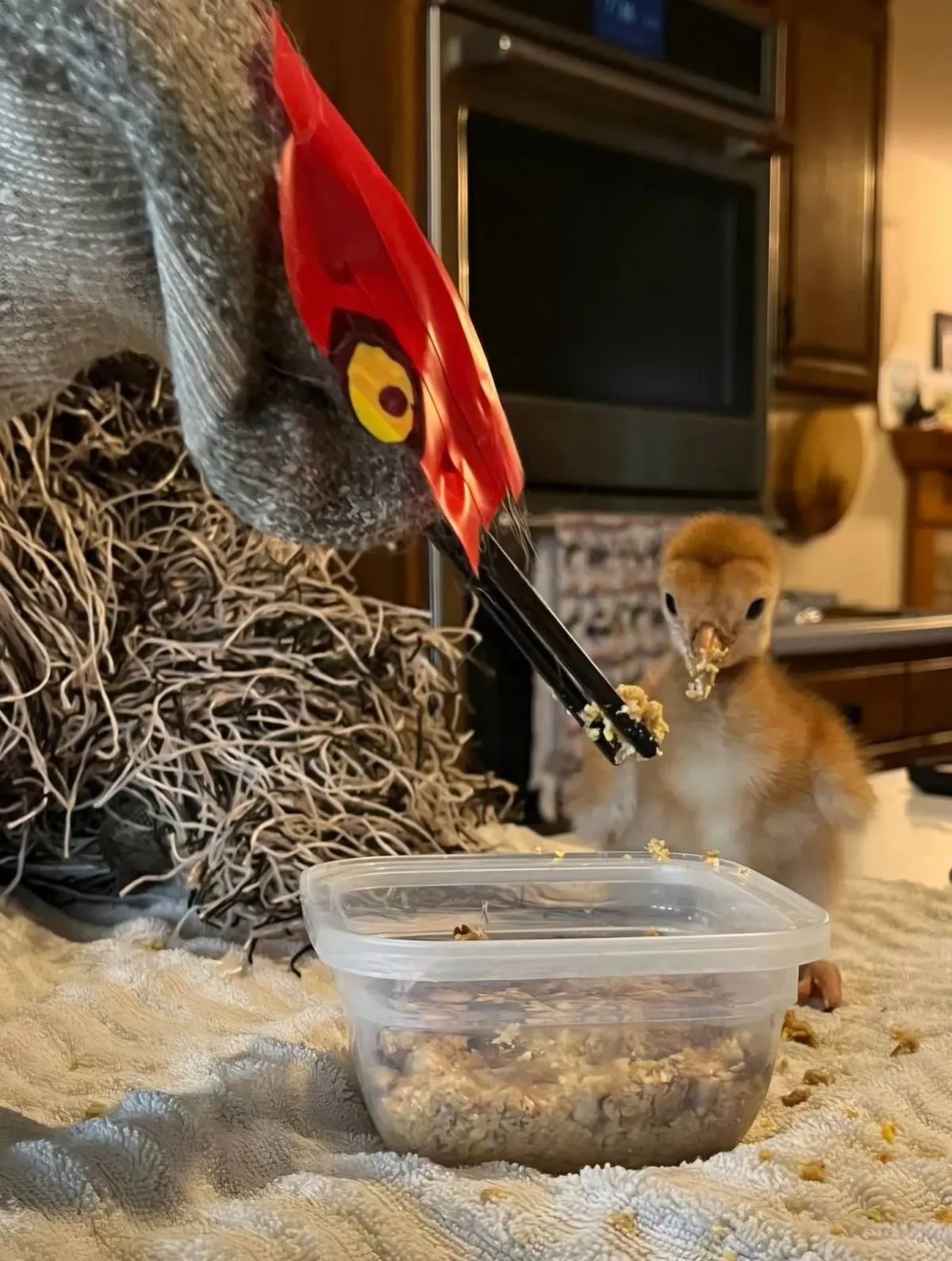
In a corner of Minnesota, wildlife rehabilitator Foxfeather Zenkova dons a rather special outfit: the "Ugly Mom" costume. Its mission? To convince orphaned sandhill crane chicks that she is, in fact, one of them. Because apparently, that's what it takes to raise a baby crane without it thinking humans are its new best friends.
Zenkova, who runs the Vulture Conservancy and Foxfeather and the Foxloft, knows that young sandhill cranes are never, ever supposed to be alone. They cling to their parents until they're practically teenagers, ready to fly south for the winter. These aren't your average backyard birds. We're talking nearly four feet tall, seven-foot wingspans, and a call that Zenkova describes as "something you’d hear in Jurassic Park." Prehistoric elegance, indeed.
The Absurdity of Raising a Crane
Cranes are smart. Like, really smart. They're social, have excellent memories, and can bond with a human faster than you can say "extinction event." If a chick imprints on a person, its chances of making it in the wild drop faster than a stone. So, rehabilitators get creative. Think crane costumes, puppets, mirrors, and even surrogate crane foster parents. Anything to convince a fluffy chick that it's a bird, not a person's pet project.
We're a new kind of news feed.
Regular news is designed to drain you. We're a non-profit built to restore you. Every story we publish is scored for impact, progress, and hope.
Start Your News DetoxThen there's the physical challenge. These babies move. A lot. Hours after hatching, they're already on the go, and within days, they're logging miles with their parents. This constant motion is crucial for their growth – they can sprout an inch a day. Which means Zenkova spends hours every day in her "Ugly Mom" get-up, foraging, exercising, and generally doing her best crane impression. All while battling the delightful humidity of a Minnesota summer.
Most of these orphaned chicks end up in Zenkova's care because one or both parents got clipped by a car. Currently, she's got four little ones, with a fifth on the way. Because saving the world, one giant awkward bird at a time, is a full-time job.
What to Do (And Not Do) If You Find a Chick
Spot a lone crane chick? Your first move is to back off. Parents are usually lurking nearby. But if it's clearly distressed, injured, or just hanging out for days without adult supervision (like one Zenkova mentioned, chilling under a bird feeder for two weeks), it needs help.
What it doesn't need is you playing amateur wildlife expert. Or following internet advice. Most of that is a recipe for disaster. Instead, contact a licensed animal rehabilitation center. Animal Help Now is a good resource to find one. These places are often desperate for volunteers and donations, because, as you can imagine, keeping a growing dinosaur-bird fed and exercised is not cheap.
Once rehabilitated, sometimes with a little swimming therapy or social skill lessons, these magnificent birds get released, usually in the fall. Zenkova calls it a privilege. And watching them heal and get a second shot at a truly wild life? Well, that's just good news worth sharing.