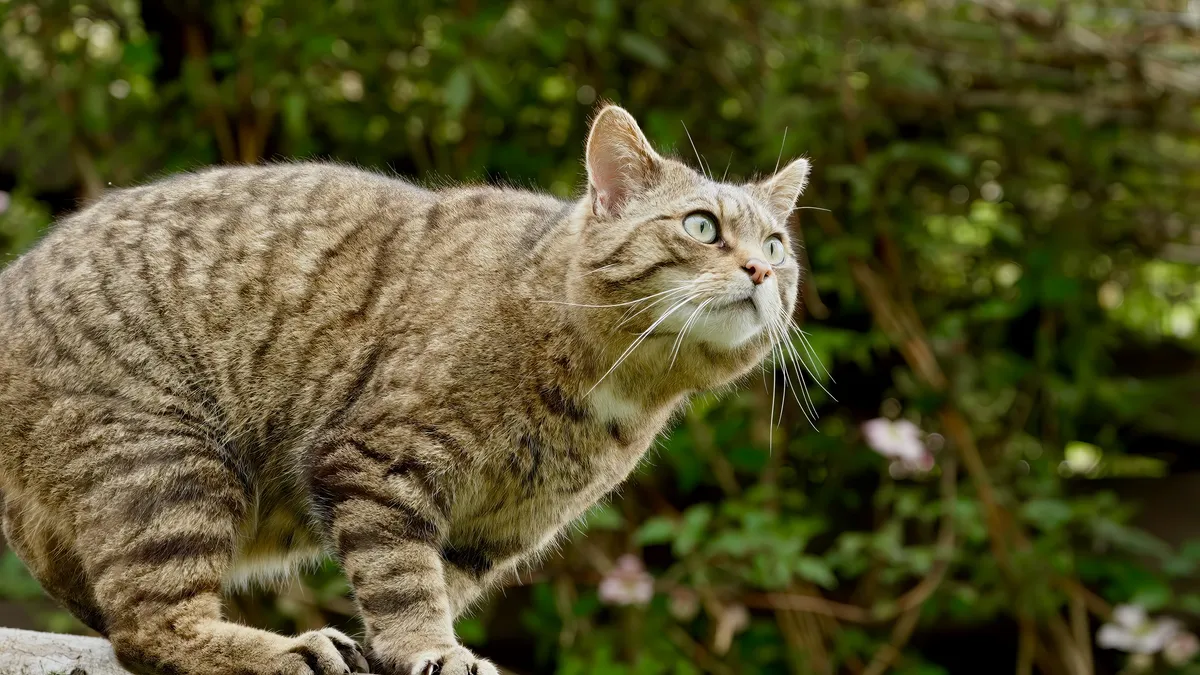
Good news, everyone: the European wildcat is staging a comeback! Mostly. In the Czech Republic's Lusatian Mountains, conservationists recently stumbled upon a pair of these elusive felines, promptly named Jonáš and Tonka. It was the first time wildcats had been spotted there in nearly a century. Tonka, clearly not one to waste time, has since produced at least three kittens. Because when you're making a comeback, you really commit.
This is a rather significant development for a species that's historically had a rough go of it, facing down habitat loss, hunting, and the general existential dread of competing with housecats for prime napping spots.

The European wildcat (Felis silvestris) is essentially a larger, more reclusive version of your average tabby, preferring to lurk mysteriously in forests. While the IUCN Red List optimistically labels the species as "least concern" globally, that's a bit like saying "the weather is fine" when half the continent is experiencing a heatwave and the other half a blizzard. Regional numbers, it turns out, vary wildly.
We're a new kind of news feed.
Regular news is designed to drain you. We're a non-profit built to restore you. Every story we publish is scored for impact, progress, and hope.
Start Your News DetoxWhere They're Prowling Back
In parts of Central Europe, wildcats are indeed returning to their ancestral hunting grounds. This happy turn of events is largely thanks to forests growing back and, crucially, fewer people trying to hunt them. Countries like Germany and France are proving that a little habitat protection and some legal boundaries can go a long way. Italy has even seen enough progress to bump up the wildcat's national conservation status. Which, if you think about it, is both impressive and slightly terrifying for the local mouse population.
Where It's Still a Bit Dicey
Meanwhile, the situation is a touch more… delicate in other locales. Scotland, for instance, declared its wildcat population functionally extinct in the wild back in 2018. Functionally extinct. Let that sink in. Now, a dedicated breeding and release program is underway in Cairngorms National Park, aiming to rebuild the population, one tiny, fierce kitten at a time. Because apparently, even wildcats need a solid PR team and a second chance.