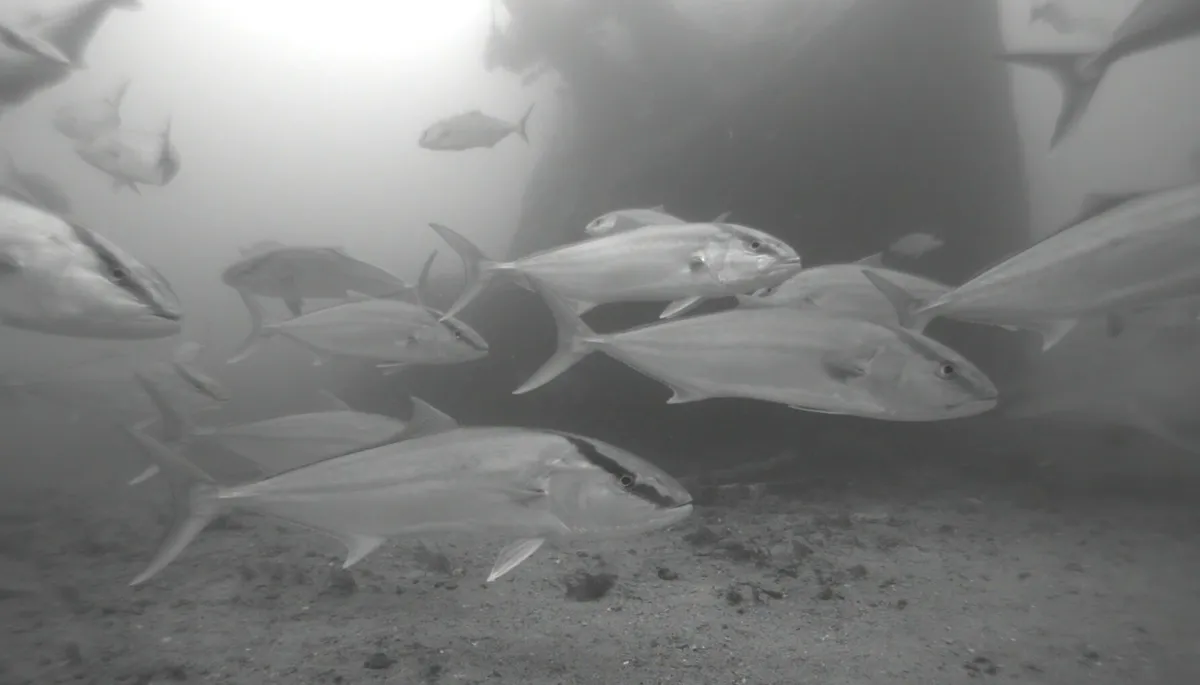
For years, fisheries managers have been trying to get a handle on the greater amberjack — a rather large, sporty fish that's a favorite target for anglers. The problem? Counting fish in the ocean is less like a census and more like trying to tally squirrels in a hurricane. But a multi-year, multi-institution project just dropped some seriously updated numbers, and they're a bit of a mixed bag.
Led by fisheries ecology professor Sean P. Powers from the University of South Alabama, a team of 20 scientists and NOAA Fisheries collaborators basically gave the greater amberjack population an extreme makeover, using everything from underwater video to sophisticated acoustic surveys. Because, apparently, old-school nets just weren't cutting it for these elusive guys.
What they found was, well, complicated. In the U.S. Gulf of Mexico, the amberjack are still getting hammered, officially "overfished" despite everyone's best efforts to get them to, you know, multiply. But over in the U.S. South Atlantic? They're doing just fine, thank you very much. Which means your next fishing trip might require a geography lesson.
We're a new kind of news feed.
Regular news is designed to drain you. We're a non-profit built to restore you. Every story we publish is scored for impact, progress, and hope.
Start Your News DetoxFish That Need Their Own Borders
Beyond the headcounts, the team also played detective, tracking amberjack movements with dart tags, acoustic tags, and even population genomics. Because if you're going to count them, you might as well figure out where they're going for their summer holidays. And what they discovered is a game-changer for how we manage these fish.
The tagging data strongly suggests that the U.S. South Atlantic, the eastern Gulf, and the western Gulf populations are essentially distinct groups. They're like different countries that happen to share a continent, and trying to manage them all as one big happy family just isn't working. It's almost as if fish have their own borders, which, if you think about it, is both impressive and slightly inconvenient for human bureaucrats.
The project also showcased some snazzy new tech, like advanced acoustics and environmental DNA (eDNA), which can basically tell you what fish are around just by analyzing water samples. Because apparently, we can now count fish without even seeing them. Which is either genius or a sign we're getting lazy. Either way, it means better data for keeping these underwater athletes around for future generations. And maybe, just maybe, fewer arguments over fishing quotas.