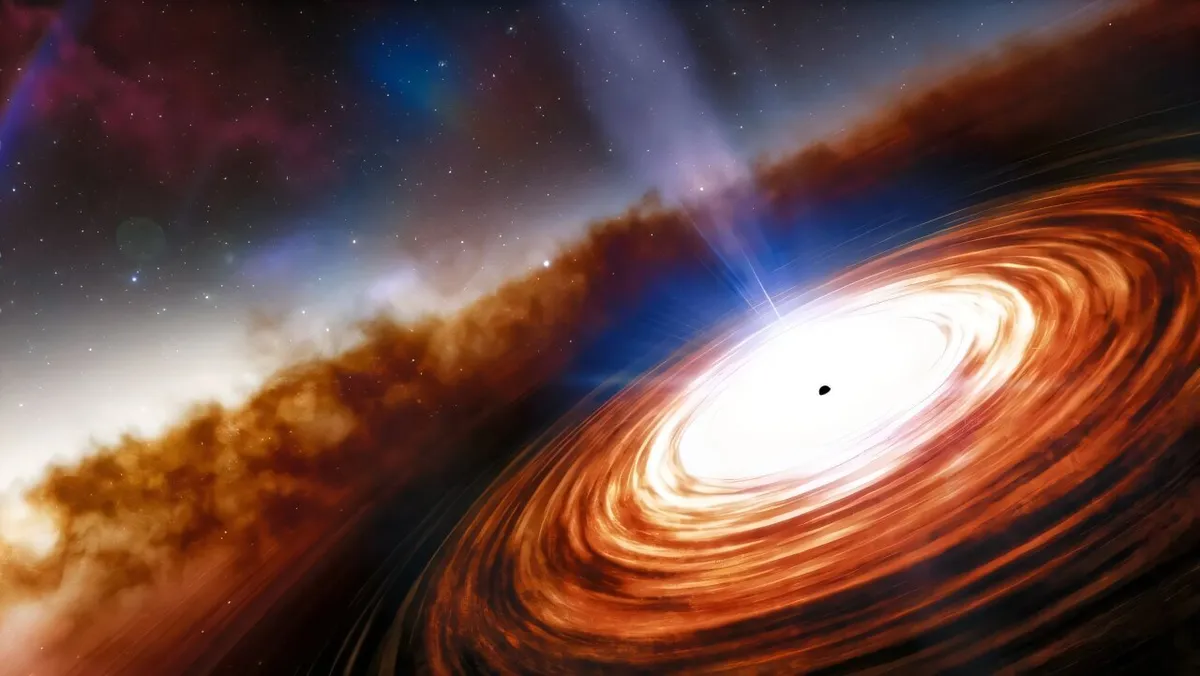
NASA's Fermi telescope has found gamma rays from a rare, super-bright supernova. This discovery offers new clues about how these powerful stellar explosions work.
An international team of astronomers used data from NASA's Fermi Gamma-ray Space Telescope. They found the first clear evidence of gamma rays from a superluminous supernova.
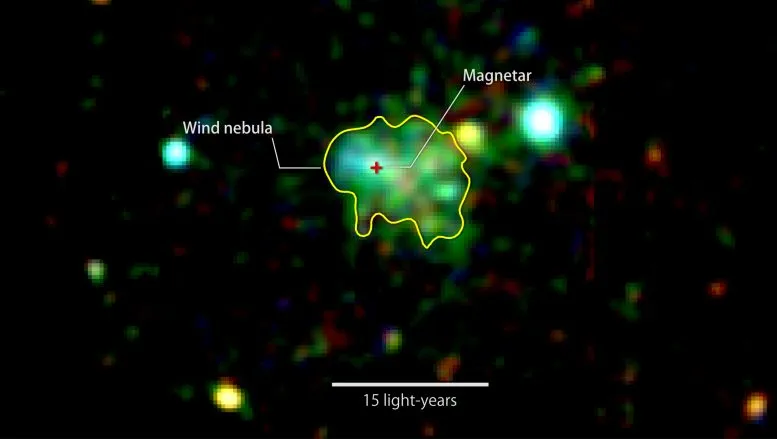
This suggests the explosion was powered by a newly formed magnetar. A magnetar is a neutron star with an incredibly strong magnetic field. It forms when a massive star collapses. This finding helps scientists understand some of the universe's most energetic explosions.
We're a new kind of news feed.
Regular news is designed to drain you. We're a non-profit built to restore you. Every story we publish is scored for impact, progress, and hope.
Start Your News DetoxNASA's Fermi mission is one of many observatories that watch changes in space. These tools help scientists learn how the universe changes over time.
Fabio Acero, the study lead, noted that astronomers have looked for gamma-ray signals from thousands of supernovae for nearly 20 years. He said that while there were some hints, none were definite until now. Acero works at the French National Centre for Scientific Research (CNRS) and the University of Paris-Saclay.
The journal Astronomy & Astrophysics published these results.
How Massive Stars Explode
Core-collapse supernovae happen when a very large star runs out of fuel. This star is many times bigger than our Sun. Without fuel, its core collapses due to gravity, causing a huge explosion.
This collapse can leave behind a neutron star, which is about the size of a city. It can also create an even smaller black hole. The explosion sends the star's outer layers into space, forming a fast-growing cloud of hot gas.
Over the last two decades, scientists have found almost 400 of these unusually bright explosions. They are called superluminous supernovae. They can shine more than ten times brighter than regular supernovae in visible light.
In 2024, a study led by Li Shang suggested that Fermi's Large Area Telescope might have detected gamma rays from one of these explosions years after it happened.
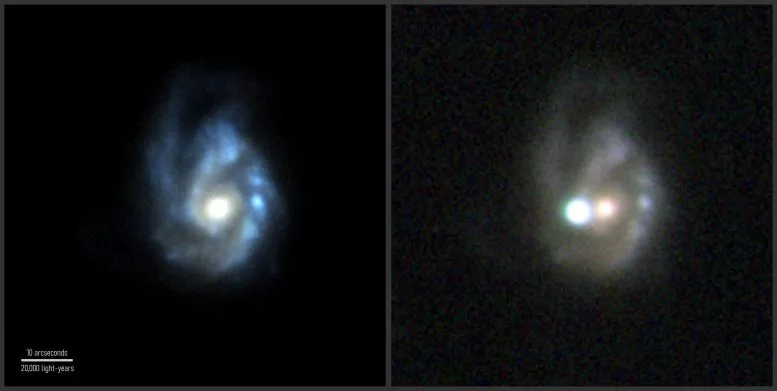
This event, called SN 2017egm, exploded in the galaxy NGC 3191. This galaxy is about 440 million light-years from Earth. Even though it's far away, it's one of the closest superluminous supernovae ever seen.
A Rare Gamma-Ray Discovery
Guillem Martí-Devesa, a researcher, explained that they looked for gamma rays from the six closest superluminous supernovae. These were seen during Fermi's first 16 years. He said only SN 2017egm showed gamma rays. This confirms that some supernovae can be as bright in gamma rays as they are in visible light.
This discovery gives scientists a new way to study these events.
Scientists have long wondered what powers the huge energy of superluminous supernovae. One main idea is the birth of a magnetar. A magnetar is a neutron star with the strongest magnetic fields known.
These magnetic fields can be 1,000 times stronger than those of regular neutron stars. They can be about 10 trillion times stronger than a refrigerator magnet.
To learn more, researchers carefully looked at both the visible light and gamma-ray observations of SN 2017egm. They compared this data with different theories about how the explosion behaves.
One model, created by Indrek Vurm and Brian Metzger, simulated how particles and radiation from a new magnetar would interact. This interaction happens with the material thrown out by the supernova.
How a Magnetar Powers a Supernova
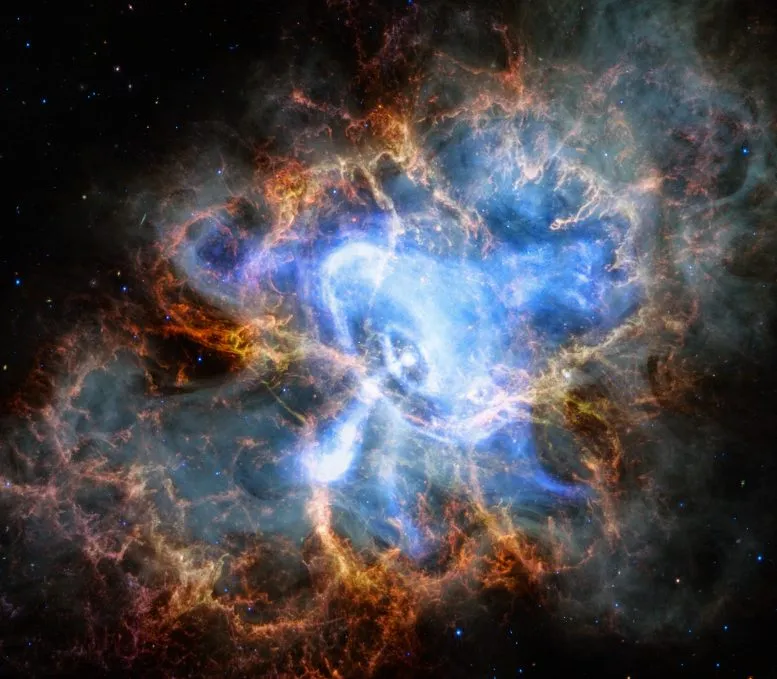
Scientists believe new magnetars spin very fast, hundreds of times per second. This fast spin creates a strong flow of electrons and positrons. Positrons are the antimatter versions of electrons.
These particles form a huge area called a magnetar wind nebula. This nebula is full of very energetic particles.
In this environment, many interactions can create and absorb gamma rays. For example, an electron and a positron can destroy each other, making gamma-ray photons. Gamma rays can also hit each other and create new pairs of particles.
As these interactions continue, gamma rays get trapped inside the expanding supernova debris. Instead of escaping right away, much of their energy turns into lower-energy visible light. This process helps explain why superluminous supernovae shine so brightly.
Acero explained that about three months after the collapse, as the supernova debris expands and cools, gamma rays can start to escape. He said this magnetar model best matches the supernova's brightness and when its gamma rays arrived in the first few months. However, he noted there's room for improvement for later times, when the visible light fades unevenly.
Other Forces May Be Involved
Researchers think other processes likely affected the supernova as it faded.
These could include material falling back onto the magnetar. Also, interactions between the expanding blast wave and matter the star released before its final collapse might play a role.
The team also looked at whether future observatories could find similar events. Their analysis suggests the new ground-based Cerenkov Telescope Array Observatory could spot a supernova like SN 2017egm from about 500 million light-years away. This would take about 50 hours of observation.
Scientists expect that combining data from observatories like the Cerenkov Telescope Array with NASA's space telescopes will greatly improve understanding of these explosions.
Judy Racusin, a deputy project scientist for the Fermi mission at NASA’s Goddard Space Flight Center, said the magnetar model builds on 20 years of magnetar research. She added that observing gamma rays from supernovae will offer a new way to explore how they work.
Deep Dive & References
- Gamma-ray signature of superluminous supernovae: Fermi-LAT GeV detection of SN 2017egm and evidence of a central engine - Astronomy & Astrophysics, 2026