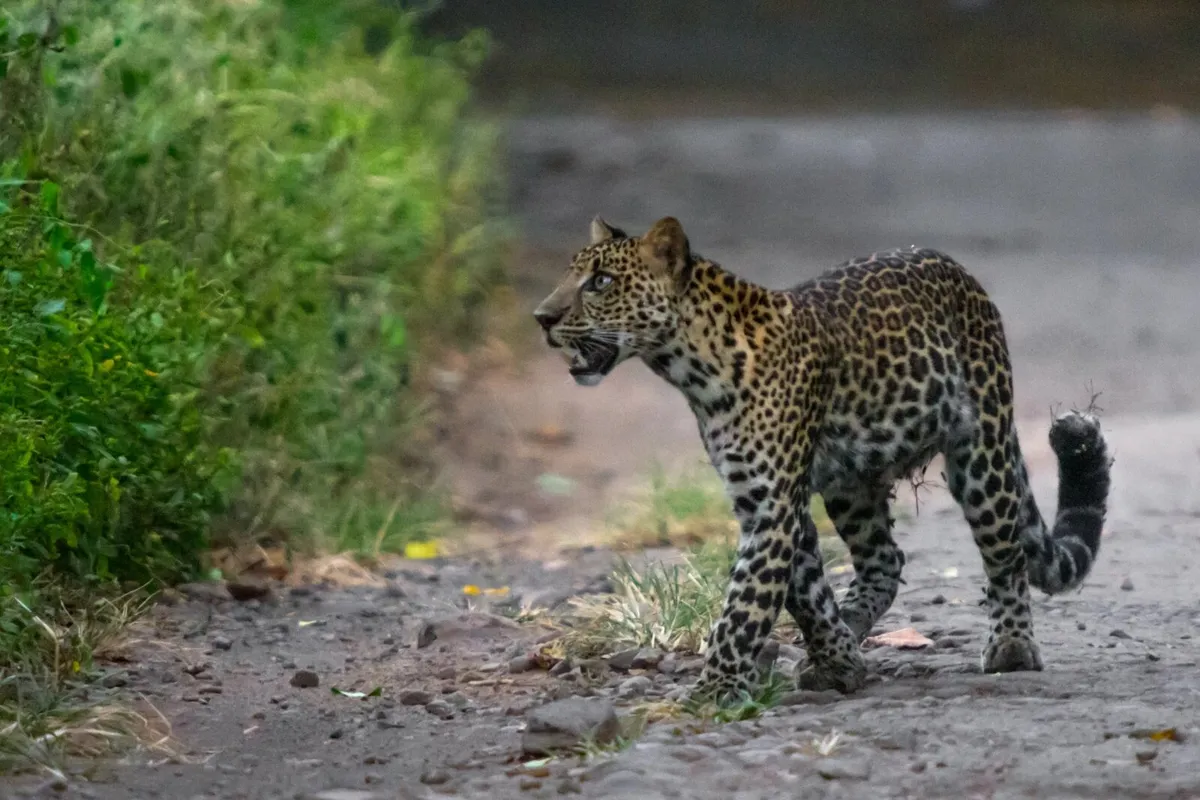
Imagine being one of the rarest big cats on Earth, and your preferred stomping ground is also home to 150 million people. That's the daily reality for the Javan leopard, a creature so elusive and endangered that fewer than 350 adults are thought to remain. And they're all crammed onto the island of Java, one of the most densely populated places on the planet.
New research from the University of Twente, led by Andhika Chandra Ariyanto, finally sheds some light on how these leopards pull off this improbable feat. Turns out, it's not just about pristine national parks. These leopards are the ultimate adaptable survivors, thriving in regrowing forests and by keeping a surprisingly diverse diet.
The Leopard That Said, "I'll Stay, Thanks."
While most large carnivores are vanishing as human development encroaches, the Javan leopard has, quite literally, dug in its claws. Ariyanto’s team used camera traps and computer models to track their movements and eating habits. What they found challenges some long-held conservation beliefs.
We're a new kind of news feed.
Regular news is designed to drain you. We're a non-profit built to restore you. Every story we publish is scored for impact, progress, and hope.
Start Your News DetoxFor starters, these leopards aren't picky eaters. Instead of relying on one specific prey, they munch on a variety of local critters. This flexibility is key when your hunting grounds are constantly shifting between farms, plantations, and ever-expanding towns. Protecting these varied prey communities, it seems, is just as crucial as protecting the big tracts of forest.
Even more surprising? Conservation often zeroes in on old-growth, untouched forests. But Ariyanto’s models showed Javan leopards making extensive use of secondary forests—areas that have been disturbed and are growing back—and even the managed lands right next to protected zones. These "lesser" forests aren't just bonus real estate; they're vital pathways, connecting isolated patches and preventing leopard populations from becoming genetic dead ends.
Connecting the Dots in a Broken Landscape
Java's rapid development means roads, railways, and cities are slicing its remaining forests into smaller, isolated islands. For an animal that needs to roam, this fragmentation is a death sentence, increasing the risk of local extinctions.
Ariyanto’s work provides a literal roadmap for survival. His maps pinpoint ecological corridors and the narrow choke points that break them. This shows planners exactly where reforestation efforts would have the biggest impact, opening up crucial routes for these endangered predators.
It’s a stark reminder that in a world increasingly shaped by humans, conservation can't just happen behind park borders. As Tiejun Wang, Ariyanto’s supervisor, put it: "A national park is no longer enough on its own. The future of the leopard will be decided in the places where people already live and work." And, apparently, where they rebuild forests, one tree at a time.