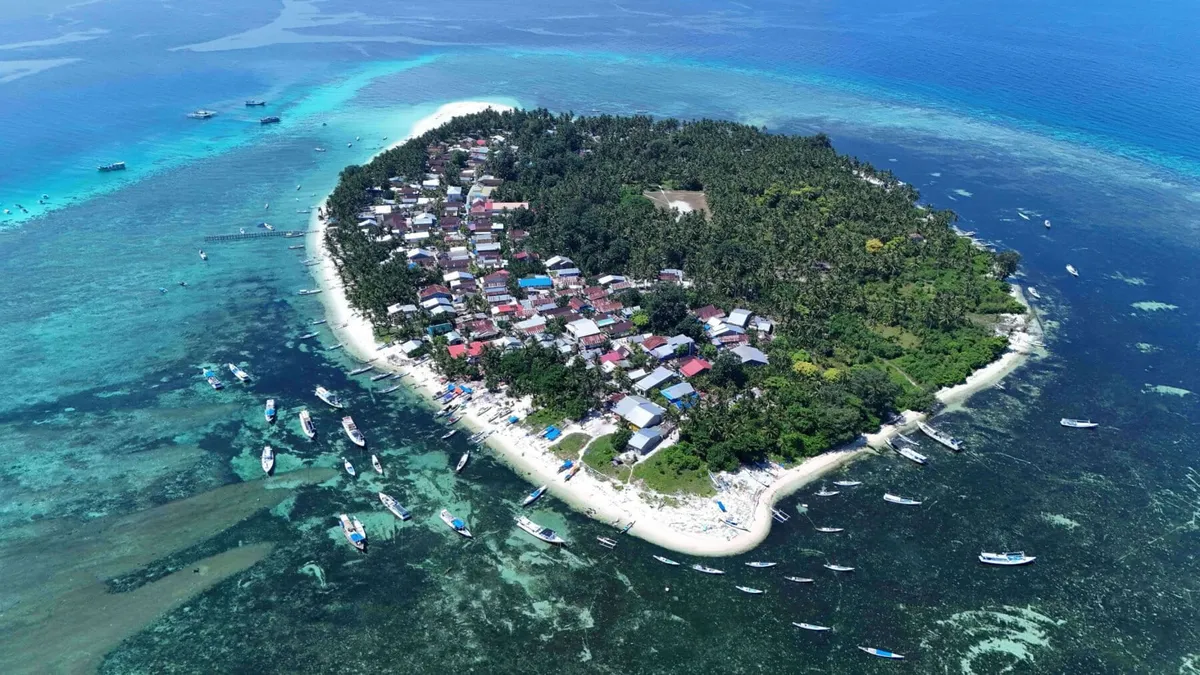
Turns out, some of the best ideas for saving our oceans aren't new at all. Across the small, vibrant islands of eastern Indonesia's Wallacea region, Indigenous communities are dusting off ancient traditions to protect their incredibly rich marine environments. And, apparently, it's working better than a lot of modern, top-down approaches.
A new documentary, "Jejak Wallacea," shines a spotlight on these efforts, showcasing how local wisdom is quietly achieving what larger conservation projects often struggle with. Think of it as a masterclass in letting the people who live by the sea actually lead the charge.

Time-Tested Tactics for a Thriving Ocean
These communities aren't just talking about conservation; they're doing it with methods that have been refined over generations. We're talking about things like strategically closing off fishing areas, enforcing customary laws (with some rather unique penalties), and getting their hands dirty restoring vital mangrove forests.
We're a new kind of news feed.
Regular news is designed to drain you. We're a non-profit built to restore you. Every story we publish is scored for impact, progress, and hope.
Start Your News DetoxTake Solor in East Nusa Tenggara. Here, locals have revived "marine granaries" (kebang lewa lolon) — traditionally protected ocean zones. They're nursing coral reefs back to health and setting up turtle hatcheries, all while putting a stop to destructive blast fishing. Vero Lamahoda, director of Yayasan Tanah Ile Boleng, points out that this isn't just conservation; it's a way of life, rooted deep in their local wisdom.
Then there's Wabula village in Southeast Sulawesi, which employs a system called Kaombo. This isn't just a suggestion box; it's a full-on access control system for precious seagrass beds and mangroves. Break the rules, and you might find yourself facing traditional fines or, even more memorably, a Kaleo Leo ritual. That's where suspects get dunked in the sea, and the first one to surface is declared guilty. Which, if you think about it, is both a public shaming and a pretty effective way to deter repeat offenders.
Over on Langkai and Lanjukang islands in South Sulawesi, communities have a genius move for octopus populations: they periodically close off marine areas to fishing. It's like giving the octopi a quiet spa day to recover and multiply. Because sometimes, the best way to catch more is to fish less.
It's a refreshing reminder that the solutions we need might not always come from a lab or a government office, but from the deep, practical knowledge of people who've lived harmoniously with their environment for centuries. And if that means a few traditional sea-dunkings, well, that's just part of the process.