Imagine a solar panel that doesn't just make electricity, but actually drinks carbon dioxide and spits out liquid fuel. Because apparently that's where we are now.
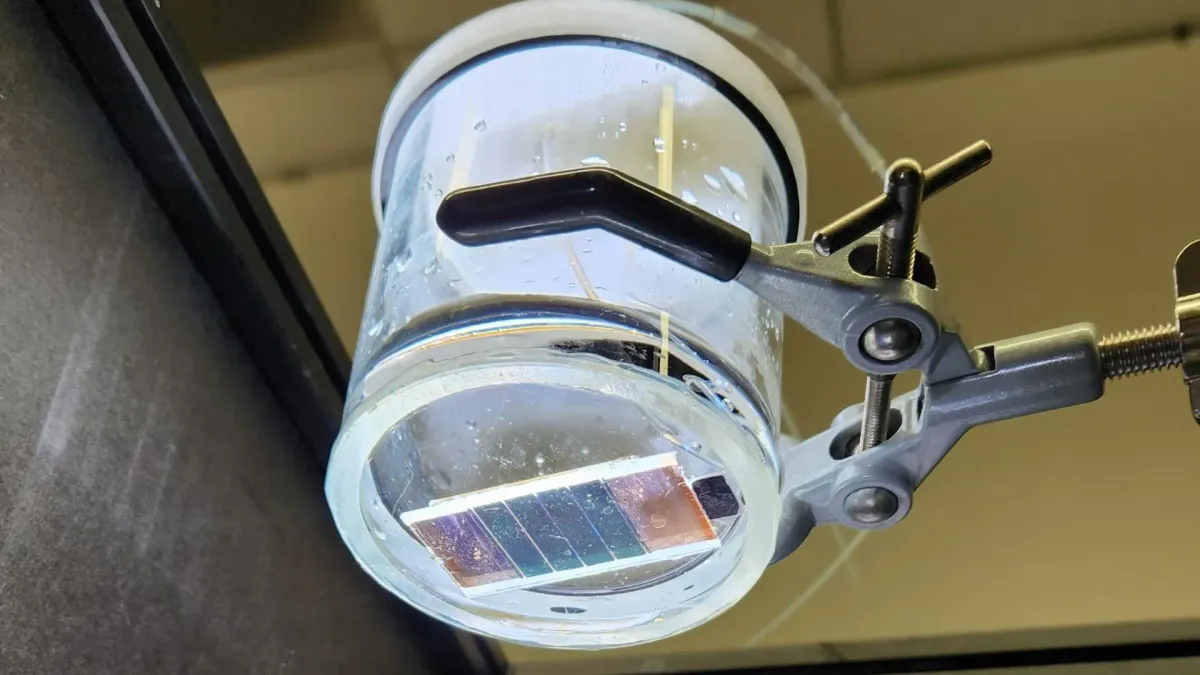
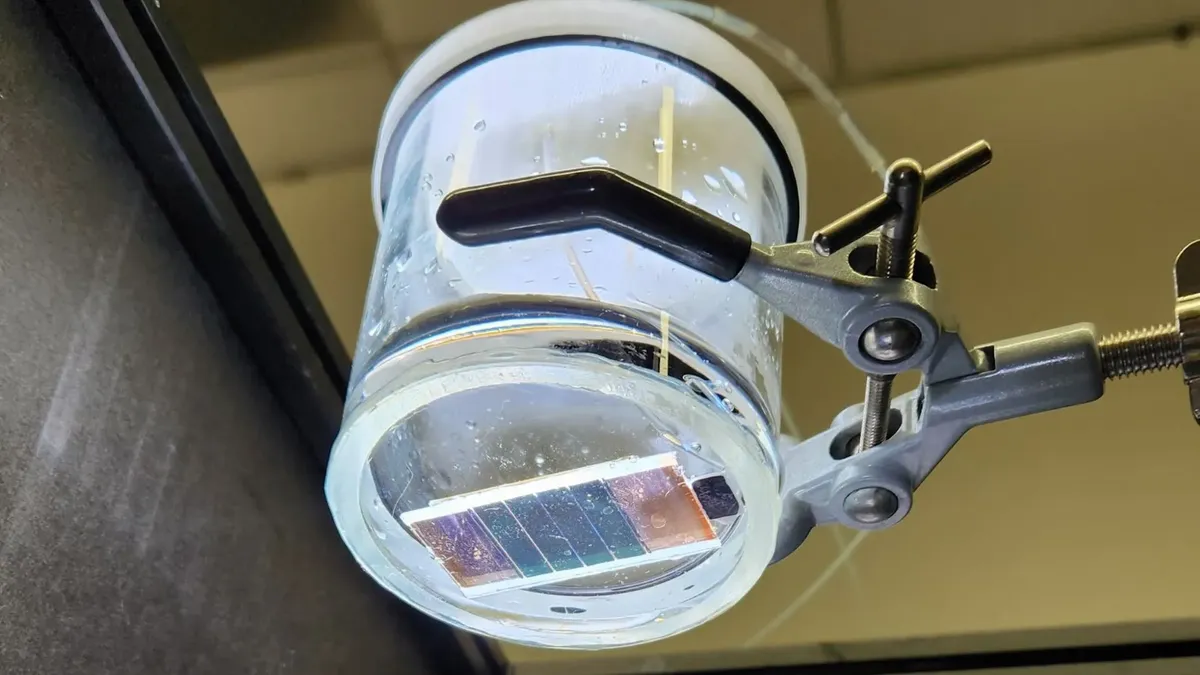
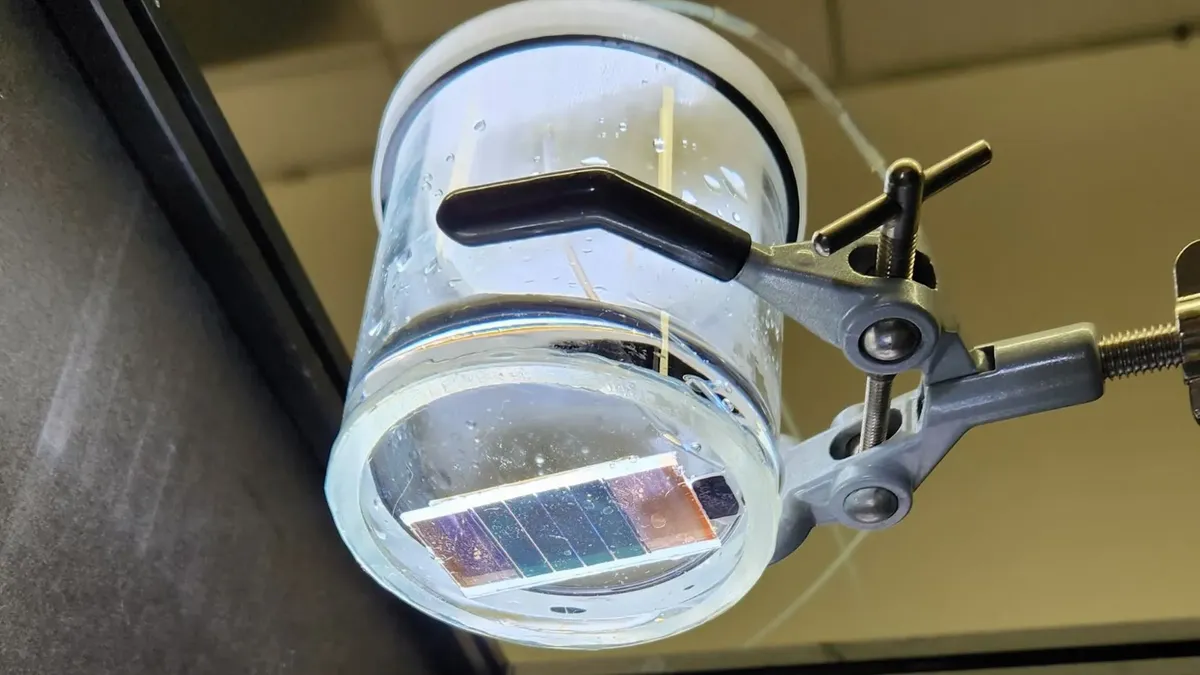
Researchers at Yale have cracked the code on an artificial leaf that takes CO2 and water, adds a dash of sunlight, and poof: methanol. This isn't just a neat party trick; it's a significant leap in artificial photosynthesis, promising cleaner fuels and a novel way to pull carbon from the air.
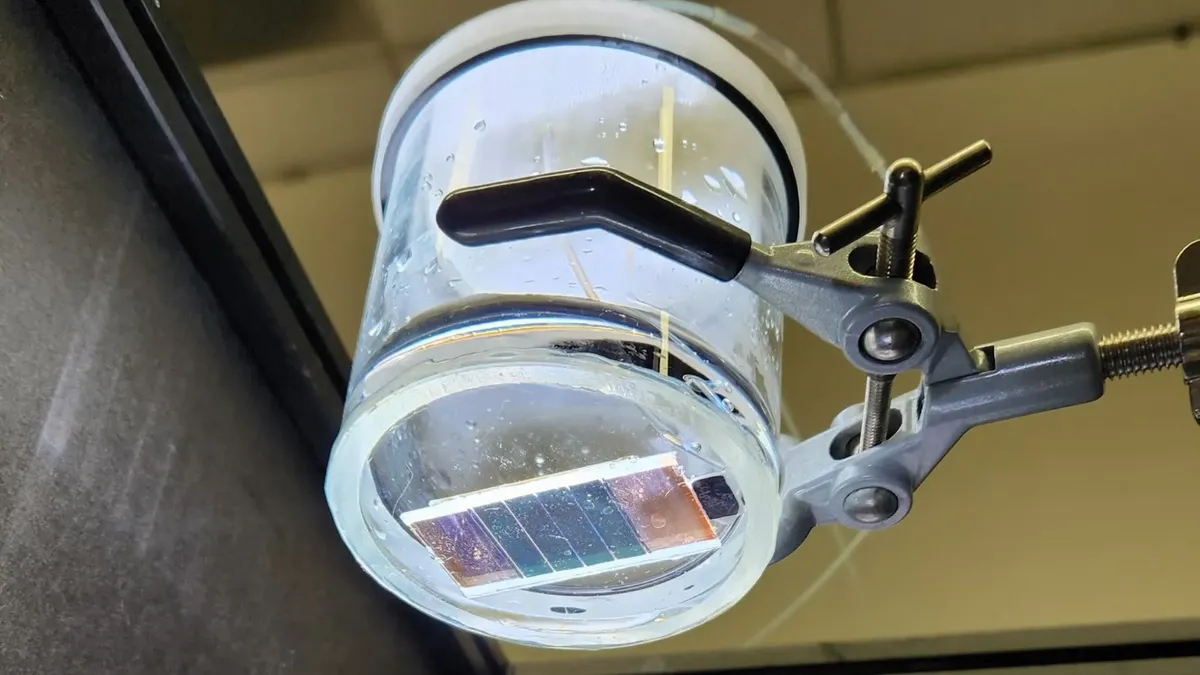
Unlike its predecessors, this new device doesn't need external electricity. It's a self-sufficient, sun-powered alchemist, turning light into liquid fuel far more efficiently than older systems designed to make alcohol fuels. Which, if you think about it, is both impressive and slightly terrifying in its potential.
We're a new kind of news feed.
Regular news is designed to drain you. We're a non-profit built to restore you. Every story we publish is scored for impact, progress, and hope.
Start Your News DetoxNature's Better Mousetrap
The team, a collaborative effort from Yale, UNC-Chapel Hill, NC State, and the University of Pennsylvania, basically took a page from nature's playbook. Yale chemistry professor Hailiang Wang noted, "This looks promising, with a concept comparable to what nature does." Except, you know, nature doesn't exactly fill up your gas tank with methanol.
While traditional solar panels generate electricity that needs to be stored or used immediately, this artificial leaf directly produces a liquid fuel. That's a huge advantage: liquid fuels are energy-dense, easy to store, and can flow through our existing pipelines and infrastructure without missing a beat. Methanol, specifically, is already a critical industrial chemical and a growing alternative fuel for shipping.
The Secret Sauce: Electron Highways
The magic happens thanks to a mashup of two of Wang's lab technologies. First up: a special catalyst developed in 2019. This cobalt phthalocyanine catalyst, perched on carbon nanotubes, performs a complex six-electron reaction to transform CO2 and water into methanol. Older catalysts were stuck doing simpler two-electron reactions, yielding less exciting stuff like carbon monoxide.
Wang describes the nanotubes as "electron highways," constantly feeding the catalyst as it works its magic. The second breakthrough is a new photoelectrode, crafted by doctoral researcher Bo Shang. This structure uses tiny silicon pillars cloaked in fullerene carbon material, boosting electron transfer and expanding the surface area where the reactions can occur.
Together, these components form what's being hailed as one of the most efficient silicon-based devices for light- and electricity-driven methanol conversion. Shang, who spent five years on this project, admitted that getting such a system to run on its own initially felt like a long shot. Watching it churn out usable fuel from sunlight, water, and CO2, however, was a rather satisfying payoff.
While commercial-scale production still faces some hurdles (because, science), this Yale-led system is a powerful proof-of-concept. It shows how engineered photosynthesis could transition from a lab curiosity to a scalable energy technology, potentially recycling industrial carbon and fueling our future with fewer emissions. Your car's next fill-up might just come from a leaf.