Every May and June, NASA satellites orbiting above Australia's Northern Territory often catch a glimpse of something slightly alarming: a whole lot of fires. Big, smoky blazes that look, to the untrained eye, like the beginning of a very bad day.
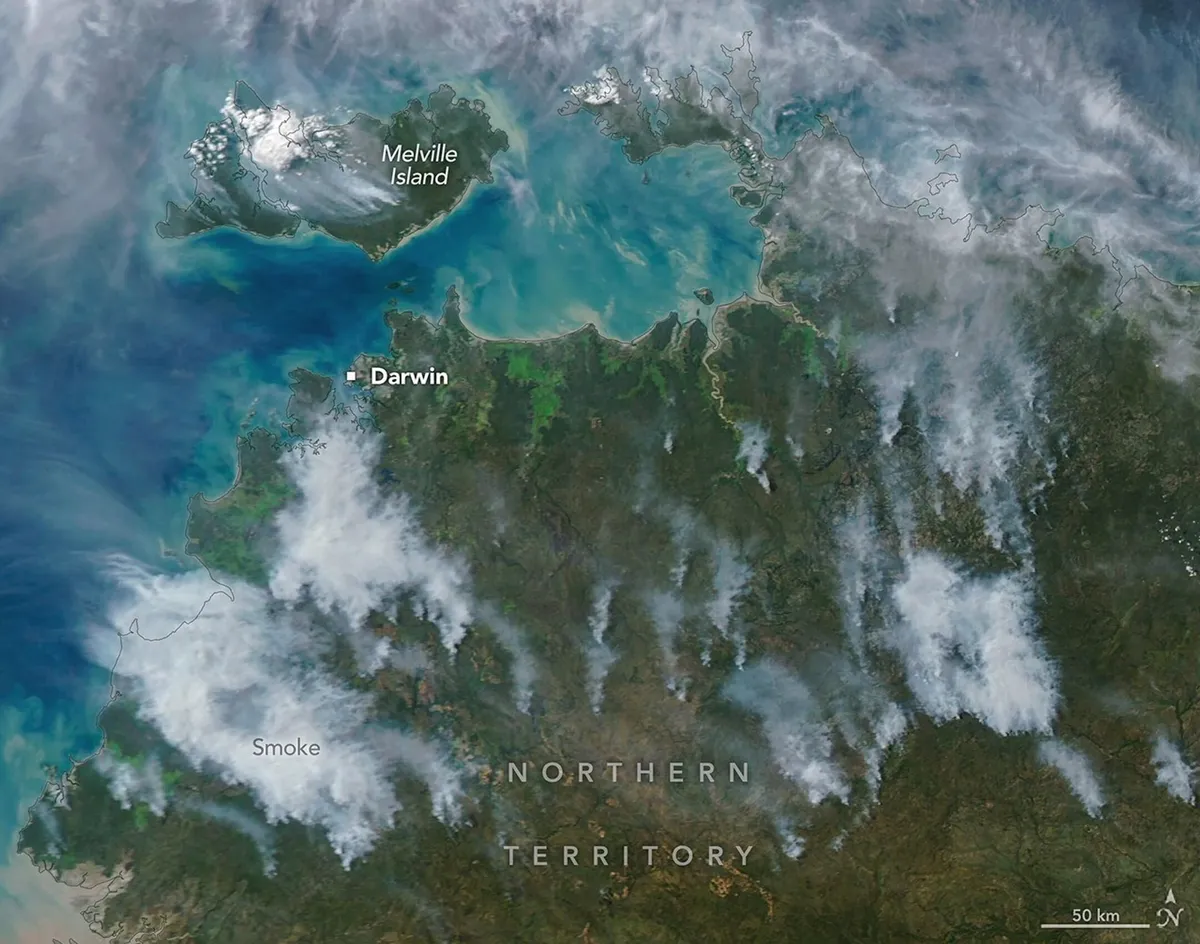
Like the one on May 28, 2026, when NASA's Aqua satellite snapped a picture of smoke plumes stretching across the Top End and Arnhem Land. Except, in a twist that would make most fire departments scratch their heads, these fires are largely intentional.
Fighting Fire with... More Fire
Just days before and after that May 28 image, satellites saw less smoke but a flurry of smaller hotspots. This particular pattern, location, and timing? It's the calling card of prescribed burns. Land managers are deliberately lighting these fires, usually in the morning, letting the smoke build up throughout the day. Which, if you think about it, is both impressive and slightly terrifying.
We're a new kind of news feed.
Regular news is designed to drain you. We're a non-profit built to restore you. Every story we publish is scored for impact, progress, and hope.
Start Your News DetoxThese controlled burns sweep through the region's tropical savannas, clearing out grasses, underbrush, and scattered trees. This isn't just random arson; these ecosystems are actually adapted to fire. It's a natural part of their life cycle, just a bit more... supervised these days.
Ancient Wisdom Meets Satellite Tech
For decades, land managers in Australia have been blending Indigenous land management practices with cutting-edge technology. Think: ancient wisdom meeting satellite imagery. Programs like the West Arnhem Land Fire Abatement project are essentially playing a very large, very fiery game of chess with the landscape.
The strategy is to intentionally burn off some of the savanna's underbrush early in the dry season (which runs from May to September, according to Australia's Bureau of Meteorology). This creates natural firebreaks and reduces the amount of highly flammable material, or 'fuel,' available. The goal? To starve off the more destructive, high-intensity blazes that tend to rage later in the season.
And it seems to be working. Research, while ongoing, suggests these prescribed burns are shifting fire activity earlier in the dry season. The result? Fewer catastrophic, high-intensity fires and a noticeable reduction in emissions. Because sometimes, the best way to prevent a disaster is to start a smaller one, on purpose. And with a very good plan.