Fixed-lens cameras are making a comeback. Many photographers want something better than a phone but don't want to carry heavy lenses. Sony's RX range has seen this trend, from small compacts to full-frame cameras. Now, Sony is bringing back its all-in-one superzoom bridge camera.
The RX10 V is the fifth camera in a series many thought was over. Its last version, the RX10 IV, came out in 2017 and was later stopped. There was no clear replacement. So, a new one arriving in 2026 is a big surprise. Like its older models, the RX10 V has one body and one lens. It can shoot everything from wide landscapes to distant birds.
You can frame shots using the 0.5-type Quad-VGA OLED viewfinder. There is also a 3-inch LCD touch monitor.
We're a new kind of news feed.
Regular news is designed to drain you. We're a non-profit built to restore you. Every story we publish is scored for impact, progress, and hope.
Start Your News DetoxWhat's New in the RX10 V
Almost everything behind the lens has changed. The camera uses processing and subject recognition from Sony's mirrorless Alpha cameras. It also has a grip and button layout from those cameras. Early reviews generally agree it's the best bridge camera available, even with little competition.
The RX10 V has a 20.1-MP 1-inch-type stacked Exmor RS CMOS sensor. It also features a BIONZ XR processor and a special AI unit. The lens is the same ZEISS Vario-Sonnar T* 24-600mm (35-mm equivalent) f/2.4-4 zoom from the RX10 IV. It includes optical stabilization and macro focusing down to about 3 cm (1.18 in) at the wide end.
The AI chip powers Real-time Recognition AF. This system identifies people, animals, birds, insects, cars, trains, and airplanes. It uses human pose estimation to track subjects even if they turn away or hide. Burst shooting reaches 30 frames per second with a blackout-free viewfinder. It can do up to 60 AF/AE calculations per second. A Speed Boost function can increase the frame rate during a sequence.
One missing feature is pre-capture. Several reviewers noted this is a real loss for wildlife photographers.
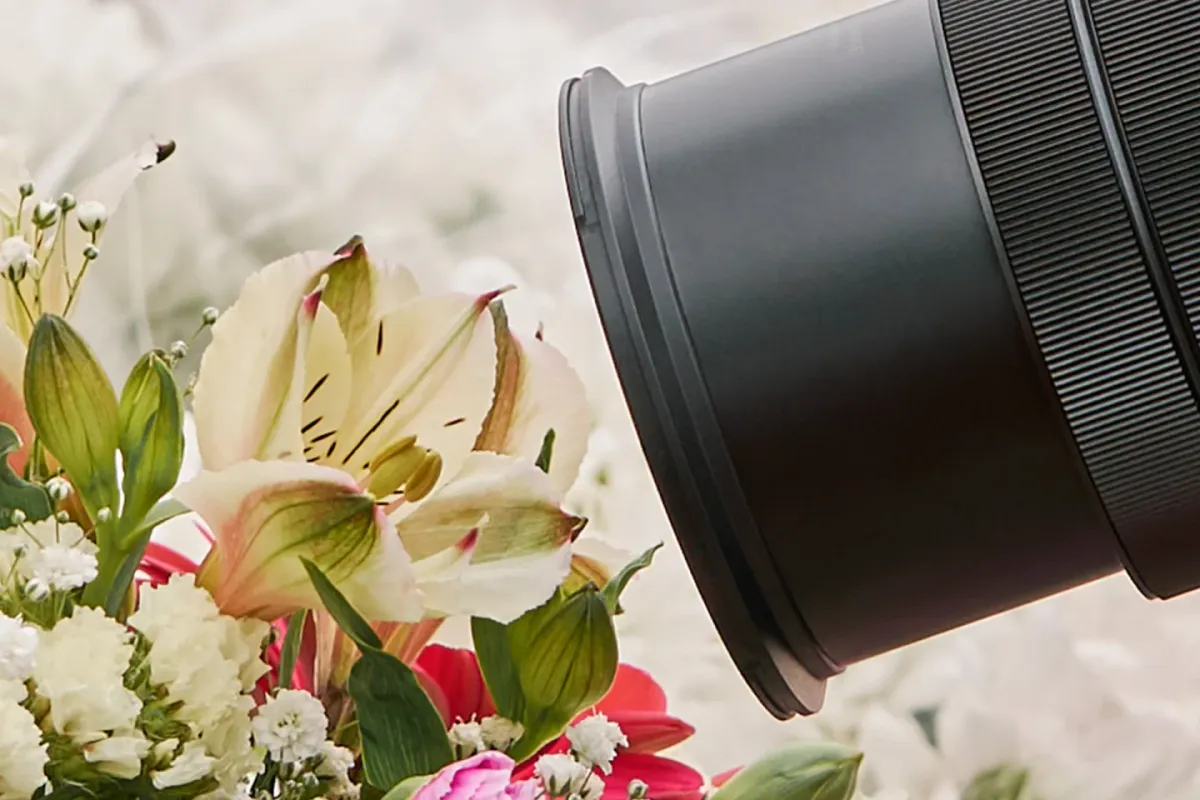
Macro focusing can get as close as 3 cm at 24 mm. This adds close-up capabilities to the camera's wide range of uses.
Video and Other Features
Video recording is another big improvement. The RX10 V records 4K at up to 120p in 10-bit. It supports S-Cinetone, S-Log3, and up to 16 user LUTs (Look Up Tables). It also has Active Mode stabilization and AI-driven Auto Framing.
Other features include a 3.68-million-dot Quad-VGA OLED viewfinder. There is also a 3-inch LCD touch monitor, a joystick, and an AF-ON button. The camera is weather-sealed and has USB-C. Its NP-FZ100 battery lasts for about 630 shots, which is about 50% more than before.
The RX10 V will be available in August for $2,299.99. This price, adjusted for inflation, is similar to the RX10 IV's launch price. However, an APS-C camera like the Alpha 6700 with a long telephoto zoom costs about the same.
Expert Opinions
This price point creates some debate in early reviews. PetaPixel found that image quality quickly worsened at higher ISOs. They concluded that being the best in a small category isn't the same as being great overall.
However, others, like wildlife photographer Steve Perry and TechRadar, were impressed. They praised the sharpness of the Zeiss lens, the large buffer, and the extensive zoom range without needing to carry a heavy 600-mm lens.
Both views can be true. The RX10 V won't replace a professional interchangeable-lens setup like Sony's Alpha 9 III. It isn't trying to. Instead, it lets you shoot a landscape, a portrait, and a bird in flight within minutes. You can do this with one camera body and no lens changes. This is an attractive option for travelers, birdwatchers, and anyone who has wished they brought a different lens.
Deep Dive & References
Sony RX10 V - Product Page