For decades, scientists thought they had a pretty good handle on HSL, a protein famous for its role in getting your body to release stored fat. You know, for energy. Turns out, HSL has been leading a double life. And this discovery is about to flip the script on how we understand obesity.
Think of your fat cells, or adipocytes, as tiny, incredibly organized fuel depots. Inside, they stash energy in neat little packages called lipid droplets. When you’re running on empty, say, after skipping breakfast, HSL gets the signal from hormones like adrenaline and starts breaking down those droplets, releasing fat for your organs to burn.
The Great Fat Paradox
Now, here’s where it gets weird. If HSL is all about releasing fat, you’d assume that without it, fat would just pile up. More HSL, less fat. Less HSL, more fat. Logical, right? Except, no. Studies in mice and even people with HSL gene mutations show the exact opposite: they lose fat.
We're a new kind of news feed.
Regular news is designed to drain you. We're a non-profit built to restore you. Every story we publish is scored for impact, progress, and hope.
Start Your News DetoxThis isn't good news, either. Too little fat leads to lipodystrophy, a condition where normal fat storage goes haywire, resulting in surprisingly similar health problems to obesity, like metabolic issues and heart disease. Both conditions, it seems, stem from fat cells that just aren't doing their job right.
HSL’s Secret Life in the Nucleus
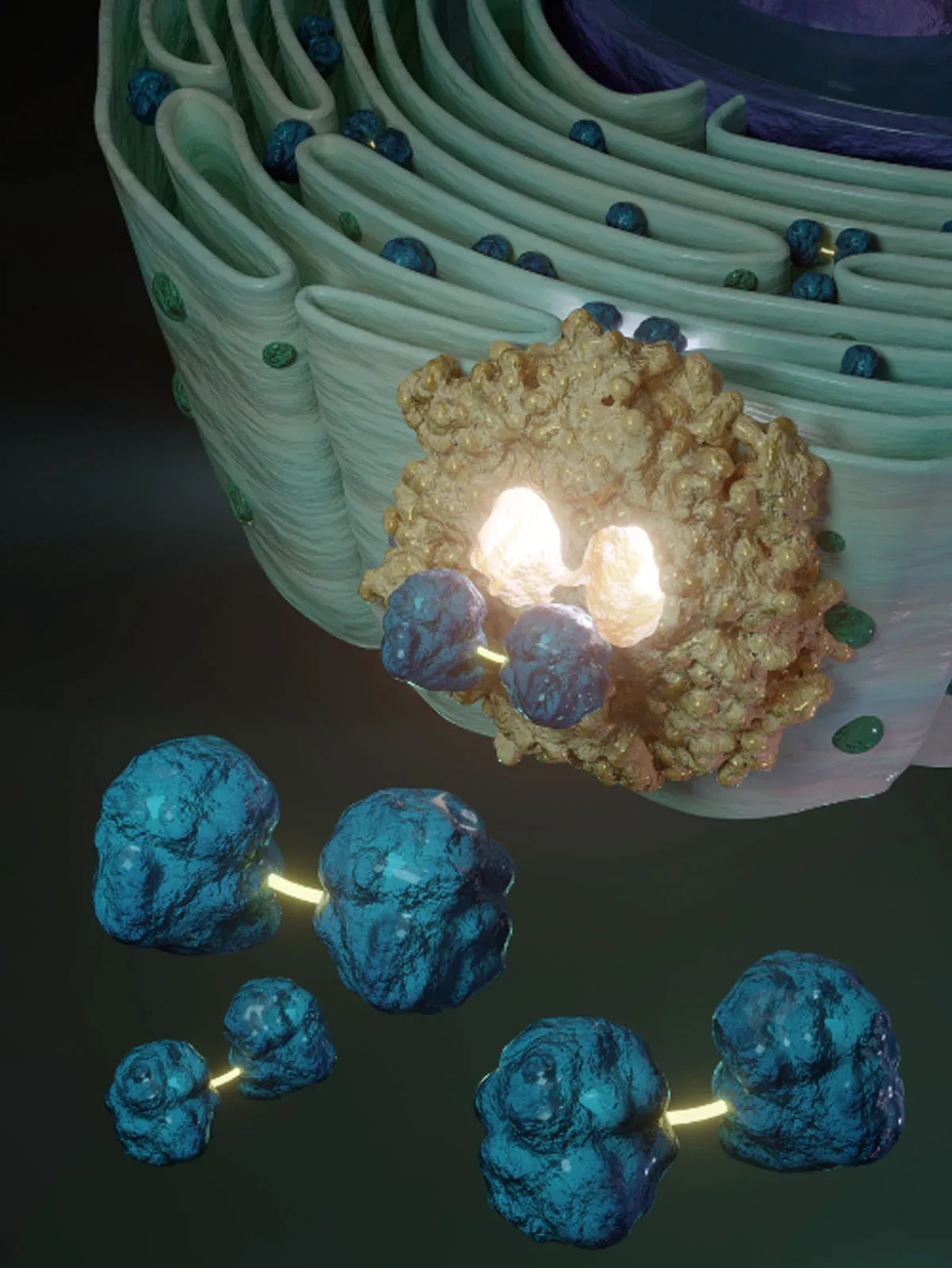
So, what gives? Researchers at the University of Toulouse, led by Dominique Langin, decided to dig deeper. They knew HSL hung out on the surface of those lipid droplets, doing its fat-releasing thing. But then, they found it: HSL was also chilling inside the nucleus of the fat cells.
The nucleus, for those who skipped biology that day, is the cell’s command center, controlling gene activity. Co-author Jérémy Dufau explained that in this inner sanctum, HSL teams up with other proteins to maintain healthy fat tissue. It’s not just releasing fat; it’s making sure the whole fat system works properly.
Even more fascinating: the amount of HSL in the nucleus is tightly regulated. When adrenaline tells HSL to go release fat from the droplets, it also tells it to leave the nucleus. It’s like a cellular bouncer, managing who’s on the dance floor and who’s in the VIP section. In obese mice, they found higher levels of HSL stubbornly staying in the nucleus, suggesting this delicate balance might be off when things go wrong.
Dominique Langin, who's been studying HSL since the 1960s, noted that for decades, HSL was just the fat-mover. Now, it's also the fat-tissue health manager. Which, if you think about it, is both impressive and slightly terrifying. It’s a bit like discovering your car’s engine also designs the road map.
This new understanding helps explain why people without HSL end up with too little fat, not too much. It also opens up entirely new avenues for tackling metabolic diseases like obesity, which currently affects a staggering 2.5 billion people worldwide. Because apparently that’s where we are now. And knowing how all the pieces fit together is the first step to fixing the puzzle.