You know glutathione as that powerful antioxidant, the cellular bouncer that neutralizes bad guys and repairs damage. Turns out, it's also a meticulous protein proofreader, a master iron regulator, and a critical player in keeping your cells (and maybe your brain) from going haywire. Because apparently, just being a cellular superhero wasn't enough.
Researchers at Rockefeller University, led by Kivanç Birsoy, have been steadily uncovering glutathione's surprisingly vast resume. They've already shown it's key for managing iron and that its balance in mitochondria—your cell's tiny power plants—can even influence cancer. Now, they've added another line to the CV: glutathione is absolutely vital for the endoplasmic reticulum (ER), the cellular factory that makes and processes proteins.
Their latest findings, published in Nature Cell Biology, suggest that when the ER gets its wires crossed, it can lead to some truly unpleasant outcomes, like neurodegenerative diseases and cancer. And guess what's at the heart of keeping those wires untangled? You guessed it: glutathione.
We're a new kind of news feed.
Regular news is designed to drain you. We're a non-profit built to restore you. Every story we publish is scored for impact, progress, and hope.
Start Your News DetoxThe Cell's Picky Proofreader
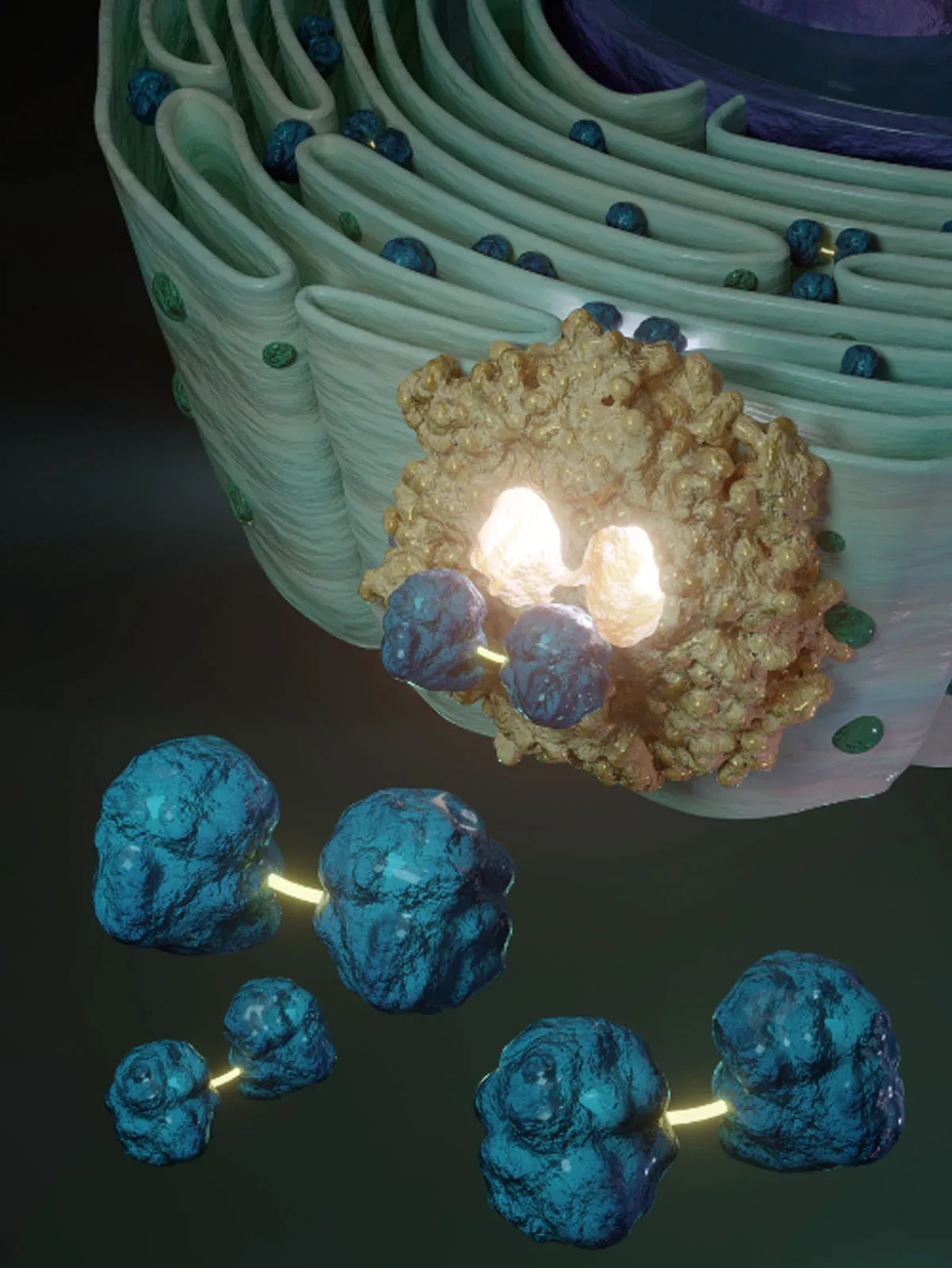
Think of the ER as the cell's bespoke tailor, crafting proteins into their perfect, functional shapes. Glutathione, it turns out, is the eagle-eyed quality control manager, ensuring every protein folds just right. If it doesn't, those misfolded proteins can pile up, and eventually, the cell decides it's had enough and calls it quits.
This isn't a simple job. Mitochondria prefer a reduced form of glutathione, while the ER—which works hand-in-glove with mitochondria to keep things balanced—needs a more oxidized environment. It's like trying to run a five-star restaurant where the kitchen needs to be hot, but the dining room needs to be cool. Maintaining that delicate balance is crucial.
So, how does the ER pull off this chemical tightrope walk? Researcher Shanshan Liu devised a clever way to peek inside the ER's chemical conditions. She found that the ER actively imports oxidized glutathione (GSSG) from the surrounding cellular fluid (cytosol) while simultaneously kicking out the reduced form (GSH). This constant exchange keeps the ER's environment perfectly oxidized, like a perfectly calibrated thermostat.
A genetic deep dive then identified SLC33A1 as the main transporter responsible for this molecular shuttle service. Further structural studies confirmed its role, explaining precisely how it ferries GSSG in and out. Before this, scientists knew the ER needed to be oxidized, but the how was a mystery. Now, we know there's a dedicated bouncer at the ER door.
Big Implications for Bad News
When this delicate proofreading system goes awry, the consequences can be severe. Misfolded proteins accumulate, leading to cell death. Identifying SLC33A1 as the key player gives scientists a new target for understanding and potentially treating diseases ranging from neurodegeneration to cancer.
One heartbreaking example is Huppke-Brindle Syndrome, a rare and severe brain development disorder that causes intellectual disability and movement problems. This condition has been linked to changes in the SLC33A1 gene, but its exact mechanism was unclear. Now, it appears these genetic hiccups disrupt the ER's glutathione balance, leading to protein misfolding during critical brain development.
Liu believes these findings could pave the way for new treatments, perhaps by using inhibitors to reduce glutathione overload. The research also offers hope for certain lung cancers, which are notoriously glutathione-hungry. Blocking the SLC33A1 transporter could cause GSSG to build up in cancer cells, essentially poisoning them from the inside out.
It’s a powerful reminder that understanding the microscopic dance of molecules within our cells can unlock major insights into human health. And sometimes, the quiet antioxidant you thought you knew is actually running the whole show.