The International Space Station, bless its aging heart, is set to become a very expensive, very specific deep-sea fishing lure in 2030. NASA plans to de-orbit it into the South Pacific, leaving a rather large, 15-nation-sized hole in low Earth orbit.
Meanwhile, China has apparently been taking notes. While the US is still figuring out its next move, China's Tiangong space station is not just planning for the future — it's planning a future that looks suspiciously like it might be the only future.
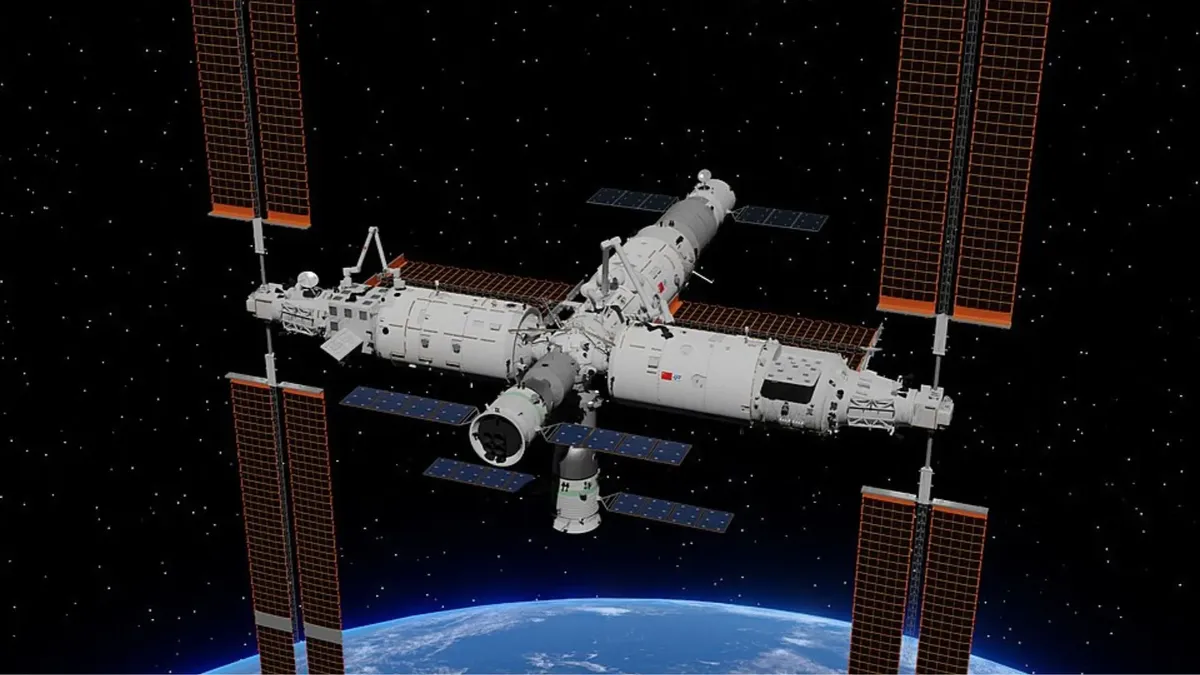
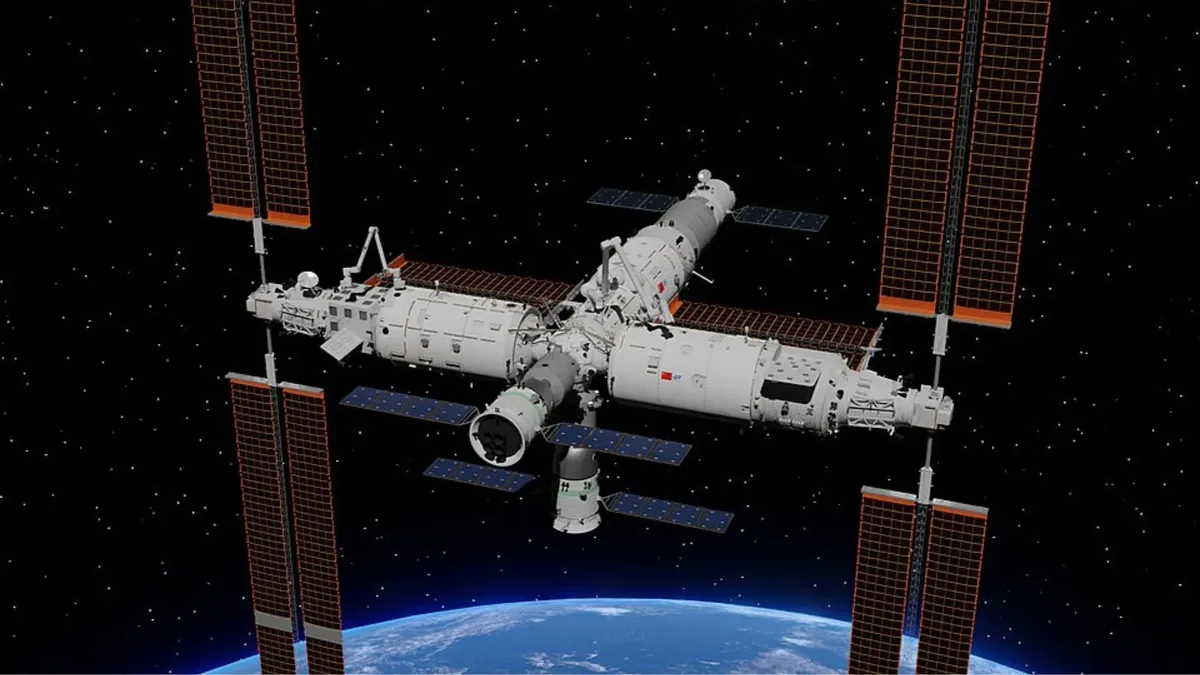
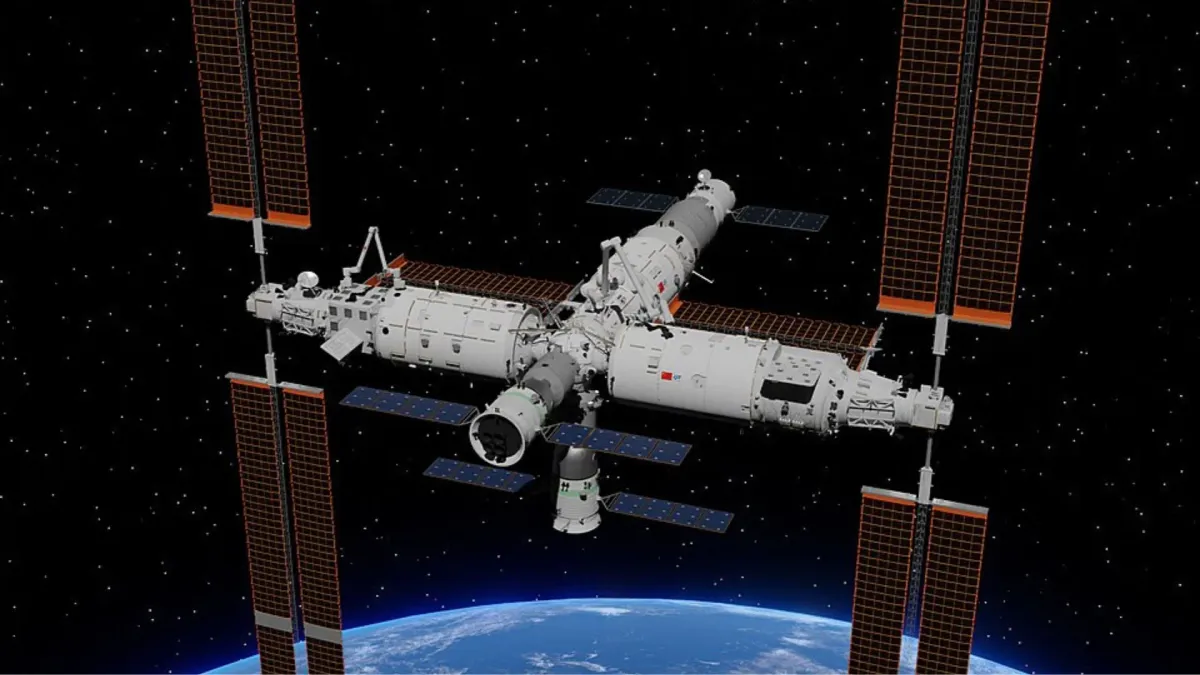
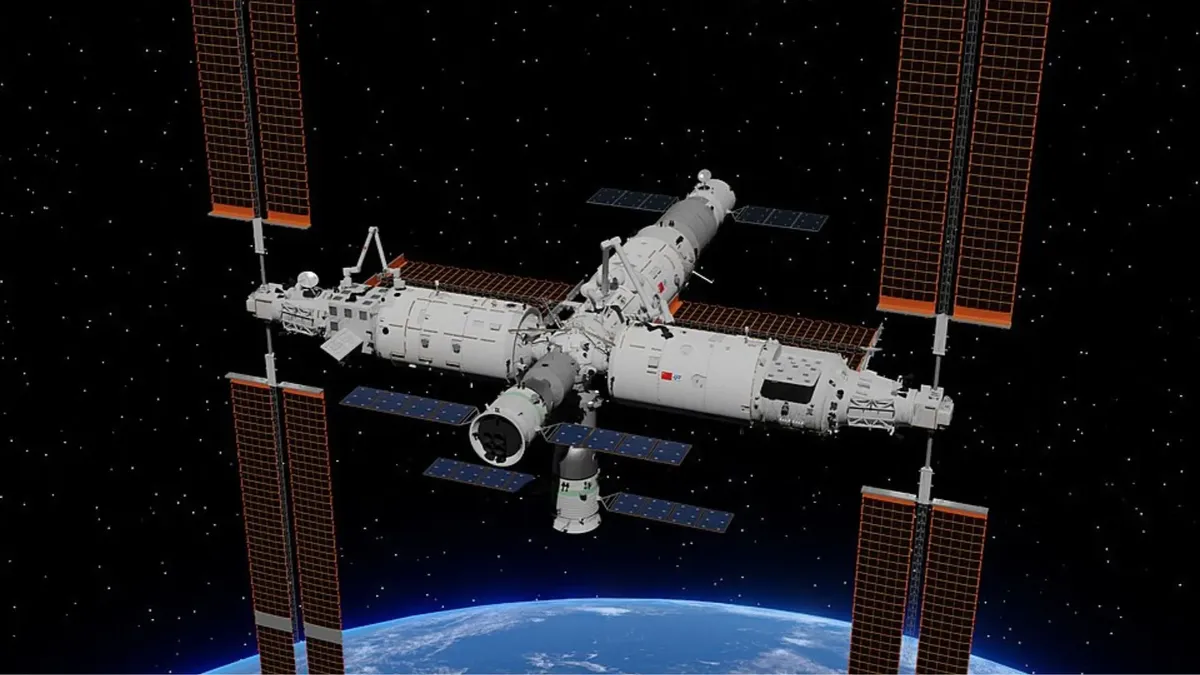
Forget the current T-shape. Tiangong is about to go full transformer, expanding into a six-module, cross-shaped behemoth weighing in at 198 tons. That's roughly the weight of 1,200 average-sized pandas, if pandas were made of high-tech space aluminum and ambition.
We're a new kind of news feed.
Regular news is designed to drain you. We're a non-profit built to restore you. Every story we publish is scored for impact, progress, and hope.
Start Your News DetoxThis isn't just a cosmetic change. The expansion kicks off with a new multifunctional module, which will be larger than the station's current core. Think of it as the ultimate space-age docking hub, complete with extra ports, a dedicated airlock for spacewalks, and the main attachment points for two new laboratory modules.
All of this will be ferried up by a more powerful Long March 5B rocket, because when you're building a galactic apartment complex, you need some serious heavy lifting. The station's robotic arms are also getting a precision and strength upgrade, because complex assembly in zero-g isn't for the faint of circuit board.
The New Space Diplomacy
Tiangong, which was finished in 2022 and is currently the size of a three-bedroom apartment, has already hosted over two dozen astronauts and more than 260 experiments. Its crew even set a new spacewalk record, clocking in at 9 hours and 6 minutes – a full 10 minutes longer than NASA's 22-year-old record. Because apparently, even in space, you gotta one-up the competition.
But here's where it gets really interesting: while US law currently prevents NASA from working with China on space endeavors, Beijing is positioning Tiangong as a "global laboratory" open to everyone. They're actively inviting more countries to send astronauts, with Pakistan, Hong Kong, and Macau potentially joining missions this year.
So, as the ISS prepares for its final plunge, Tiangong is not just expanding its hardware; it's expanding its guest list. And if its 15-year operational design holds, it could very well be the sole address for humans in low Earth orbit after 2030. Which, if you think about it, is both impressive and slightly terrifying.