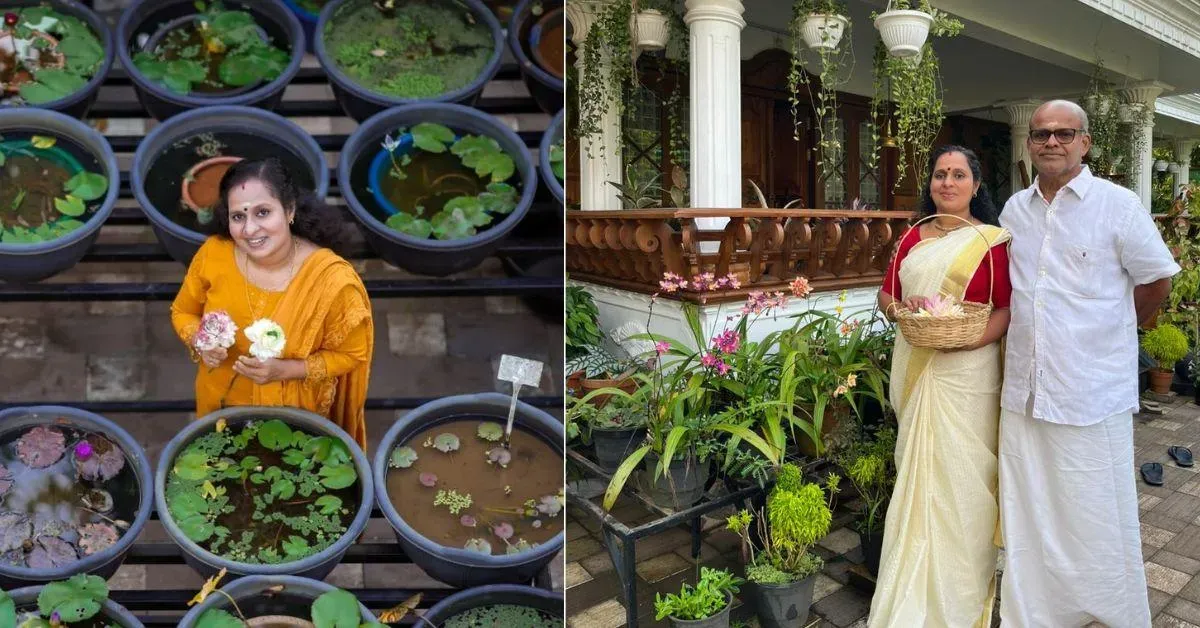
Lathika Suthan's home garden in Thrissur, Kerala holds nearly 100 lotus varieties and 80 water lily species — many blooming in India for the first time. What started as a childhood passion has become a quiet, thriving business that now brings in Rs 40,000 a month.
She grows specimens like the Ancient Maple Leaf lotus and the 1,000-petal variety, plants so rare that their first Kerala blooms drew magazine features and social media attention. People began showing up at her door asking how to grow them. "Through this, many people came to know about lotuses and started contacting me," Lathika explains. "I started giving tubers to individuals keen on cultivating these exquisite plants. And then I thought, why not make a business out of it?"
From Classroom to Nursery
Lathika was a primary school teacher for decades, but gardening never left her. She'd loved it since childhood — that simple joy of watching something grow. In 2018, at 51, she made the shift from classroom to full-time cultivation.
We're a new kind of news feed.
Regular news is designed to drain you. We're a non-profit built to restore you. Every story we publish is scored for impact, progress, and hope.
Start Your News DetoxWhat she discovered was a gap in the market. "There were a hundred varieties of lotus and water lilies, but only a few were available in India," she says. "The rest were imported from Thailand, Vietnam, and Japan." She began buying saplings from nurseries across the country, learning which varieties would eventually drop in price as they became established. A lotus tuber that cost Rs 20,000 when first introduced now sells for Rs 250.
She attended workshops through the agricultural department, asked questions of other growers, then experimented herself. The learning happened in the soil, not in theory.
Now she sells over 150 lotus seedlings and 100 water lily seeds monthly — bulk orders come from hospitals, hotels, and resorts. Her approach to cultivation is deliberately low-tech. She uses dried cow dung, used tea leaves, powdered eggshells, and occasionally DAP fertilizer. "Compared to other plants, managing lotuses and water lilies is way easier," she notes. "Once planted, it will start growing and giving flowers without much care."
Her husband Suthan, who retired from work in Qatar to support the business, has become her partner in both the garden and the operation. "I am deeply inspired by her work and I take pride that she is embracing her childhood passion even at this age," he says. They water the exotics together, repot seedlings together, and have built something that feels less like a job and more like a shared life.
Beyond the income, Lathika speaks of something quieter. "More than money, I feel very content and happy with each bloom of flowers," she says. "These plants are a respite to me from the daily stress." It's a reminder that some of the most sustainable businesses grow from the things we'd do anyway — the ones that feed something deeper than the bank account.