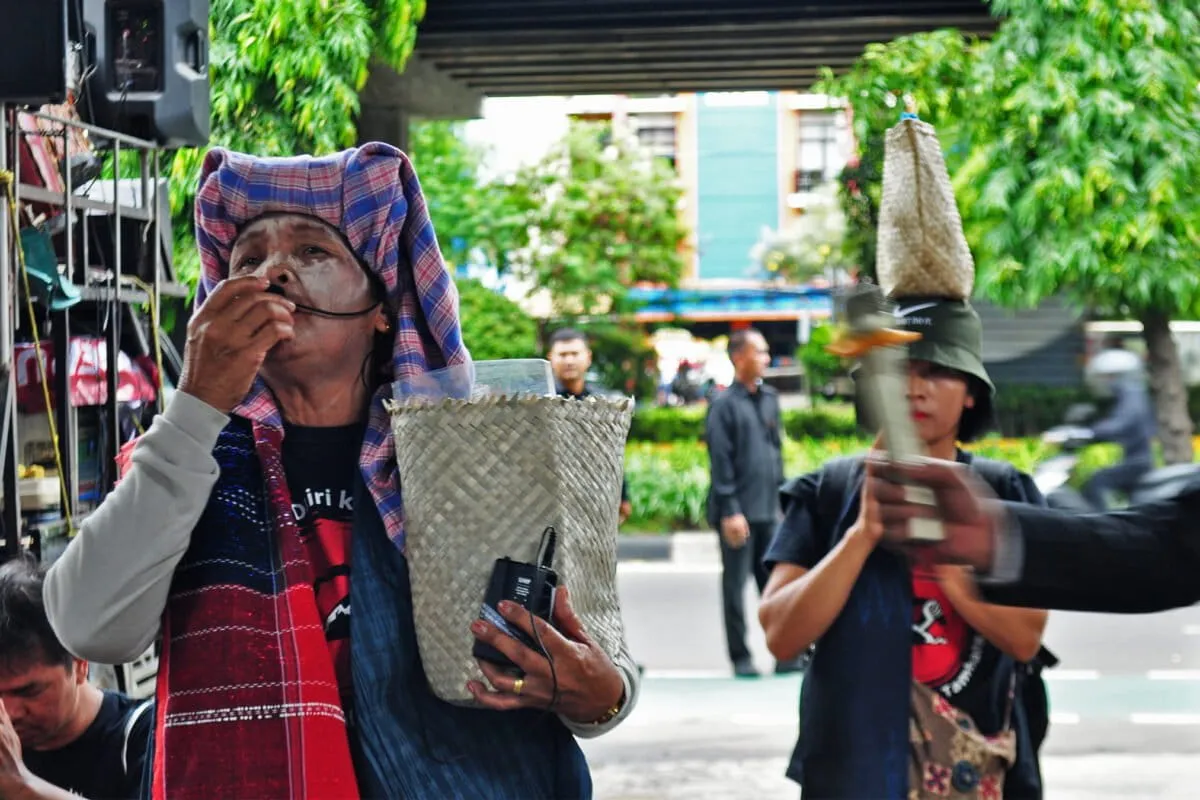
Rainim Purba was in her mid-30s when the rumor reached her village in 1996. A zinc mining company was coming to Pandiangan, a farming community in North Sumatra. The company dangled promises—jobs hauling supplies, work in the mines—but Rainim and the women around her saw something else: a tailings dam planned for earthquake-prone land, on unstable volcanic ash, in a region prone to landslides.
She didn't know it then, but she was about to spend the next 25 years in court.
A Legal Precedent Built by Women
In May 2025, Indonesia's environment ministry revoked the mining permit for PT Dairi Prima Mineral. It was a victory that mattered far beyond one village. For the first time, a court had confirmed that environmental permits issued under Indonesia's controversial 2020 law could actually be challenged—and overturned.
Rainim and 11 other villagers, mostly women farmers, brought the lawsuit. They had to prove what the mining company had never properly disclosed: the genuine risks. When PT DPM first came to the villages of Pandiangan and Longkotan, there was no formal environmental outreach, no written assessment of what could go wrong. "They just gave us a verbal notification, no outreach," Rainim recalls.
We're a new kind of news feed.
Regular news is designed to drain you. We're a non-profit built to restore you. Every story we publish is scored for impact, progress, and hope.
Start Your News DetoxWhat made this case significant wasn't just that they won. It was that women—the people most dependent on the land's stability and fertility—led the legal strategy. They understood the stakes in a way that transcended the abstract language of permits and environmental impact. A failed dam in earthquake country doesn't just affect mining operations. It affects water, soil, the ability to farm.
The 2020 law that created these permits had been criticized by environmental groups as too permissive, too quick to approve industrial projects without adequate public input. This ruling cracks open that assumption. It says the law's permits aren't untouchable. Communities can challenge them. Courts will listen.
Indonesia is one of the world's largest mining nations, and legal precedents here ripple outward. Other communities facing similar industrial projects—and there are many across Southeast Asia—now have a clearer path to court. The case also signals something quieter but equally important: that the people who live closest to the land often understand its vulnerabilities better than the companies seeking to extract from it.
For Rainim and the women of Pandiangan, 25 years of meetings, documents, and courtroom arguments ended not with celebration but with something more durable: a legal foundation that others can now build on.