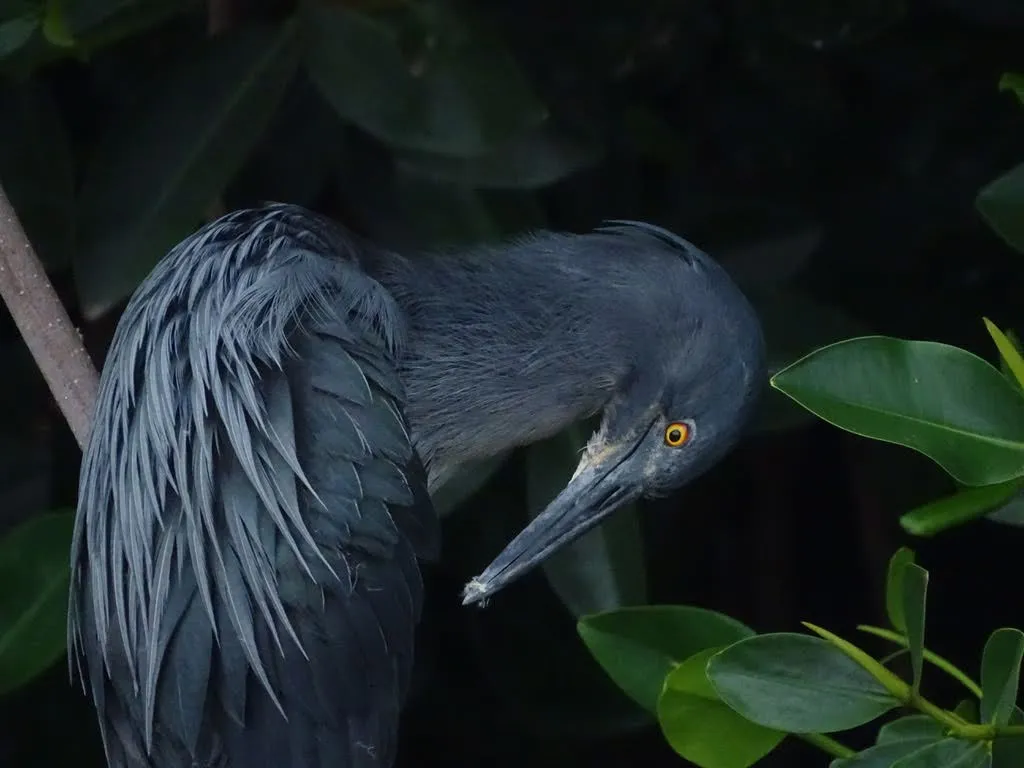
In 2025, researchers at the California Academy of Sciences did something that feels increasingly rare: they found creatures nobody knew existed. Working with scientists across six continents, they formally described 72 species new to science — a lava heron in the Galápagos, sea slugs from the deep ocean, beetles from places we haven't fully explored yet.
The list reads like a naturalist's cabinet of curiosities. Fifteen beetles. Eleven sea slugs. Twelve bush crickets. Six geckos. Seven fishes. A skink. Plants, mollusks, wasps, worms, a cicada. One specimen — a cardinalfish pulled from the ocean during an expedition that included Fidel Castro in 1997 — sat in the academy's collection for nearly 30 years before anyone formally described it this year.
What makes this work quietly radical is what it reveals about the gaps in our knowledge. Less than 20% of all species on Earth have been formally documented. That means roughly 80% of life on this planet remains unnamed and uncategorized. More urgently, many species are likely disappearing before science even gets their names down.
We're a new kind of news feed.
Regular news is designed to drain you. We're a non-profit built to restore you. Every story we publish is scored for impact, progress, and hope.
Start Your News Detox"Discoveries like these remind us that much of life on Earth remains undocumented and therefore unprotected," said Shannon Bennett, a virologist and chief of science at the California Academy of Sciences. The San Francisco-based institution holds 46 million specimens in its collection — a kind of biological archive that's become more valuable as technology improves. Researchers can now extract DNA from century-old preserved samples, identify patterns, and solve mysteries that previous generations couldn't touch.
The academy's work matters because naming something is the first step toward protecting it. You can't write a conservation plan for a species that doesn't officially exist in the scientific record. You can't track its decline or understand its role in an ecosystem if nobody's documented what it is.
As climate change accelerates habitat loss, this work has taken on new urgency. The pace of discovery is racing against the pace of extinction. Each species the California Academy and its collaborators describe is a thread in the larger tapestry of life on Earth — and a reminder that there's still so much we don't know about the world we're trying to save.