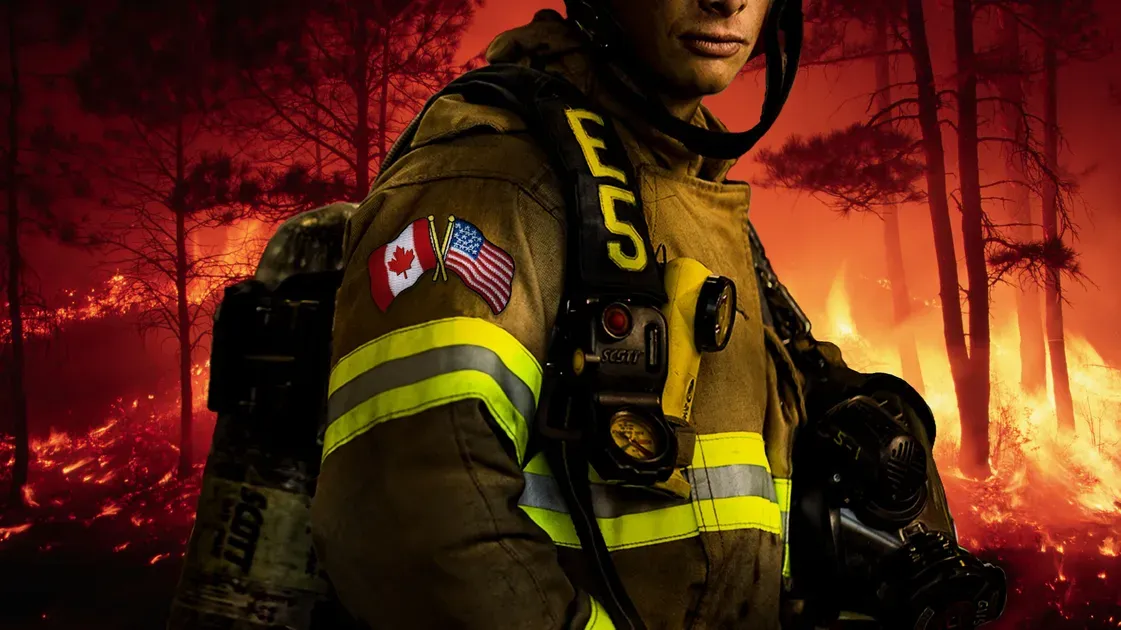
On a Monday, as President Donald Trump criticized Canada for wildfire smoke, a different event unfolded 1,700 miles away. In Colorado, a 300-mile funeral procession honored Nicholas Dale, a Canadian firefighter. He died on July 12 while battling a wildfire in the state.
Joy Wobido was among those who paid their respects. She told CBS Denver that Dale came from another country and gave his life to save people. She wanted to show her support for him and his family.
A History of Cross-Border Aid
Dale was one of thousands of Canadian firefighters who have helped fight American fires. This cooperation dates back to the 1982 Canada/United States Reciprocal Forest Fire Fighting Arrangement.
We're a new kind of news feed.
Regular news is designed to drain you. We're a non-profit built to restore you. Every story we publish is scored for impact, progress, and hope.
Start Your News DetoxData from the Canadian Interagency Forest Fire Centre shows that 3,386 Canadian firefighters have helped in the U.S. since 1988. This number does not include Canadian firefighting aircraft and their crews.
American firefighters also regularly go to Canada when needed. In 2000, a bad year for U.S. wildfires, over 1,300 Canadian firefighters crossed the border. They also helped in eastern Washington in 2015, and in Montana in 2017 and 2019. In 2020, 594 Canadian firefighters went to the U.S., and another 40 helped in Washington in 2021.
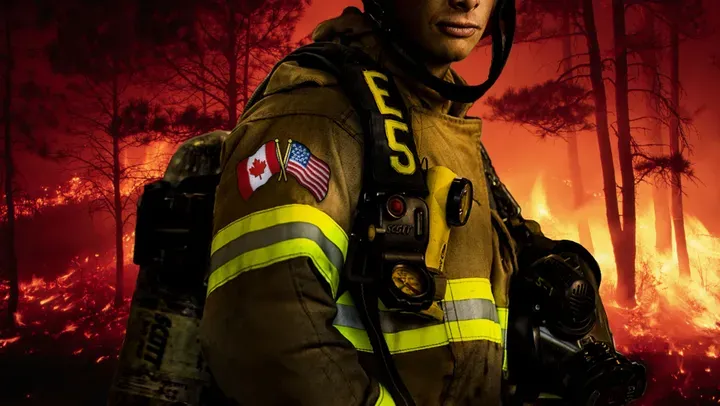 Illustration: HuffPost; Photos: Getty
In 2025, when the Palisades fire broke out in Los Angeles, 40 wildland firefighters from Alberta and two support staff helped. A crew from British Columbia also joined. Quebec has leased Canadian-made "Super Scooper" air tankers to Los Angeles every fall since 1993.
Political Blame and Climate Change
Dale's sacrifice and the help from other Canadian firefighters seem to have been overlooked by some American lawmakers. Three days after Dale's death, four Michigan Republican Representatives sent a letter to Canadian Prime Minister Mark Carney. They accused Canada of being a bad neighbor for not addressing the causes of the fires.
They wrote that if Canada would not manage its forests, the U.S. would act on its own. They added that sovereignty comes with the responsibility to prevent disasters from crossing borders.
One of the biggest reasons for Canada's fires is climate change. Climate change makes fire seasons longer, fires hotter, and they spread faster. It also makes them harder to put out. Fires are now spreading into remote areas like the Arctic and sub-Arctic tundra, which historically saw less burning.
The Republican letter did not mention climate change. Instead, it blamed Canada for not thinning forests, not doing enough prescribed burns, and "inadequately enforcing against arson."
Canada's boreal forest is 1.5 billion acres. Expecting anyone to thin it, or "rake and clean" it, as Trump suggested, is unrealistic. Ontario Premier Doug Ford suggested that American politicians who complain should instead send support and help. He noted that Canada has done the same for its American friends.