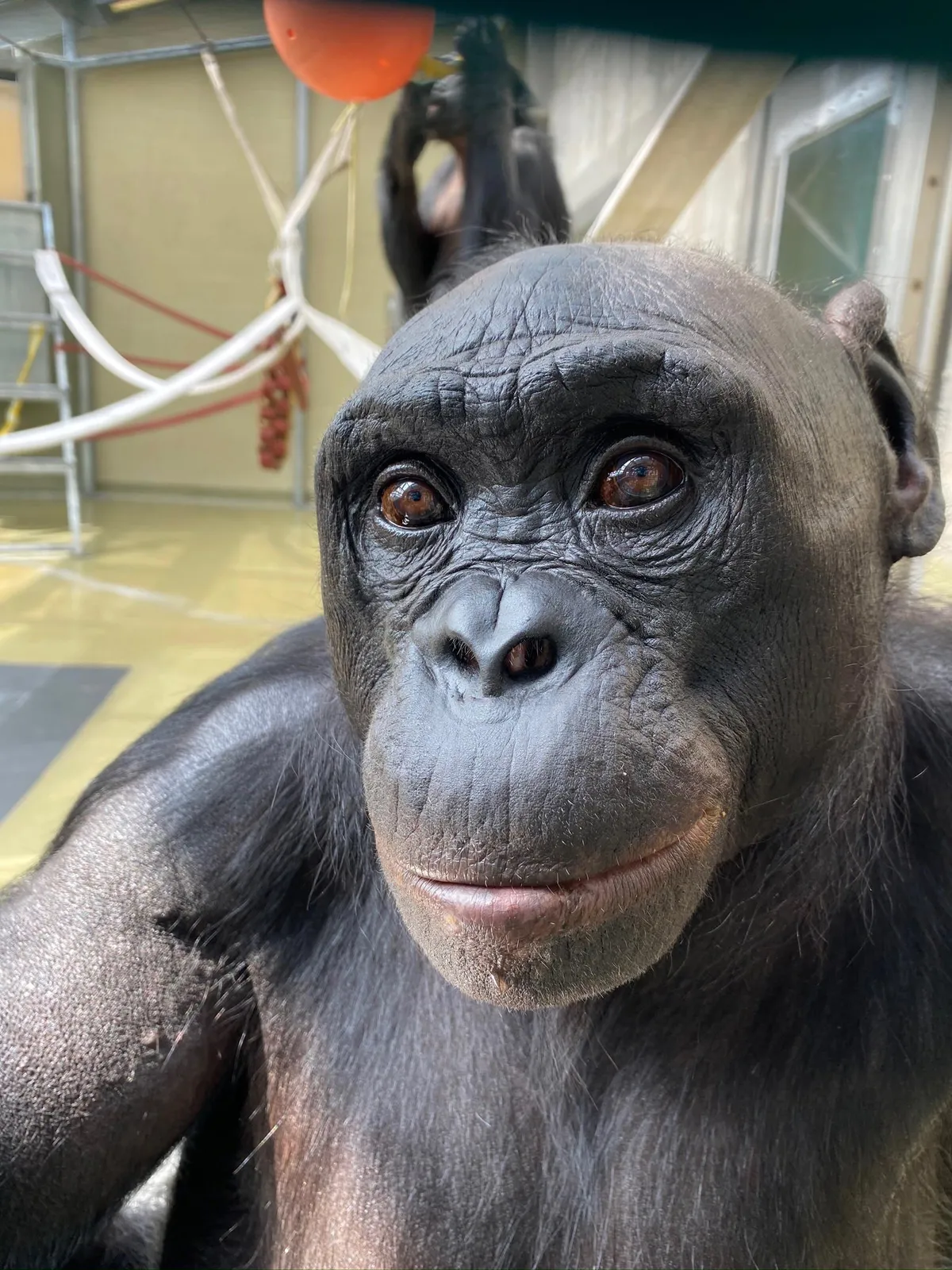
Kanzi, a 43-year-old bonobo at Ape Initiative, sat across from a researcher with an empty pitcher and two clear cups. The experimenter poured nothing into both cups, then pretended to empty one. Kanzi pointed to the cup that should still hold the imaginary juice. He was right.
This simple tea party game, repeated across three carefully designed experiments at Johns Hopkins University, has upended a foundational assumption in science: that imagination—the ability to conceive of things that don't exist—belongs to humans alone.
The experiments that changed the question
For decades, researchers knew that human children begin pretend play around age two. They'd heard anecdotal reports of apes engaging in make-believe in both wild and captive settings. But no one had tested it rigorously. Christopher Krupenye and Amalia Bastos decided to find out whether Kanzi, who can understand spoken English and respond by pointing, could actually grasp pretense.
We're a new kind of news feed.
Regular news is designed to drain you. We're a non-profit built to restore you. Every story we publish is scored for impact, progress, and hope.
Start Your News DetoxThe first test seemed almost too simple to be meaningful. Kanzi watched invisible juice get poured, watched one cup get emptied of nothing, and pointed to the right cup anyway. But the researchers knew this wasn't enough. He might have just been following a pattern. So they ran a second test: this time, one cup held real juice, the other held only imagination. Kanzi nearly always chose the real juice. He understood the difference between what was there and what wasn't—and he could track both.
In the third task, they switched from juice to imaginary grapes. Again, Kanzi indicated the correct location, though less consistently. The pattern held.
"It's extremely striking that the data seem to suggest that apes, in their minds, can conceive of things that are not there," Bastos said in the study, published in Science in February. "Kanzi is able to generate an idea of this pretend object and at the same time know it's not real."
What this actually means
This matters because imagination isn't trivial. It's the foundation of planning, daydreaming, worry, hope—the whole texture of human mental life. If Kanzi has it, then the roots of imagination likely stretch back 6 to 9 million years to a common ancestor we shared with bonobos and other apes. We're not uniquely imaginative. We're just the species that built the most elaborate structures on top of it.
"Imagination has long been seen as a critical element of what it is to be human," Krupenye noted. "But the idea that it may not be exclusive to our species is really transformative." The implication is quieter but deeper: other animals aren't trapped in the present moment, robotically responding to what's in front of them. They have inner lives that contain things that don't exist yet.
The research team is already planning the next phase—testing whether other apes can do this, and whether they can imagine future events or think about what others might be thinking. Those questions could reveal how far imagination extends through the animal kingdom, and how much of our supposedly unique human nature we actually share.