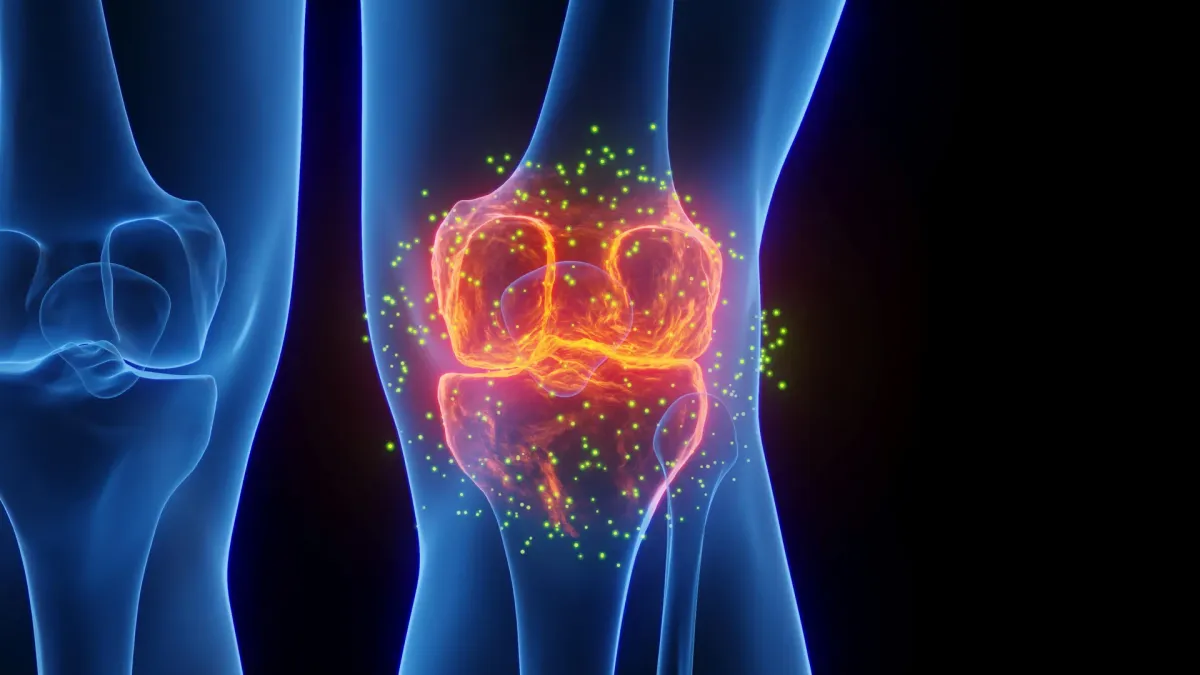
A new, minimally invasive treatment is helping people with chronic knee pain. It allows them to return to activities like gardening and cycling without needing knee replacement surgery. Early studies show this procedure, called genicular artery embolization (GAE), can reduce inflammation and provide years of relief.
Cynthia Schraf-Fletcher, 74, found the GAE treatment for her right knee "remarkably" successful. She says the improvement is similar to the total knee replacement she had on her left knee. Schraf-Fletcher noted that everyday activities are now much more enjoyable due to less pain. Dr. Leigh Casadaban, a professor of radiology at the University of Colorado Anschutz School of Medicine, performed her procedure.
How GAE Works
GAE is an outpatient procedure. It reduces chronic knee pain by decreasing blood flow to inflamed areas in the joint. The treatment targets abnormal blood vessels linked to inflammation, which helps lessen swelling and discomfort.
We're a new kind of news feed.
Regular news is designed to drain you. We're a non-profit built to restore you. Every story we publish is scored for impact, progress, and hope.
Start Your News DetoxDr. Casadaban explained that options for knee osteoarthritis usually include medications, physical therapy, steroid injections, or total knee replacement. He noted there hasn't been a good option in between these extremes. GAE is a promising procedure that can help patients who haven't found relief from other treatments but aren't ready for major surgery.
Patients with mild to moderate osteoarthritis usually benefit the most. Those with more advanced disease can also have the procedure, but the effects might not last as long. Dr. Casadaban said about 70% of patients see excellent results, cutting their pain scores in half or more. Some even become pain-free.
What Happens During the Procedure?
GAE typically takes one to two hours and uses conscious sedation. An interventional radiology team makes a small cut near the leg's crease. They use X-ray imaging and a contrast dye to guide a tiny catheter through the femoral artery to the genicular arteries around the knee.
Once the catheter is in place, microscopic beads are released. These beads block blood flow to the abnormal vessels in the painful areas identified by the patient. Patients are watched for several hours and usually go home the same day. Doctors recommend taking it easy for a few days afterward.
GAE was first developed in Japan over a decade ago and has gained global attention. Since 2021, the FDA has given "breakthrough device status" to several related devices in the United States.
Research Shows Lasting Pain Relief
Ongoing research shows encouraging results. Dr. Casadaban said GAE is thought to reduce inflammation inside the knee joint, and pain relief can last for years. Data from Japan shows pain relief lasting four years after one outpatient procedure. In the U.S., two-year data confirms that good responses can lead to two years of pain relief. This suggests the procedure might be changing something within the joint.
Dr. Casadaban is currently leading two clinical trials at CU Anschutz. One study looks at changes in knee fluid in GAE patients. The other evaluates a temporary arterial treatment device called Nexsphere-F, which blocks small blood vessels that cause inflammation and pain in the knee.
Expanding Beyond Knee Osteoarthritis
Osteoarthritis is a common degenerative joint disease affecting millions. While GAE is currently used for knee conditions, researchers are exploring its use for other painful musculoskeletal issues. These include frozen shoulder, tennis elbow, and plantar fasciitis.
Deep Dive & References
Materials provided by University of Colorado Anschutz School of Medicine.