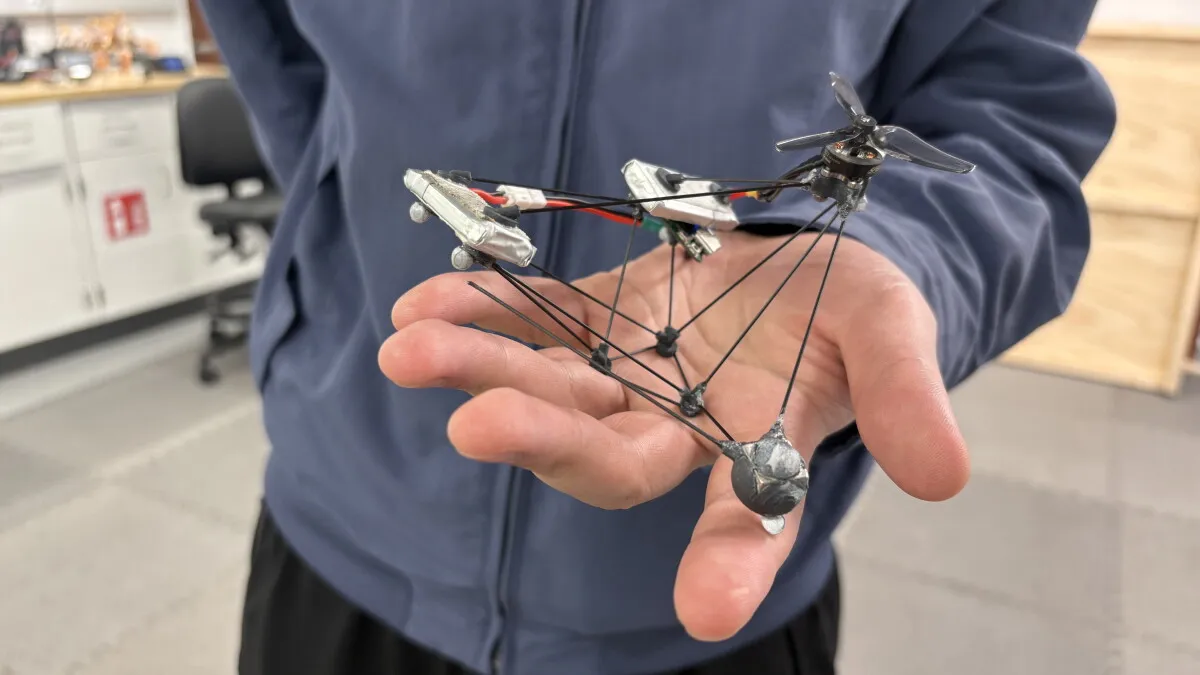
Engineers at Northwestern University have created a drone that seems to disappear. It does this by spinning so fast that human eyes cannot focus on it. This stealthy design could make surveillance almost invisible.
The drone, called Phantom Twist, spins up to 25 times per second. This speed is too fast for our eyes to process sharp details. Instead of becoming truly invisible, the drone turns into a faint, blurry shape that blends with its background. Michael Rubenstein, an associate professor, led this work. It was presented at the Robotics: Science and Systems 2026 conference.
Rubenstein explained that most efforts to hide drones focus on camouflage. His team instead designed the drone around how humans see motion. He noted that few people have explored this idea of low visibility through constant movement.
We're a new kind of news feed.
Regular news is designed to drain you. We're a non-profit built to restore you. Every story we publish is scored for impact, progress, and hope.
Start Your News DetoxA Drone That Nearly Vanishes
This new drone's ability to disappear is important. Drones are often used to watch wildlife, inspect old buildings, or survey wetlands. However, their presence can change the behavior of what they observe. Birds might fly away, animals might flee, and people might act differently. A drone that is hard to spot could do these jobs without causing such reactions.
Past attempts at hiding objects with motion provide some background. The Northwestern paper mentions the Boomerang Drone project. This earlier project also tried high-speed rotation. However, it could not spin fast enough to fully create the blur effect, so it remained mostly visible.
The idea of active concealment also goes back to the "Yehudi light." This project from 1944 used counter-illumination to hide Allied aircraft from enemies.
The Phantom Twist looks very different from these earlier designs. Unlike a typical quadcopter with four separate rotors, it uses a single motor and propeller. The propeller spins one way, and the rest of the drone's body spins the opposite way.
Rubenstein explained that in a standard quadrotor, the propellers spin, but the body stays still. With their drone, the entire thing rotates, so no parts are stationary.
How the Design Was Created
To find the best design, the team used a computer model. It generated about 20,000 possible drone setups that could fly stably. Then, artificial intelligence and optimization algorithms rearranged the motor, propeller, circuit board, counterweight, and batteries.
Each design was simulated spinning in flight. These simulations were placed over 100 real-world backgrounds. A model mimicking human vision then scored each design, with lower scores meaning better camouflage. The 500 best designs were refined further before the final version was built.
Emma Alexander, a co-author and assistant professor of computer science, explained the science. She said the human eye takes time to gather signals, like a camera's exposure time. When an object spins fast, it blurs and loses clear features. Because this new drone is mostly transparent, its few solid parts blend with the background, appearing as a slight haze. The study found the finished drone is about 10 times harder to spot than a standard quadcopter.
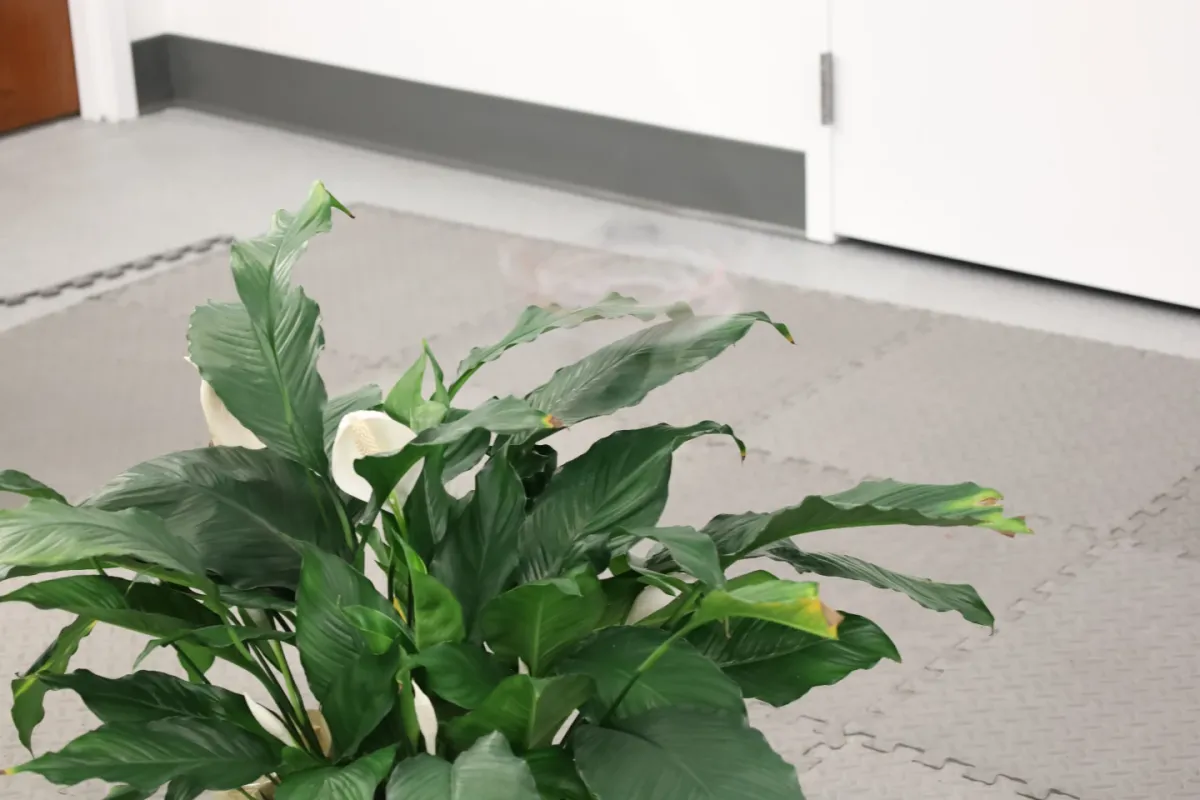
However, this spinning trick has limitations. The propeller still makes an audible whirring sound, which can give the drone away. Its support wires and rods also remain partly visible.
The researchers suggest future versions could use more transparent materials and quieter propulsion. This would bring the drone closer to true invisibility. While this technology can help with wildlife observation, it could also be used for less friendly purposes.
Deep Dive & References
Computational Design of a Low-Visibility UAV Using Human-Aligned Perceptual Metric - Robotics: Science and Systems 2026