For thousands of years, the snow leopard was known as the king of the mountains, a majestic apex predator whose kingdom spanned 12 countries across Asia. Think China, India, Russia — a truly impressive territorial claim. Now, this top-tier hunter is facing a rather steep decline.
Turns out, even kings aren't immune to the indignities of poaching, habitat loss, and a dwindling food supply. But the biggest threat? Our old friend, climate change. The World Wildlife Fund (WWF) has crunched the numbers, and a warming planet could wipe out up to 30% of their Himalayan habitat alone. Which, if you think about it, is both impressive and slightly terrifying.
Peeking at the Elusive
The WWF isn't just watching this happen. They've been working with communities and governments across Asia for years, essentially trying to make sure these magnificent creatures don't become a myth. This involves everything from public awareness campaigns to fighting the illegal wildlife trade. They even helped India and Mongolia get their first proper snow leopard census, which is a surprisingly big deal when you're trying to save an animal that's practically invisible.
We're a new kind of news feed.
Regular news is designed to drain you. We're a non-profit built to restore you. Every story we publish is scored for impact, progress, and hope.
Start Your News DetoxSnow leopards earned their nickname, "the ghost of the mountains," for a reason. Their thick, camouflaged coats are so good at blending into snowy landscapes that spotting one in the wild is like trying to find a polar bear in a blizzard. The harder they are to find, the harder they are to save, which makes data collection a real headache.
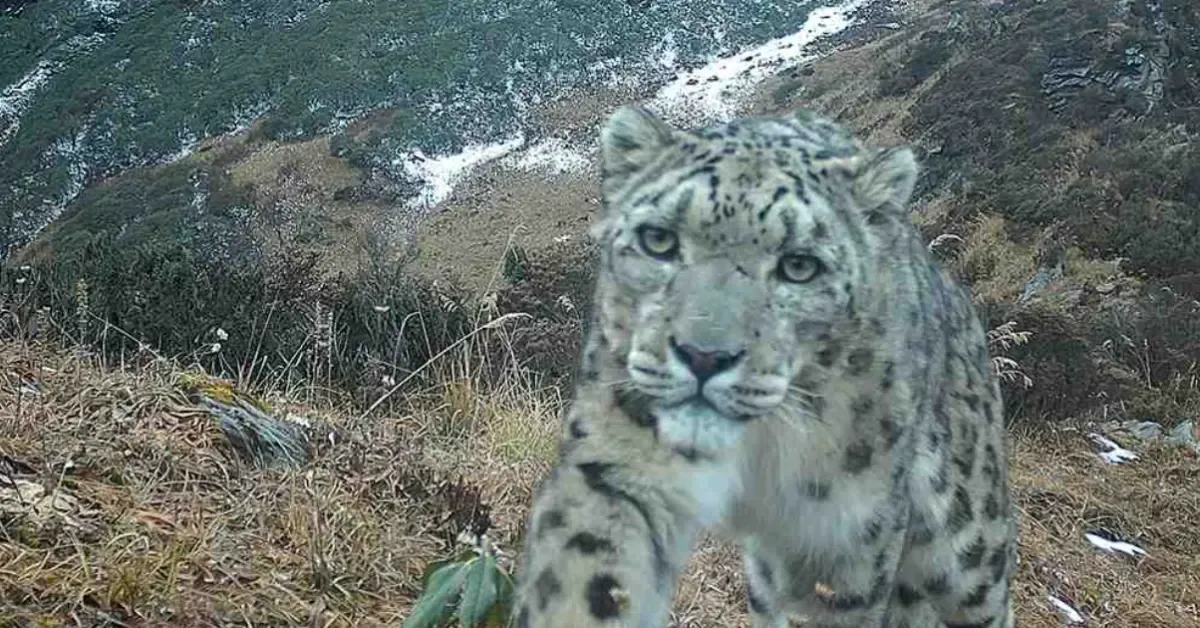
But sometimes, technology steps in where human eyes fail. Recently, the WWF UK Instagram page gave us a peek into how their camera traps are solving this particular problem. "POV: you’re a camera trap in the high altitudes of Wolong," the nonprofit shared, giving us the perspective of a silent, digital observer. "WWF China’s camera trap monitoring has documented a range of species during their ongoing survey in the area — from the iconic snow leopard to red foxes and takin, too!"
These snapshots are part of a massive survey launched in 2022, aiming to document mountain cats across 10 high-altitude regions in China, including the Wolong National Nature Reserve and Sanjiangyuan National Park. So far, these silent sentinels have captured over 600 photos of snow leopards. Let that satisfying number sink in.
Researchers estimate that only 22% of existing snow leopard populations have ever been officially recorded. This means every single grainy photo, every fleeting glimpse, is incredibly valuable. The WWF is leaning heavily into modern tech like these trail cameras to gather the crucial data needed to manage human-leopard conflict, improve protection, and generally ensure these majestic ghosts don't vanish into legend for good.