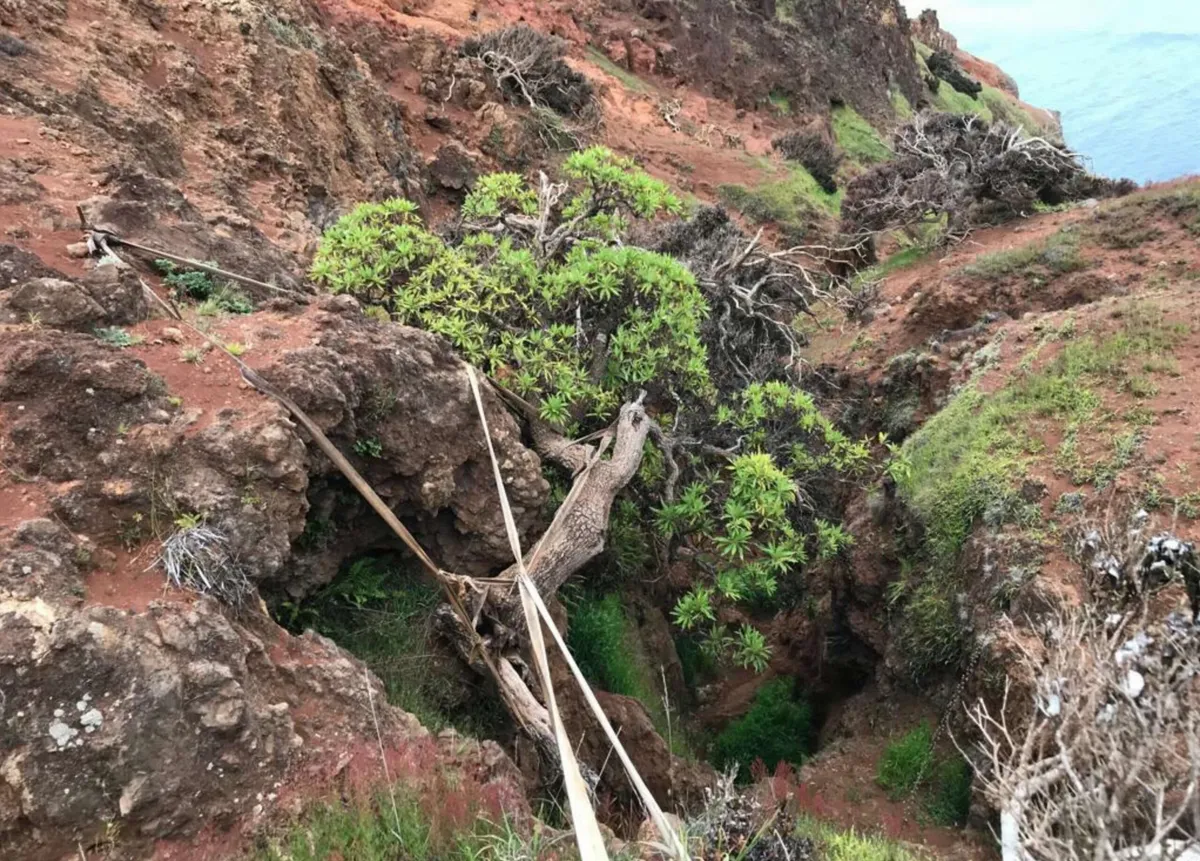
On a remote Chilean island, one very old tree is quite literally hanging on for dear life. Dendroseris neriifolia—the last known wild specimen of its kind—clings to a steep cliff face on Robinson Crusoe Island. Because apparently, that's where the most drama happens.
Conservationists, proving that some heroes wear harnesses instead of capes, recently managed to collect its precious seeds. The mission? To coax them into growing, offering a last-ditch effort to pull this species back from the brink.

All eleven species of Dendroseris trees are exclusive residents of the Juan Fernández Archipelago, just off Chile's coast. They're known for their cheerful yellow, orange, or white flowers. Unfortunately, their existence has been a bit less cheerful, largely decimated by habitat loss, aggressive invasive plants, and the munching habits of goats and rodents. Because, of course, when you're a rare tree, everything wants a piece of you.
We're a new kind of news feed.
Regular news is designed to drain you. We're a non-profit built to restore you. Every story we publish is scored for impact, progress, and hope.
Start Your News DetoxThe Great Seed Heist (for Science!)
Paulina Hechenleitner, a research associate at the Royal Botanic Gardens, Kew, U.K., confirms that only this single, 150-year-old D. neriifolia remains in the wild. It’s perched on a cliff so remote, getting to it requires the kind of specialized skills usually reserved for spy movies, complete with careful planning to avoid, you know, accidentally knocking over the last tree.
Local conservationists attempt this perilous seed collection annually. The tree, however, isn't always in a giving mood. Some years, the fruits are empty or contain very few viable seeds. It's almost as if it knows how much pressure is on it.
This year, fortune smiled (or perhaps the tree just felt generous). About 400 seeds were collected. Of those, 29 looked promising. These were promptly whisked away to the Millennium Seed Bank (MSB) at Kew, which is essentially the Noah's Ark of wild plant seeds. Researchers there put the tiny hopefuls under X-ray, confirming that 24 of them actually contained developing embryos. Let that satisfying number sink in.
So, while one ancient tree continues its cliffside vigil, a new generation of D. neriifolia might just be getting ready for its big debut. Talk about high stakes horticulture.