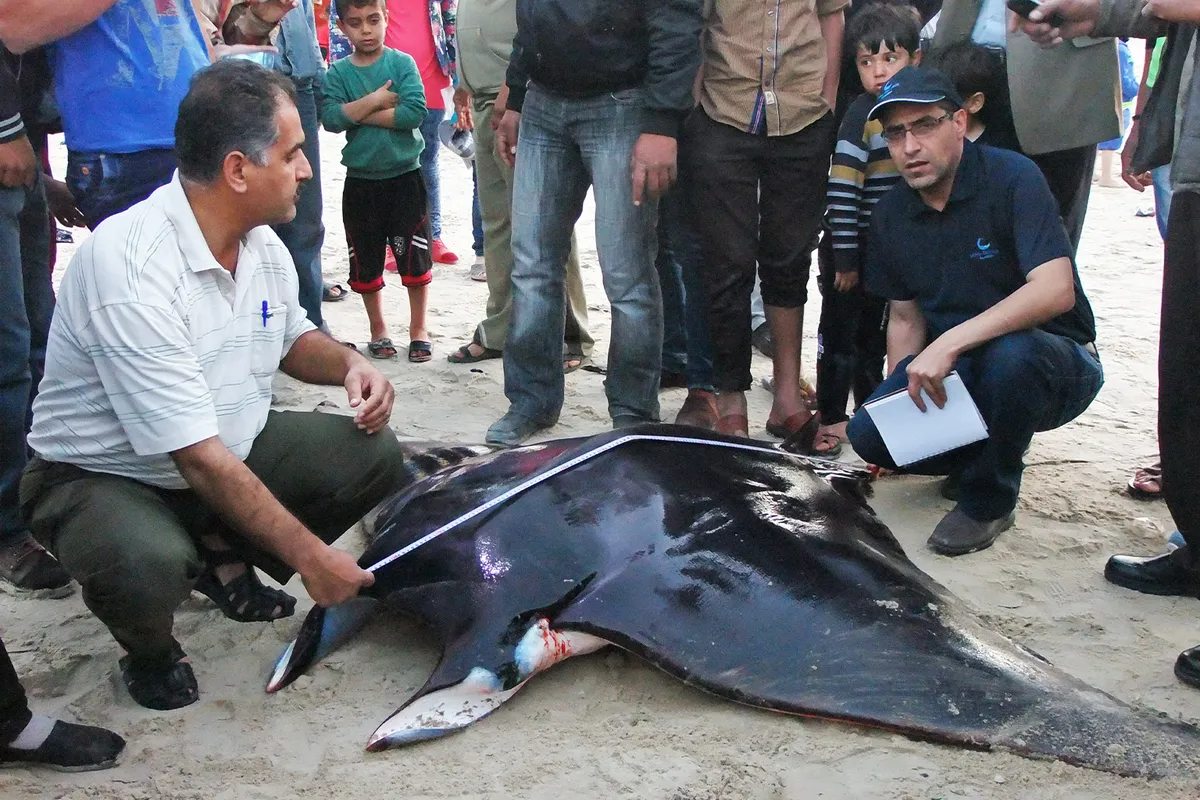
Mohammed Abu Daya, a marine ecologist from Gaza, is probably the last person you'd expect to be tracking critically endangered spinetail devil rays. And yet, here we are.
These magnificent, giant rays are basically the globe-trotters of the Mediterranean, and Abu Daya's work has shown Gaza's waters are a surprisingly crucial pit stop on their migratory path. Few scientists focus on these gentle giants at all. Even fewer do it from a war zone.

Before the world turned upside down, Abu Daya was teaching at Palestinian universities and working at Gaza's National Research Center. He'd head out with local fishers, measuring rays, collecting data, basically doing the hands-on science that makes conservation possible. He was the guy finding out where these rays hang out and why.
We're a new kind of news feed.
Regular news is designed to drain you. We're a non-profit built to restore you. Every story we publish is scored for impact, progress, and hope.
Start Your News DetoxThen came the war. He lost his home. His office. His regular access to the sea, which, for a marine biologist, is a bit of a problem. Universities, libraries, even the fishing boats he relied on — all affected. It's the kind of setback that makes most people say, "Well, that's that for the manta rays."
But Abu Daya isn't most people. He’s still at it. Back in 2013, a huge group of devil rays swam too close to shore, and fishers, facing dwindling resources and economic hardship, caught hundreds. Abu Daya didn't just see a tragedy; he saw a puzzle. He wanted to understand why it happened, linking the lack of conservation efforts to the impossible choices people are forced to make when livelihoods are on the line.
Which, if you think about it, is a pretty profound way to approach marine biology. Even with his entire world upended, Abu Daya continues his mission, proving that sometimes, the most important work happens in the most challenging places. Let that sink in for a moment.