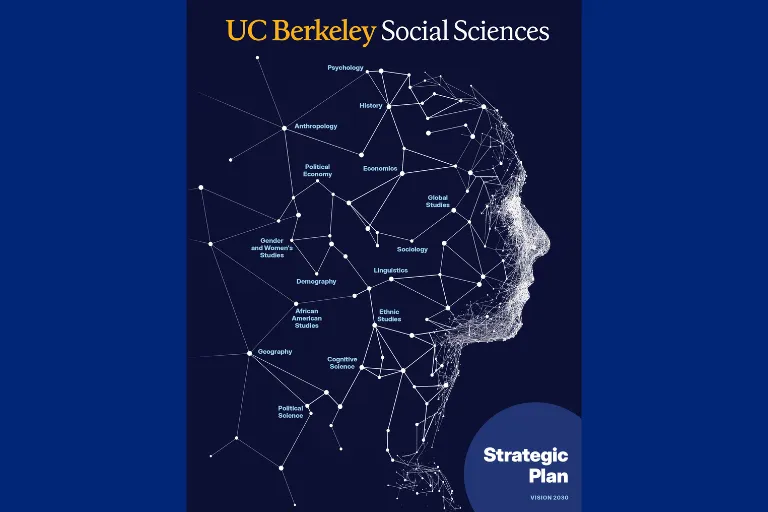
UC Berkeley's Division of Social Sciences has mapped out how it plans to deepen its influence over the next five years—not by chasing prestige, but by deliberately connecting research to real-world problems and making education accessible to students who wouldn't otherwise have the chance.
The strategic plan emerged after more than a year of conversations with faculty, staff, and students. It's built on three premises: that social science research should address urgent problems, that teaching should prepare students for a world that needs them, and that universities shouldn't hoard their insights behind campus gates.
Research that reaches beyond academia
The Division's faculty are already doing serious work. They've pulled in $269 million in external research funding in recent years, and their roster includes six Nobel laureates, nine MacArthur Fellows, and 25 members of the National Academy of Sciences. They're studying democratic governance, economic inequality, climate change, mental health systems, and indigenous language preservation—the kind of problems that don't fit neatly into one discipline.
We're a new kind of news feed.
Regular news is designed to drain you. We're a non-profit built to restore you. Every story we publish is scored for impact, progress, and hope.
Start Your News DetoxBut the plan signals a shift in how that research gets used. Rather than treating published papers as the end goal, the Division wants to build infrastructure that helps findings reach policymakers, community organizations, and the public. It's the difference between writing about a problem and actually influencing how it gets solved.
Education for first-generation students
One-third of the Division's nearly 7,000 undergraduates are the first in their families to attend college. Nearly 30% come from communities of color. Women make up 55% of Social Sciences students—significantly higher than the campus average of 40%.
Those numbers matter because they shape who gets to study inequality, governance, and change. The strategic plan doubles down on this by committing to reduce barriers to student success, rethink how faculty teach about contemporary challenges, and redesign graduate education. Faculty are already mixing large lectures with smaller seminars that emphasize debate, case studies, and fieldwork—the kind of active learning that helps ideas stick.
The Division also runs a Career Readiness Internship Program that places undergraduates in paid positions, bridging the gap between classroom and workplace. For students without family networks in professional fields, that direct pathway matters.
Community as collaborator, not audience
The third pillar is subtler but significant: the plan treats community building as central to the Division's mission, not peripheral. That means supporting initiatives like the Social Sciences Matrix and D-Lab, which bring together researchers across disciplines to tackle shared problems. It means programs like the Black Studies Collaboratory and Global Democracy Commons that explicitly invite collaboration across traditional boundaries.
With more than 160 staff members supporting students and faculty, the Division has the infrastructure to do this work at scale. The plan commits to deepening partnerships with policymakers, community organizations, and alumni—people who can actually use what Berkeley researchers are learning.
The timing matters. As global challenges accelerate and public trust in institutions wavers, universities like Berkeley have a choice: retreat into their own networks or deliberately build bridges outward. This plan suggests the Division is choosing the latter.