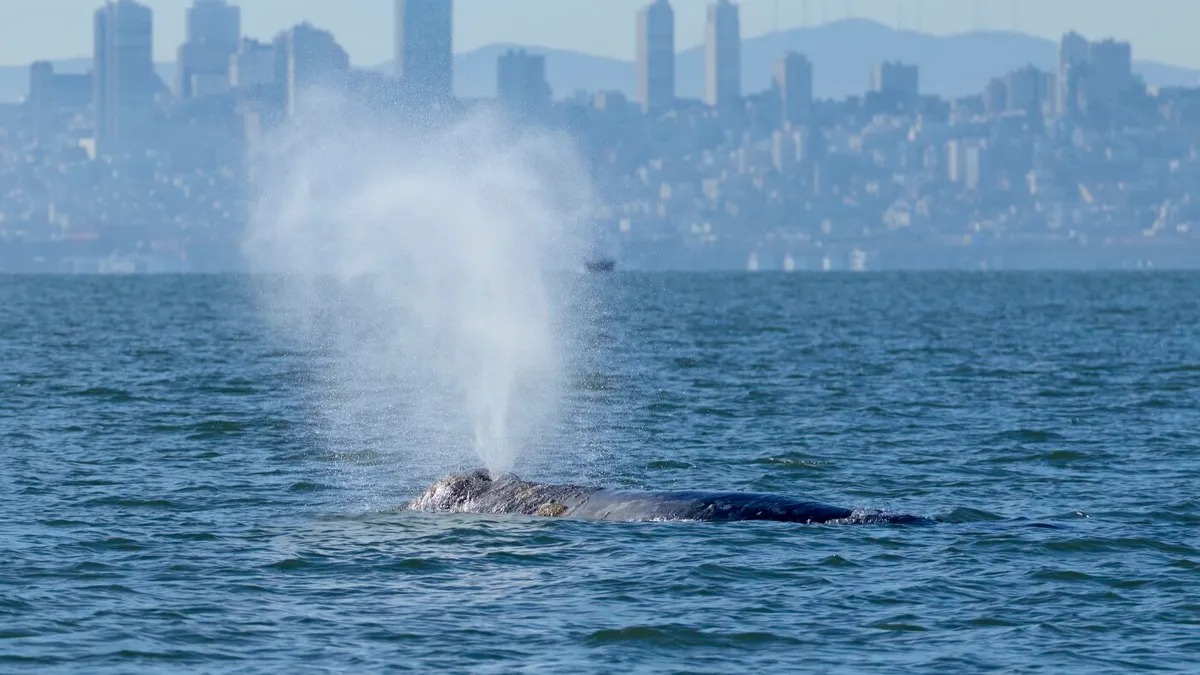
Gray whales are now appearing in San Francisco Bay, a change from their usual migration patterns. These whales are detouring into the bay while traveling from Mexico to Alaska. They seem to be looking for food because climate change is reducing their normal food sources in the Arctic.
This new behavior puts the whales at risk from ships in the busy bay. To help protect them, scientists and local officials are testing a new alert system.
New Tech to Protect Whales
Of the 16 gray whales seen in San Francisco Bay this year, seven have died. Researchers believe several of these deaths were caused by ship strikes. Since some whales are staying in the bay for weeks, a new system is being used to prevent collisions.
We're a new kind of news feed.
Regular news is designed to drain you. We're a non-profit built to restore you. Every story we publish is scored for impact, progress, and hope.
Start Your News DetoxResearchers placed a thermal camera on an island in the bay. This camera can detect the heat from a whale's breath. Artificial intelligence screens potential whale sightings, and then human operators confirm them. The U.S. Coast Guard uses this confirmed information to warn ships and vessels.
Gary Reed, who directs Vessel Traffic Service San Francisco for the U.S. Coast Guard, said they want to spread the word about whales in specific locations to help prevent encounters.
The North Pacific gray whale population is shrinking. It is currently about 13,000, which is half of what it was 10 years ago. Last year, 22 gray whales died in the greater San Francisco Bay Area, the highest number in 25 years.
Douglas McCauley, director of the Benioff Ocean Science Laboratory at the University of California Santa Barbara, noted that every whale entering and leaving the bay is important for the population. He believes this is a solvable part of a larger problem.
Climate Change and Whale Health
On Angel Island, the large bones of three whales are visible on a beach. These are from whale necropsies, or animal autopsies, performed by the Marine Mammal Center and the California Academy of Sciences. Researchers quickly examine dead whales to find out why they died.
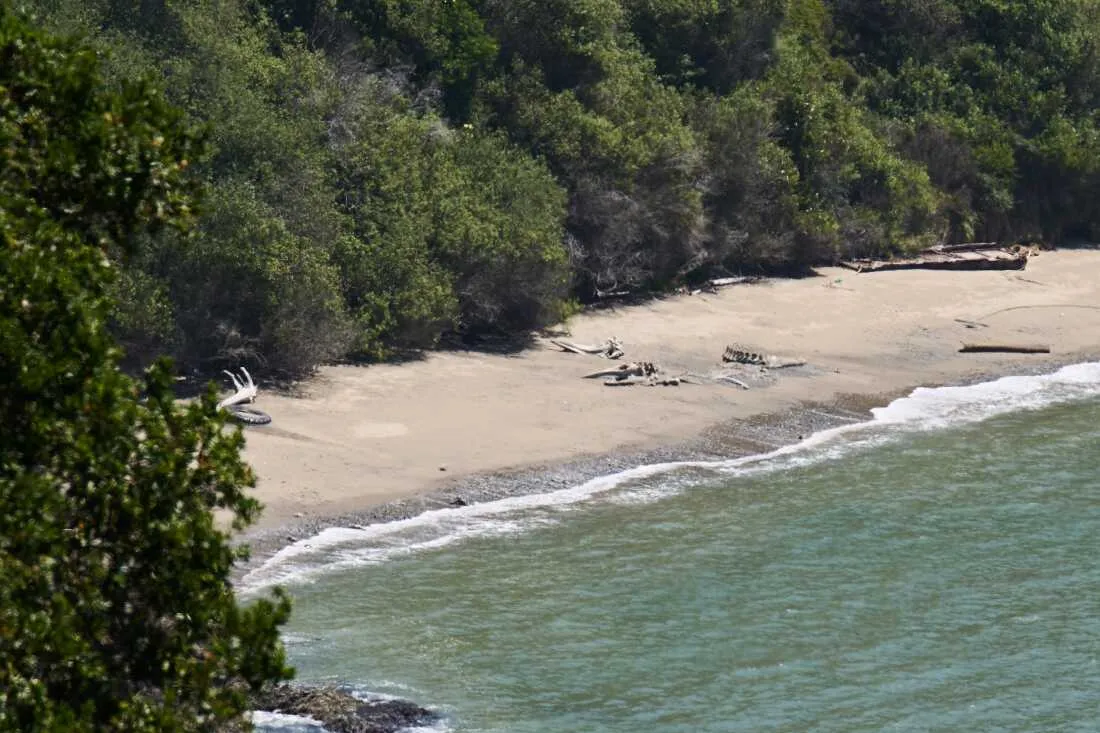
Broken bones and bruised tissue often point to a ship strike. Kathi George, director of Cetacean Conservation Biology at the Marine Mammal Center, explained that the middle skeleton, from a female whale this year, showed injuries from blunt force trauma due to a vessel strike.
Many whales have also been found malnourished in California and the Pacific Northwest. Gray whales travel about 12,000 miles each year, one of the longest migrations of any mammal. They feed in the Arctic during summer and then go to Baja California, Mexico, for winter to have their young.
Whales need to build up fat reserves in the Arctic for their long journey. However, shrinking sea ice in the Arctic, which is warming quickly, is changing the ecosystem. This reduces the availability of the small, shrimp-like animals gray whales eat. Gray whales need to eat more than a ton of these animals daily. Scientists think whales are running out of energy before finishing their migration.
George said these whales are hungry and are stopping in new areas to find food, with San Francisco Bay becoming one of these spots.
How Heat-Sensing Cameras Work
Shawn Henry, CEO of WhaleSpotter, demonstrated how his company's camera detects whale exhalations. A whale's breath is slightly warmer than the surrounding water and air, creating a clear thermal signal.
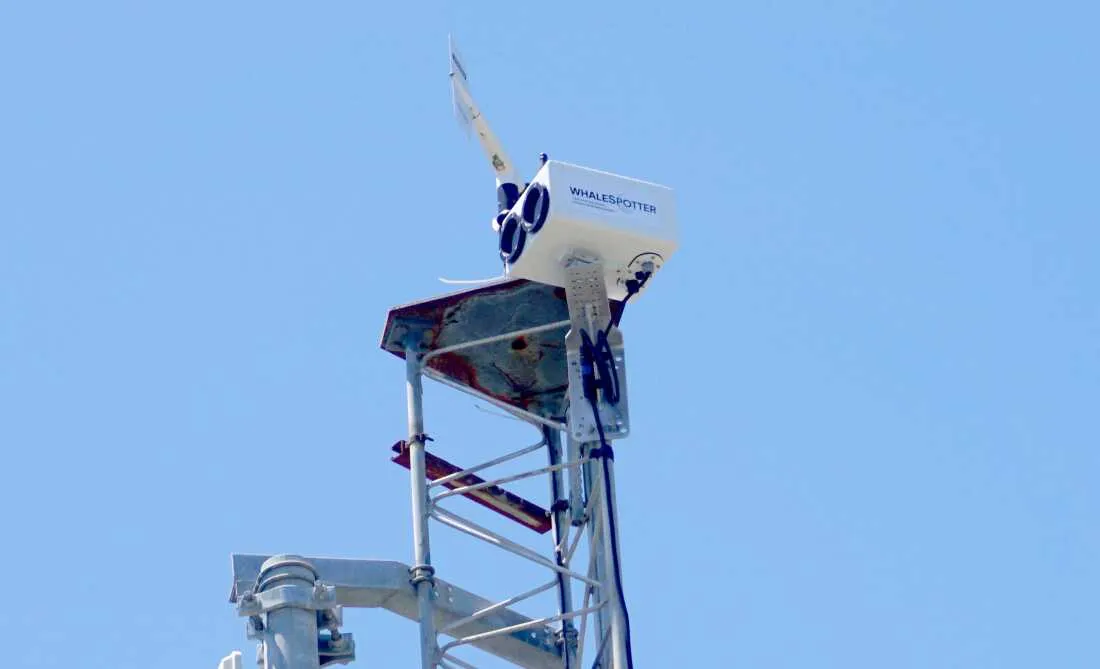
Once a whale is detected, its location is posted on the WhaleSafe website, managed by UCSB's Benioff Ocean Science Laboratory. The Coast Guard then uses this information to alert vessels by radio. Before this project, Coast Guard alerts relied on visual reports from vessels during the day.
Reed from the Coast Guard said this new technology allows them to spot whales at night and notify traffic. Another camera is being installed on a local ferry. Ferry companies in the Bay Area say their operators either slow down or avoid areas where whales are seen. This is harder for large container ships, which are less agile and must stay in specific shipping lanes.
For now, ship participation in the alert system is voluntary. McCauley noted that on other parts of the California coast, shipping fleets have shown good compliance with voluntary speed limits without mandatory rules. He is hopeful that the community will work together to solve this problem.
McCauley believes conditions for gray whales may become even more challenging. Whales are showing they can adapt, but there are limits. He concluded that while the world is changing and whales are trying their best to adapt, they are not giving up.
Deep Dive & References
- 22 gray whales died in the larger San Francisco Bay Area - The Marine Mammal Center
- Gray whale strandings along the West Coast - Cascadia Research Collective
- Shrinking sea ice reducing prey availability - Science, 2026
- WhaleSafe website - UCSB Benioff Ocean Science Laboratory
- Compliance with voluntary speed limits - Blue Whales Blue Skies