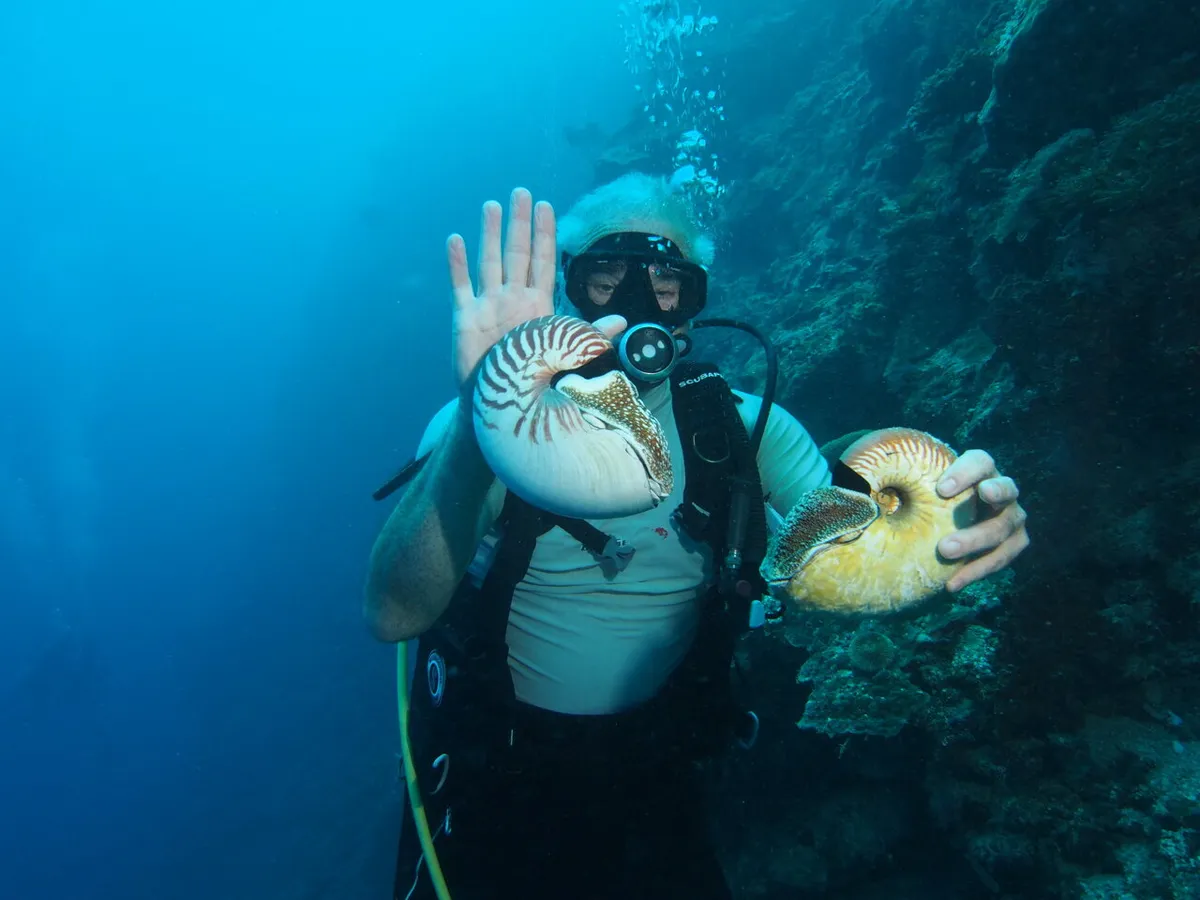
For half a billion years, the nautilus and its cousin, the allonautilus, have been doing their thing in the ocean's twilight zone. These "living fossils" are basically the ocean's oldest residents, and for decades, scientists have been scratching their heads trying to figure out how these ancient cephalopods manage to thrive in places where dinner is rarely served.
Turns out, they've been keeping a few tricks up their sleeves, or rather, their tentacles. A team from the University of Washington just dropped some new findings, revealing these deep-sea dwellers are far more dynamic than previously thought. And yes, they're still around, despite literally being older than dirt.
The Original Deep Divers
The big reveal? Modern nautilus and allonautilus species are living much deeper than their ancestors. Like, the kids are hanging out twice as deep as the adults. Which, if you think about it, is both impressive and slightly terrifying for a creature that's essentially a mollusk in a spiral shell. They're also not picky eaters; they're scavengers, always on the move, hoovering up whatever falls to the ocean floor.
We're a new kind of news feed.
Regular news is designed to drain you. We're a non-profit built to restore you. Every story we publish is scored for impact, progress, and hope.
Start Your News DetoxWhile some nautiluses are apparently training for aquatic marathons, diving hundreds of meters down at sunrise and back up at sunset, most are a bit more chill. The researchers even stumbled upon a brand new population of allonautilus near New Britain island, just casually living their best ancient lives. Good news: these populations are doing pretty well, partly thanks to new hunting restrictions inspired by this very research.
So, after 500 million years, it seems the nautilus is still evolving, still surprising us, and still proving that sometimes, the best way to survive is to just keep swimming, and maybe go a little deeper than everyone else. Let that sink in.