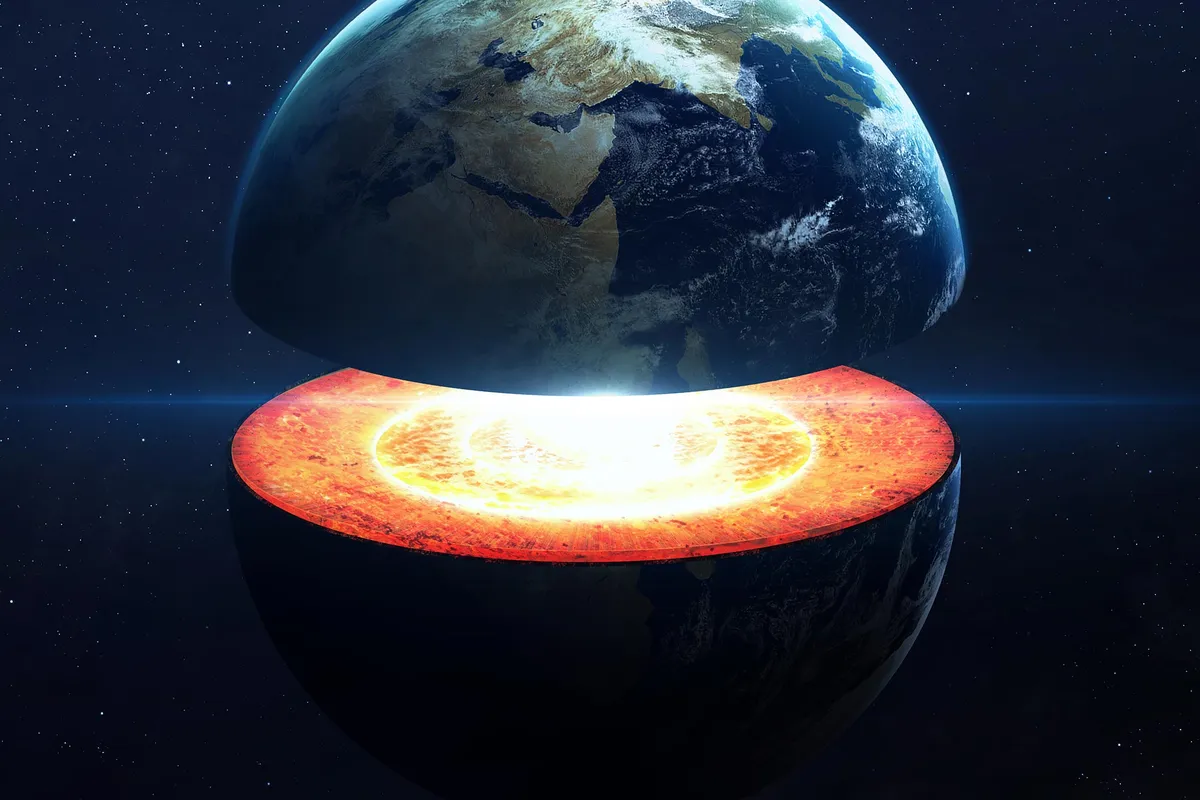
Deep beneath our feet, where the Earth’s mantle meets its molten core, there’s a whole lot of slow-motion twisting happening. We're talking 1,800 miles down, a place so remote it makes the Mariana Trench look like a puddle. And now, scientists have a much clearer picture of why all that rock is wriggling.
Turns out, much of the deep-seated deformation in the mantle isn't just random subterranean yoga. It's happening precisely where old tectonic plates — those colossal landmasses that make continents drift and mountains rise — have finally given up the ghost and plunged thousands of kilometers into the Earth's interior. Because apparently, even dead plates can still cause a ruckus.
Mapping the Mantle's Moves
For a while, scientists suspected a connection between these sunken slabs and the mantle's deep movements. But a new study in The Seismic Record just gave us the global receipts, mapping about 75% of the lowermost mantle, right above the core-mantle boundary.
We're a new kind of news feed.
Regular news is designed to drain you. We're a non-profit built to restore you. Every story we publish is scored for impact, progress, and hope.
Start Your News DetoxJonathan Wolf and his team at the University of California, Berkeley, pulled off this geological feat by sifting through a truly mind-boggling amount of data: over 16 million seismograms. That's like listening to the Earth clear its throat 16 million times, all collected from 24 data centers worldwide. They were looking for something called "seismic anisotropy." Basically, when earthquake waves (specifically shear waves) travel through rock, their speed changes depending on the direction. These subtle speed shifts are like tiny flags telling scientists where the mantle is deforming, stretching, and generally having a bad day.
Why the Deep Flow?
Wolf explains that closer to the surface, deformation is mostly about tectonic plates doing their thing. But down in the lowermost mantle? That was the big question mark. "That's really what we want to get at," he noted, with the kind of understated passion only a geophysicist can muster.
Using what Wolf called "the largest-ever assemblage of earthquake seismic data," his team tracked seismic waves that took the scenic route: through the mantle, into the core, and then back out. This allowed them to map anisotropy over hundreds of kilometers, giving an unprecedented peek into the deepest parts of our planet.
They found anisotropic signals in about two-thirds of the areas they probed. And the kicker? Most of these signals popped up exactly where those deeply subducted slabs are believed to be. It's not entirely surprising, as geodynamic simulations had predicted this, but seeing it on this scale, with actual data, is a whole different beast.
So, what's causing this deep-earth jig? It could be "fossil" anisotropy, meaning the slabs held onto some deformation from their days near the surface. More likely, though, it’s the sheer intensity of deformation as these slabs hit the core-mantle boundary, pushing aside and deforming everything around them. Plus, extreme pressure and heat can literally change the minerals in the slabs, creating new anisotropic "fabric."
Wolf hopes this "treasure trove" of data will eventually let them map the global flow directions of the lowermost mantle. Because understanding what's going on 1,800 miles beneath our feet isn't just cool; it helps us understand everything from volcanoes to plate tectonics. And who doesn't want to know what the Earth is really up to down there?