Imagine you're deep in the Himalayan mountains, meticulously studying forest ants — because that's a thing people do. Then, out of nowhere, a tiny spider with a ridiculously cheerful face stares back at you from under a leaf. That's precisely what happened to scientists Devi Priyadarshini and Ashirwad Tripathy.
They weren't looking for spiders. They were on an ant mission. But when Tripathy sent an image of this peculiar arachnid to Priyadarshini, her ant-focused brain did a double-take. Because this wasn't just any spider; it was a dead ringer for the famous Hawaiian happy-face spider.
A Smile That Traveled 7,000 Miles
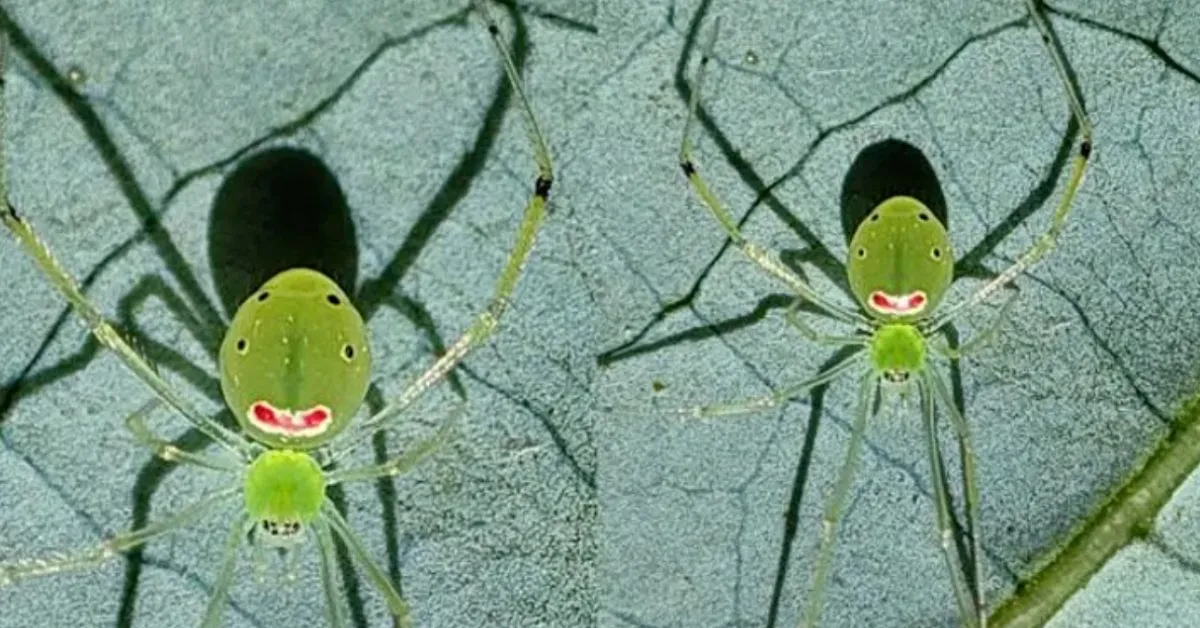
The Hawaiian happy-face spider (Theridion grallator) is basically a celebrity in the insect world, known for its abdomen markings that look like a cartoon smile. It's also incredibly exclusive, living only on the Hawaiian Islands. So, finding its doppelgänger 7,000 miles away in Uttarakhand, India, was, shall we say, unexpected.
We're a new kind of news feed.
Regular news is designed to drain you. We're a non-profit built to restore you. Every story we publish is scored for impact, progress, and hope.
Start Your News DetoxPriyadarshini, who had studied the Hawaiian version, immediately recognized the uncanny resemblance. Their ant research promptly took a backseat to what became a months-long spider hunt. Starting in October 2023, Tripathy began sending her every variation he could find.
On April 24, they officially introduced the world to Theridion himalayana — the Himalayan Happy-Face Spider. And if you think one smiling spider is cute, try 32 different color patterns, all featuring grinning red, black, and white faces. Because apparently, that's where we are now.
This new species shares more than just a smile with its Hawaiian relative. It also lives upside down on the underside of ginger leaves. Which is where things get interesting: ginger isn't native to Hawaii. So, how did two species evolve such similar traits, thousands of miles apart, one of them choosing an invasive plant?
Scientists are now scratching their heads, wondering if T. himalayana could be an older relative of T. grallator, a kind of ancestral smiley-face. They're also investigating other creatures in the same environment that sport similar patterns, hinting at some fascinating coevolution. Nature, it seems, just loves a good punchline — or, in this case, a good happy face.