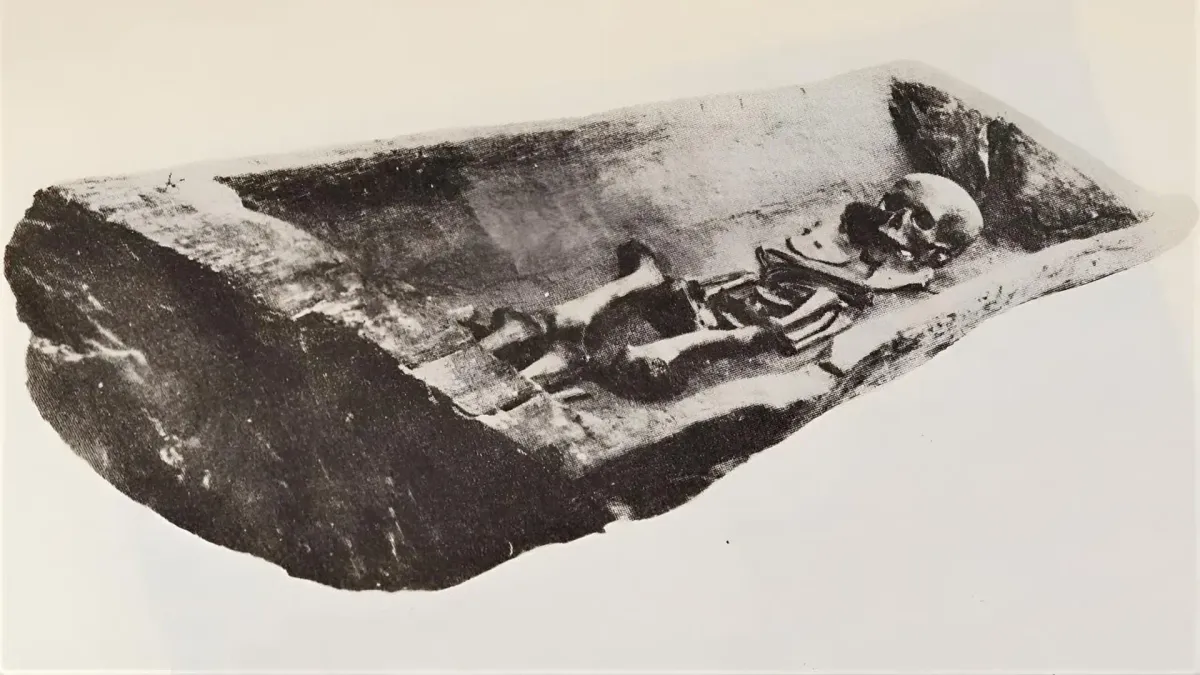
In 1898, a wooden coffin carved from a single oak log tumbled from a cliff in northwestern Poland and split open on the rocks below. Inside lay a woman from the Gothic era, her skeleton surrounded by bronze pins, glass beads, amber necklaces, and bracelets—all preserved in remarkable detail by the damp coastal environment that had also destroyed the coffin itself.
Archaeologists called her the Princess of Bagicz. But for over a century, they couldn't agree on when she'd actually died. One dating method suggested around 120 CE. Another pushed her back to 113 BCE. The gap was so wide—more than 100 years—that researchers essentially threw up their hands. How could the same skeleton produce such wildly different answers?
The breakthrough came from asking a different question: not just when did she die, but why couldn't scientists agree.
We're a new kind of news feed.
Regular news is designed to drain you. We're a non-profit built to restore you. Every story we publish is scored for impact, progress, and hope.
Start Your News DetoxThe Fish That Confused Everything
A new team applied dendrochronology to the coffin wood itself, counting tree rings to determine when the oak was felled. The answer: around 120 CE. That narrowed things down, but the real insight came from analyzing what the woman had eaten.
Stable isotope analysis of her bones revealed she'd consumed large amounts of freshwater fish—a diet heavy in aquatic protein. This matters because fish live in hard water environments where carbon accumulates differently than in the atmosphere. When she ate those fish, radiocarbon in her bones became contaminated with that aquatic carbon, making her skeleton appear older than it actually was. Earlier researchers had been measuring the wrong thing all along.
The team also used strontium isotope analysis, which traces where someone grew up based on the chemical signature in their bones. It pointed to Scandinavia or the island of Öland—suggesting she'd traveled from the north before being buried in Poland.
The study, published in Archaeometry, finally resolved the mystery not through a single brilliant insight, but by recognizing that different scientific methods had been measuring different pieces of the same puzzle. The coffin's tree rings, her diet, her isotopic signature—together they told a coherent story that radiocarbon dating alone never could.
It's a quiet reminder that some of our most stubborn questions don't need new technology so much as they need us to stop asking them in isolation.