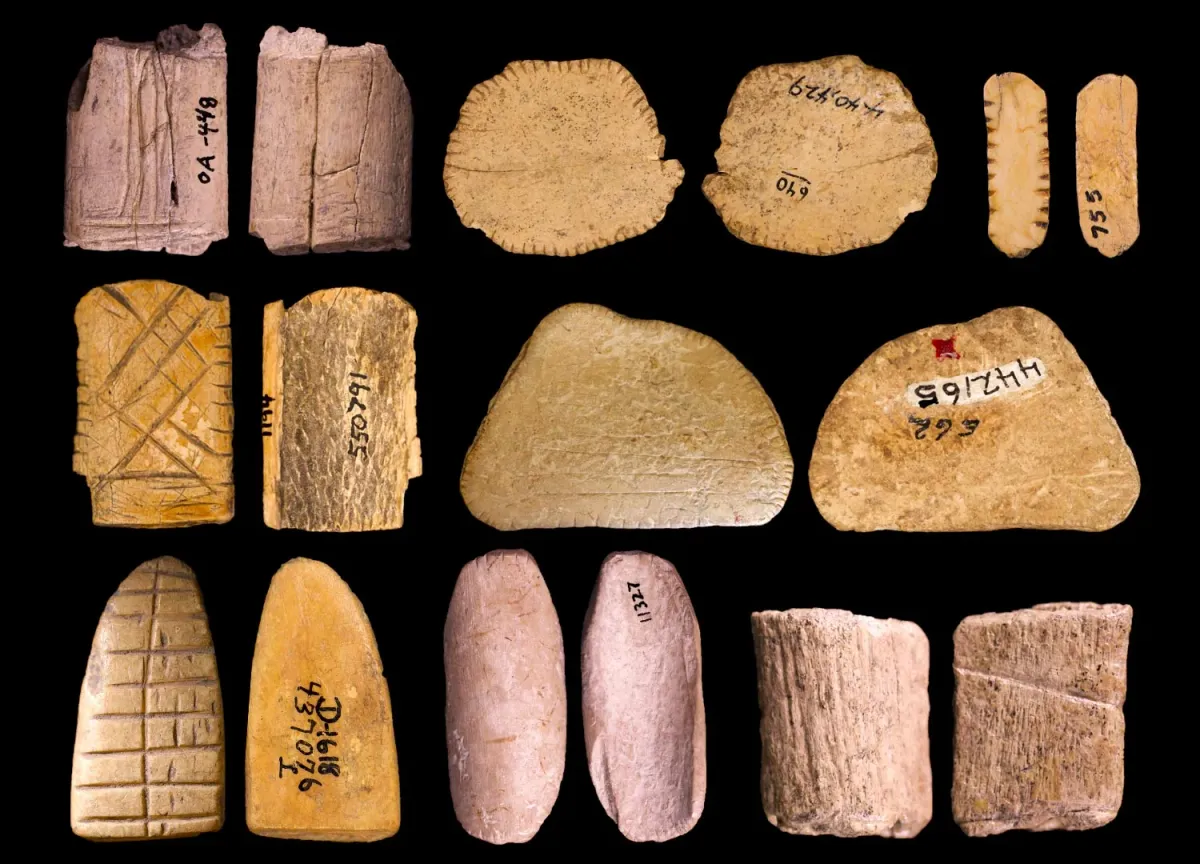
Native Americans were making and using dice over 12,000 years ago. This is much earlier than experts previously thought. These ancient tools hint at early forms of thinking about chance.
A new study in American Antiquity shows that the oldest known dice were used by Native American hunter-gatherers. These objects were found on the western Great Plains. They are far older than the earliest dice found in Bronze Age societies.
Robert J. Madden, a Ph.D. student at Colorado State University, led the research. His work shows that dice, gambling, and games of chance have been part of Native American cultures for at least 12,000 years. The oldest examples come from Folsom-period sites in Wyoming, Colorado, and New Mexico. These finds are more than 6,000 years older than similar dice from other parts of the world.
We're a new kind of news feed.
Regular news is designed to drain you. We're a non-profit built to restore you. Every story we publish is scored for impact, progress, and hope.
Start Your News DetoxMadden explained that historians usually thought dice and probability started in the Old World. But the archaeological evidence shows ancient Native American groups made objects to create random outcomes. They used these outcomes in structured games thousands of years earlier than thought.
What These Ancient Bone Dice Looked Like
The oldest pieces found are about 12,800 to 12,200 years old. These were not cube-shaped dice. Instead, they were two-sided objects called "binary lots." They were small pieces of bone, carefully shaped to fit in a hand. They were usually flat or slightly curved, often oval or rectangular.
Each piece had two different sides. These differences came from markings, surface treatments, or colors, much like heads and tails on a coin. One side was the "counting" face. When tossed, each piece would land with one side up, giving a two-outcome result. Players threw several pieces at once. The results depended on how many showed the counting side.
Madden described them as "simple, elegant tools." He added that they were clearly made on purpose, not just leftover bone pieces. They were designed to create random outcomes.
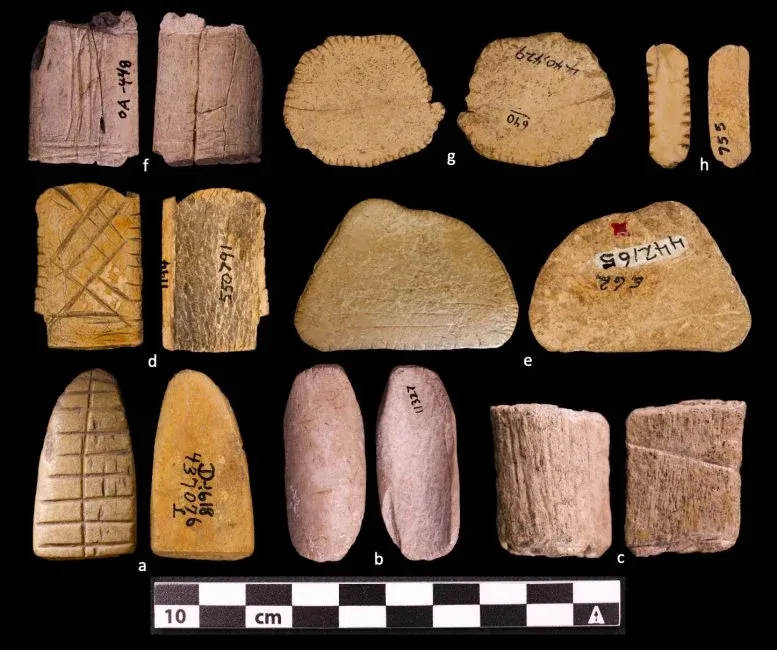
A New Way to Find Ice Age Dice
To avoid guesswork, the study created a new test. It's a checklist of physical features used to identify dice in archaeological finds. This method is based on a study of 293 sets of historic Native American dice. Ethnographer Stewart Culin documented these in 1907.
Using this method, Madden looked again at old artifacts. Some were called "gaming pieces" or were completely overlooked. By using consistent rules, Madden could tell if these objects were truly dice.
Much of this material was known for years. However, without a clear way to identify them, they weren't seen as part of a larger pattern. With this new approach, Madden found over 600 definite and likely dice. These came from sites across North American prehistory, from the Ice Age through European contact.
Madden noted that the evidence was already there. What was missing was a clear, continent-wide standard for recognizing what they were seeing. He also examined the earliest examples directly in museum collections. These included the Smithsonian Institution and the Denver Museum of Nature and Science.
Rethinking the Start of Probability
Dice games are often seen as one of the first ways humans dealt with randomness. This led to ideas about probability, statistics, and scientific thinking. Until now, these practices were thought to have started in complex societies about 5,500 years ago.
The new findings suggest a much older and more widespread origin. Madden clarified that these findings don't mean Ice Age hunter-gatherers had formal probability theory. But they did intentionally create and use random outcomes in rule-based ways. They relied on patterns like the law of large numbers. This changes how we understand the global history of thinking about probability.
A 12,000-Year Tradition of Games of Chance
The study also shows how common and long-lasting dice games were in Native American cultures. Evidence of dice appears at 57 archaeological sites across 12 states. These sites cover different time periods and cultures.
Madden believes this long history shows how important these games were in society. He said games of chance created neutral, rule-governed spaces for ancient Native Americans. They allowed different groups to interact, trade goods, share information, form alliances, and deal with uncertainty. In this way, they acted as powerful social tools.
Deep Dive & References
Probability in the Pleistocene: Origins and Antiquity of Native American Dice, Games of Chance, and Gambling - American Antiquity, 2026