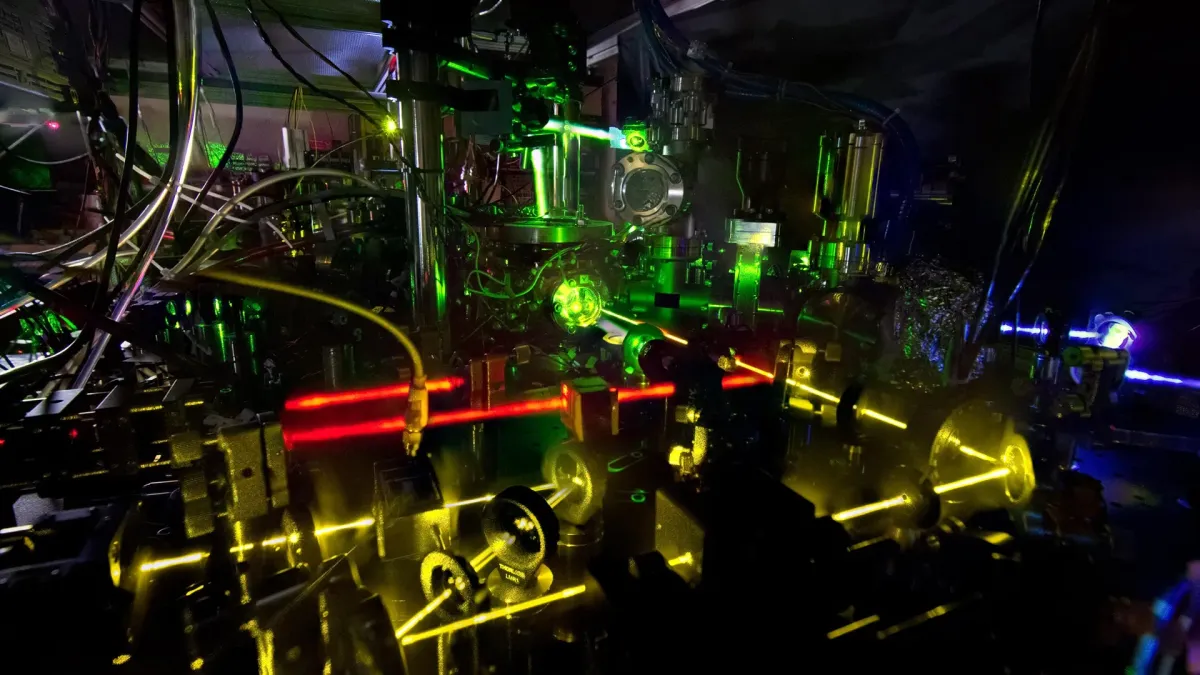
Imagine a clock so accurate it would lose less than a second in 30 billion years. Now imagine one that just got 100 times better, thanks to a team of physicists in Japan. Their new ytterbium atomic clock isn't just a timekeeping marvel; it's a potential dark matter detector.
Led by Taiki Ishiyama at Kyoto University, the team pulled off what was once considered too tricky: precisely measuring a rare electron jump deep inside ytterbium atoms. It's like finding a needle in a hayst-atom, and then making that needle your new, incredibly stable clock hand.
The Atomic Tick-Tock Gets an Upgrade
Atomic clocks, at their heart, measure how electrons bop between energy levels. The current champions, often using caesium-133 atoms, trap these atoms in laser grids, resulting in that mind-bending accuracy of less than a second lost over 30 billion years. That's a lot of Netflix binges without being late.
We're a new kind of news feed.
Regular news is designed to drain you. We're a non-profit built to restore you. Every story we publish is scored for impact, progress, and hope.
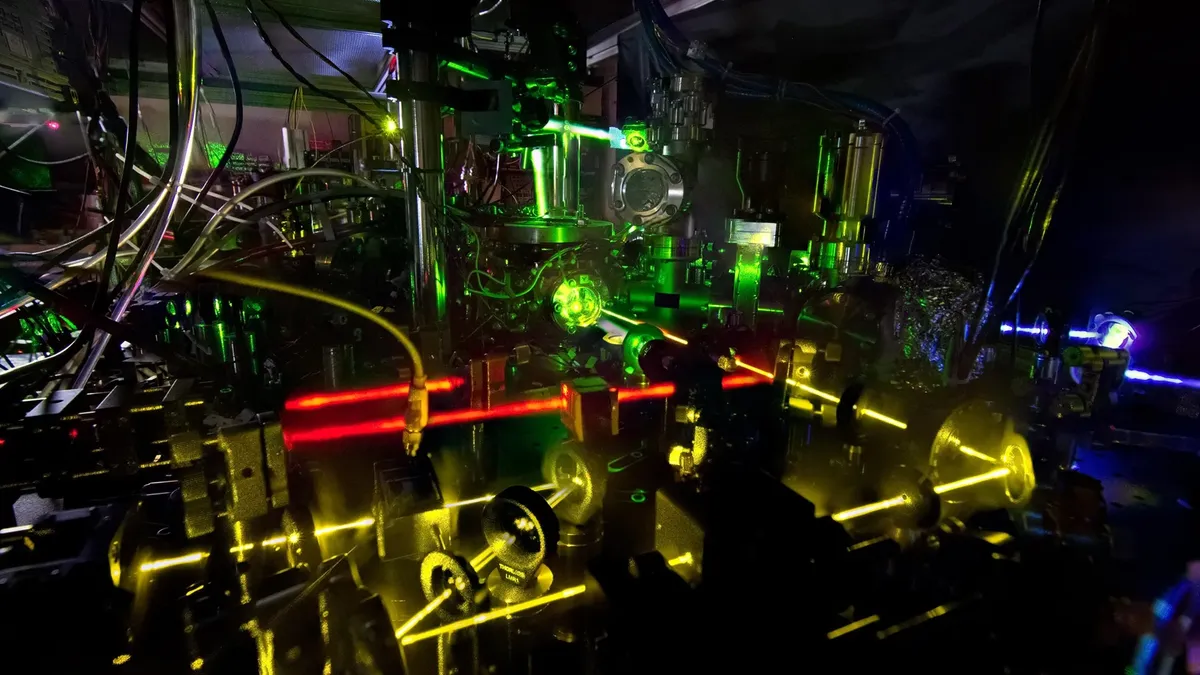
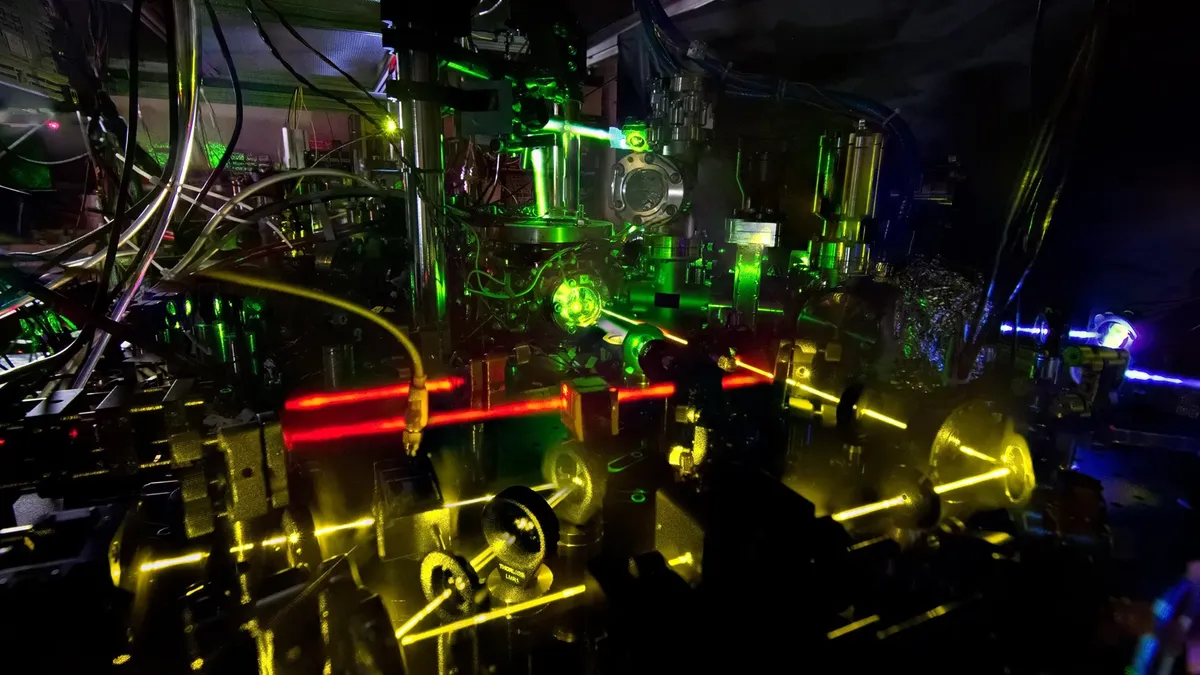
Start Your News DetoxScientists suspected that a specific, deeply buried electron jump in ytterbium atoms could make clocks even more sensitive. The challenge? Lasers used to trap the atoms kept messing with the delicate measurements. So, the team deployed a technique called 'magic wavelength,' essentially creating a 3D light grid that cradles the ytterbium atoms without nudging their energy levels.
This magical light trick improved their measurement precision by a factor of 100. Let that satisfying number sink in. This heightened sensitivity means the clock can now sniff out tiny physical changes that might just be the elusive whispers of dark matter or other particles currently outside our understanding of the universe.
Ishiyama notes that this new tool is a powerhouse for uncovering particles that might interact with electrons and neutrons – the kind of particles that don't fit neatly into physics' current Standard Model. It turns out those inner-shell electron jumps, once thought too wild to tame, can now be controlled with exquisite precision. Which, if you think about it, is both impressive and slightly terrifying. The universe just got a new, very attentive listener.