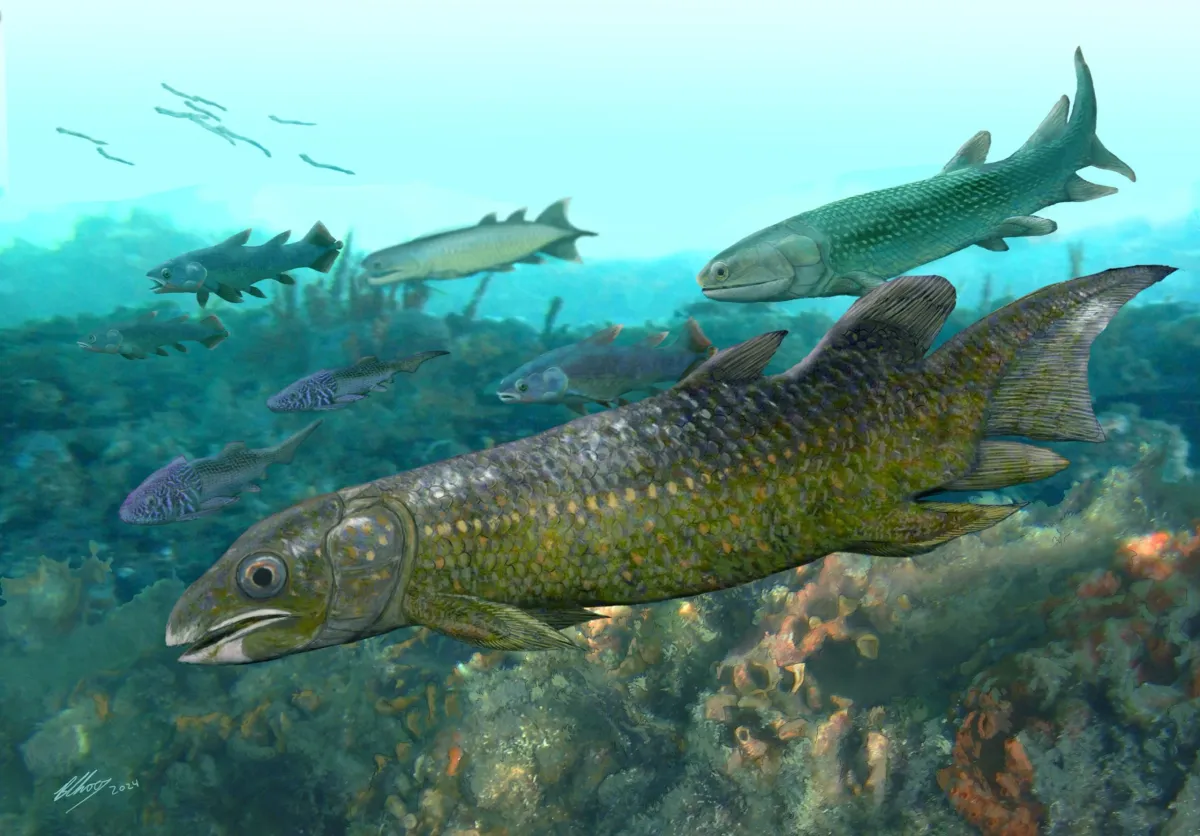
Two damaged skulls, separated by continents and time, are rewriting what we know about the leap from water to land. Scientists in Australia and China have just decoded what makes these 400-million-year-old lungfish so crucial to understanding how vertebrates eventually crawled onto dry ground.
The story starts with a puzzle. In 2010, researchers in Western Australia found a fossil so strange they wondered if it was an entirely new species. It came from what's often called Australia's first Great Barrier Reef — a Devonian reef system in the Kimberley region. For over a decade, the specimen sat in the collection, too damaged and complex to fully understand.
Then came the scanning technology. "Using high-tech imaging, we were able to create comprehensive digital images of the external and internal skull," explains Dr. Alice Clement of Flinders University's Palaeontology Lab. What emerged was the intricate brain cavity of an ancient lungfish, far more detailed than anyone had seen before. The fossil wasn't new to science after all — it was just ahead of its time, waiting for the tools to read it.
We're a new kind of news feed.
Regular news is designed to drain you. We're a non-profit built to restore you. Every story we publish is scored for impact, progress, and hope.
Start Your News Detox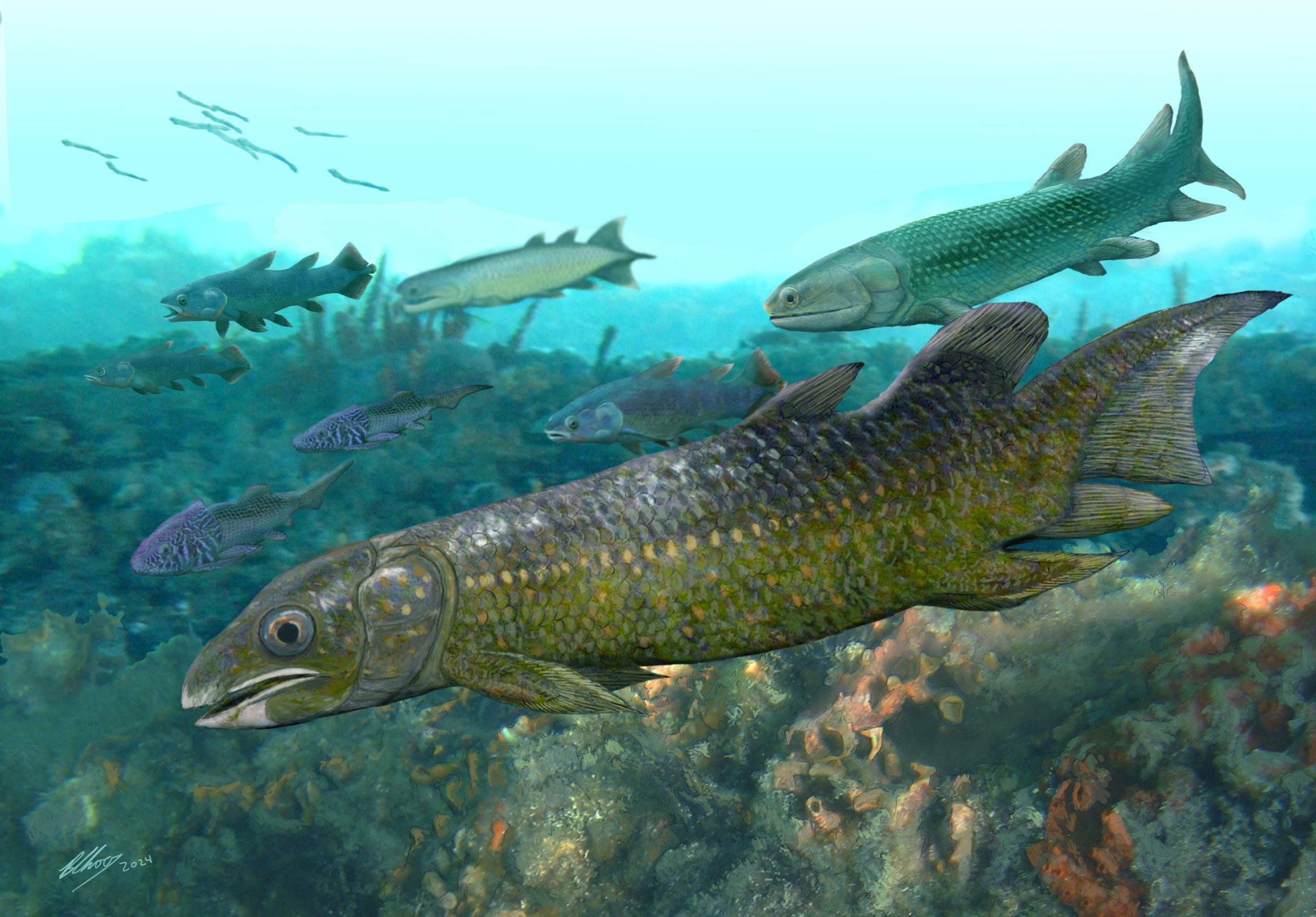
Across the Indian Ocean, a parallel discovery was unfolding. A research team in China had reconstructed the skull of Paleolopus, a lungfish that swam in South Chinese seas 410 million years ago. The timing matters. This species lived in that narrow window between when lungfish first appeared and when they suddenly diversified — a moment when they were developing the feeding adaptations that would define them for the next 400 million years.
"It gives us an unprecedented look at a critical moment," says Dr. Brian Choo, also from Flinders. "This was when the group was just starting to develop the distinctive features that would serve them through the rest of the Devonian and onwards to the present day."
Why does this matter for us. Lungfish are the closest living relatives to tetrapods — backboned animals with limbs, the line that eventually led to humans. The Australian lungfish still swims in Queensland today, virtually unchanged since the Devonian. By studying these ancient skulls, researchers are essentially watching the moment when fish began experimenting with the anatomy that would let their descendants breathe air and walk on land.
These aren't flashy discoveries. They're incremental, technical, built on damaged specimens and digital reconstruction. But they're the kind of patient science that fills in the gaps between "we don't know" and "we understand." Two skulls, two teams, one clearer picture of how we got here.
The next chapter will likely come from more fossils, more scanning, more details. The transition from water to land took millions of years. We're still learning how it happened, one ancient brain cavity at a time.