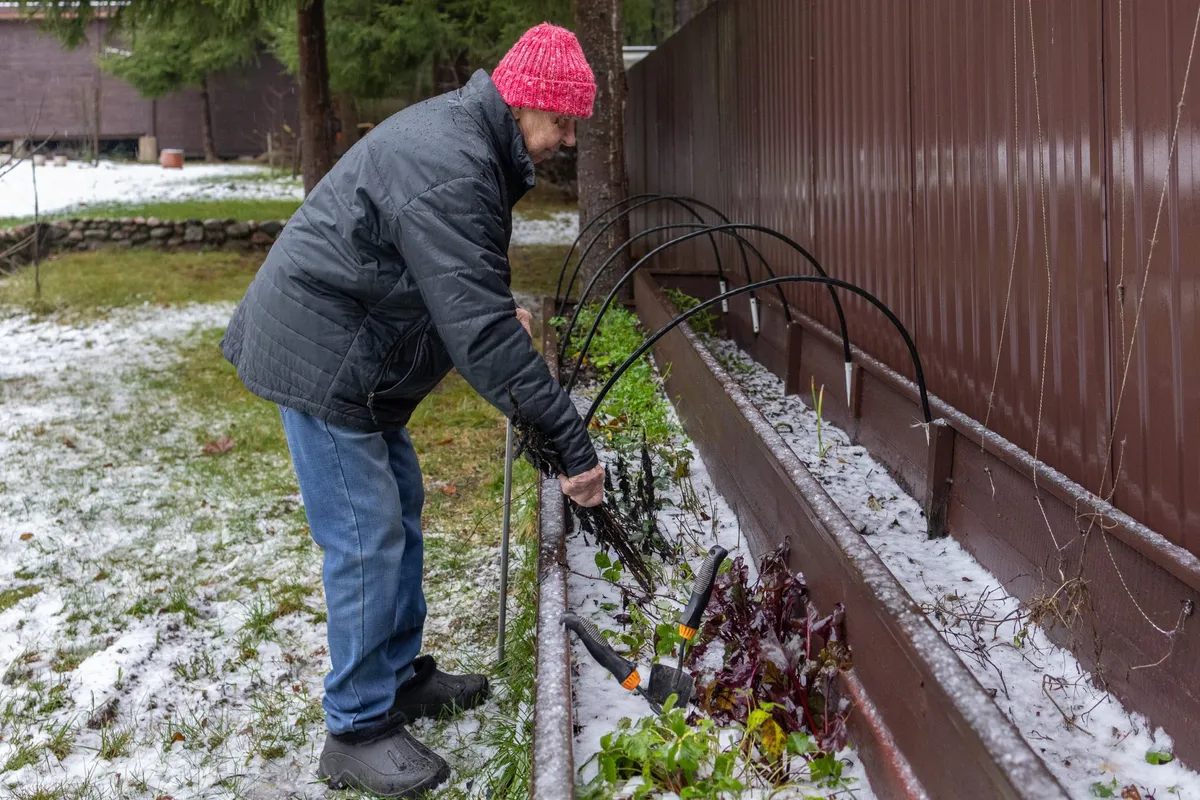
Spring might feel far off, but a few mild winter days are your window to set your garden up for success. The work you do now—clearing debris, testing soil, pruning back dead growth—isn't glamorous, but it's the difference between a garden that limps through spring and one that wakes up strong.
Getting the basics right
Start with cleanup. Remove sticks, matted leaves, and last season's dead foliage from around your beds. This sounds basic, but it matters: clearing debris lets sunlight and air reach the soil, gives new shoots room to emerge, and disrupts the damp spots where mold and fungal diseases hide. You're also breaking up the cozy winter homes of slugs and snail eggs before they hatch. Just be careful around early risers like crocuses and hellebores—gently clear the mulch from around them, but leave it elsewhere for insulation.
While you're at it, pull out fast-growing winter weeds like chickweed and henbit before they establish roots. A few minutes now saves hours of weeding later.
We're a new kind of news feed.
Regular news is designed to drain you. We're a non-profit built to restore you. Every story we publish is scored for impact, progress, and hope.
Start Your News DetoxNext, think about your soil. If you haven't tested it in a few years, now's the time. A simple home kit or a sample sent to your local extension office will tell you the pH—and that matters because different plants want different conditions. Azaleas and rhododendrons crave acidic soil, while lavender and lilacs prefer alkaline. Knowing what you're working with means you can plant smarter and stop guessing about fertilizer.
The wet soil trap
Here's where patience pays off: don't dig in wet soil. It sounds counterintuitive when you're eager to get started, but working compacted, waterlogged earth squeezes out the air pockets that roots need. Do a quick test—grab a handful from 6 to 8 inches down and squeeze it. If it crumbles, you're good. If it stays in a wet lump, wait a week or two. Your plants will recover faster from a delayed start than from compacted soil.
Pruning and drainage
Late winter is the right time to cut back perennials like asters, Russian sage, and sedum to about an inch above ground. This clears space for spring growth and encourages fuller blooms later. Same logic applies to roses, summer-blooming clematis, and ornamental shrubs—prune away dead or damaged branches while they're still dormant.
Finally, check your drainage. Walk the garden after rain and look for pooling water. These low spots need attention—add compost, dig a trench, or install a rain barrel to redirect excess water. On the flip side, don't assume winter moisture means everything's hydrated. In dry regions or windy weeks, soil dries out faster than you'd think. Check moisture levels a few inches down, and water deeply if needed, especially around new shrubs and spring bulbs waking up.
These tasks won't take a full weekend, but they'll shape how your garden performs for the next six months. You're not fighting nature—you're working with it, giving your plants the foundation they need to thrive.