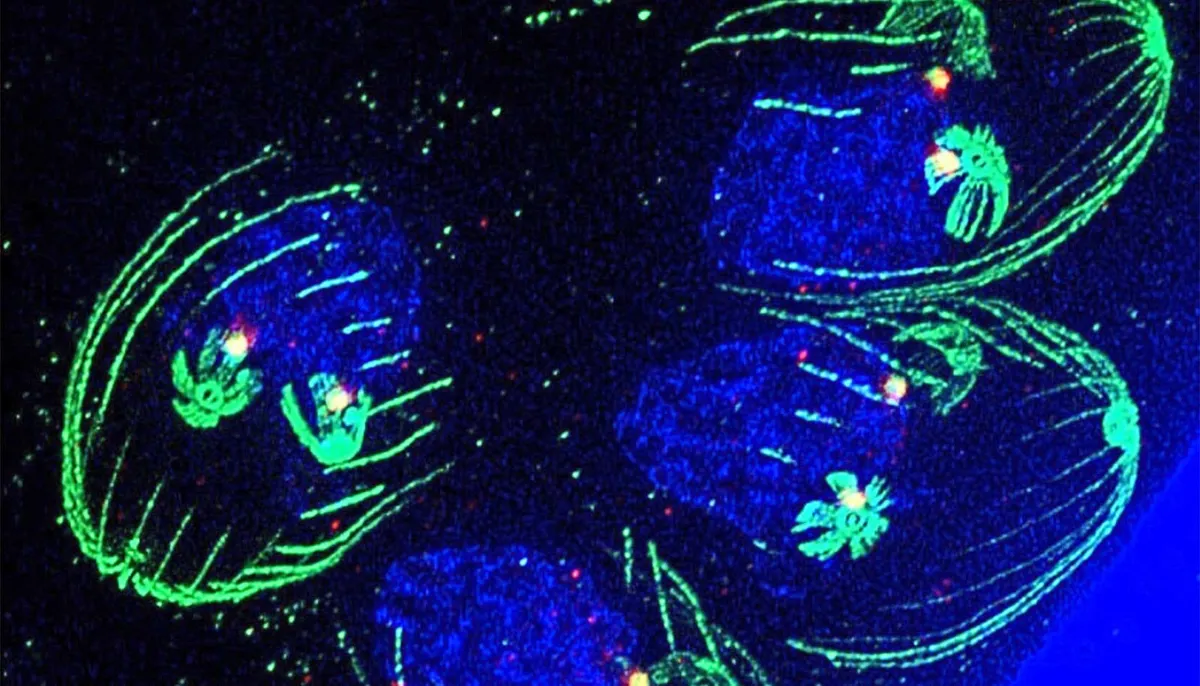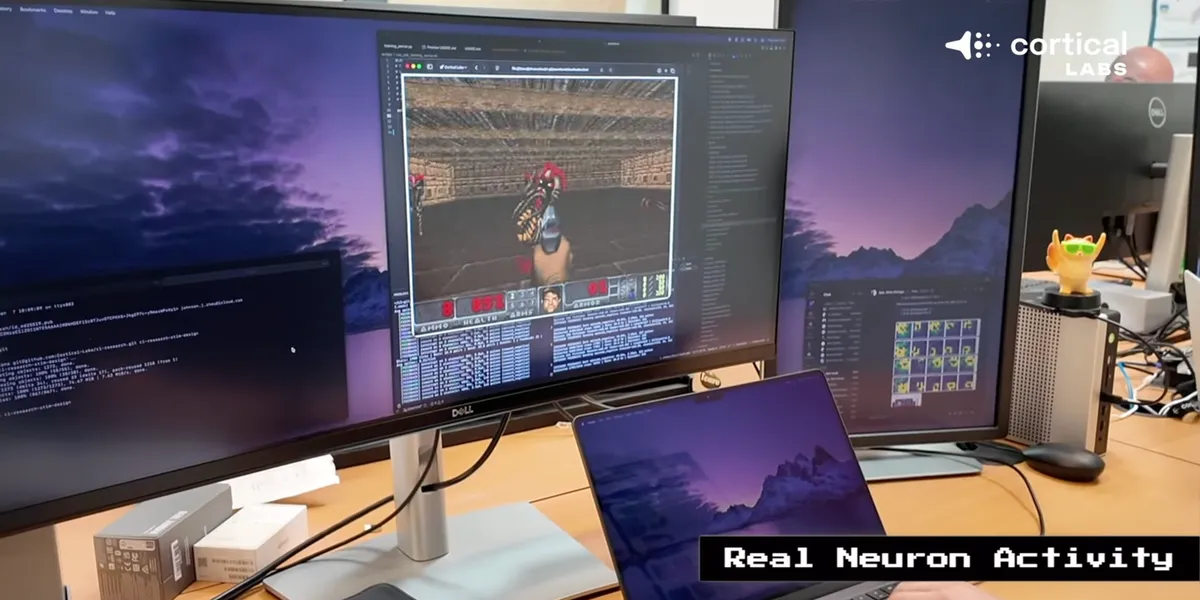
Researchers have taught about 200,000 human brain cells to play the classic 1990s video game "Doom." This project by Cortical Labs, an Australian biotech company, is part of their work on a "biological computer" that uses nerve cells grown on a silicon chip.
How Brain Cells Play "Doom"
A few years ago, Cortical Labs trained 800,000 cells to play "Pong." After that, many people asked if the cells could play "Doom." Alon Loeffler, a scientist at Cortical Labs, noted this public interest.
The neurons used in the project came from Cortical Labs CEO Hon Weng Chong. Researchers took white blood cells from his blood and turned them into stem cells. These stem cells can make copies of themselves and become other cell types.
We're a new kind of news feed.
Regular news is designed to drain you. We're a non-profit built to restore you. Every story we publish is scored for impact, progress, and hope.
Start Your News DetoxChong explained that they reverse the cells' biological clock to an embryonic state. Then, they turn them into neurons and place them on a glass chip. Since the cells are on a chip and use electricity, they can connect with a computer system to play "Doom."
The team used a biocomputer to turn the game's video feed into neural stimulation patterns. For example, if a demon appeared on the left side of the screen, electrodes stimulated the left side of the neuron clump's sensory area. David Hogan, chief technology officer, explained this process.
The researchers then observed the cells' electrical responses. They converted these responses into game commands like shooting or moving right.
Learning and Future Potential
While the neurons can play better than a random player, they are not very skilled. Brett Kagan, chief scientific officer, compared their play to a beginner who has never used a computer. However, the cells show they can find enemies, shoot, and spin. They are learning, even though they "die a lot."
Other scientists are also using video games in research. In February, a different team taught mouse brain cells to play a game where they had to keep a pole upright on a moving cart. Andrew Adamatzky, a computer scientist not involved in the work, said this shows real progress in controlling and training living neural systems.
However, scientists like Steve Furber from the University of Manchester don't fully understand how the neurons play the game. They are still learning how the cells know what to do or what's on the screen.
Beyond video games, the real goal for this technology is medical use. Chong hopes to use it for biomedical research and disease modeling. This could include testing drugs for conditions like epilepsy on neurons grown outside the body. This approach could help discover new drugs and tailor treatments for individual patients.