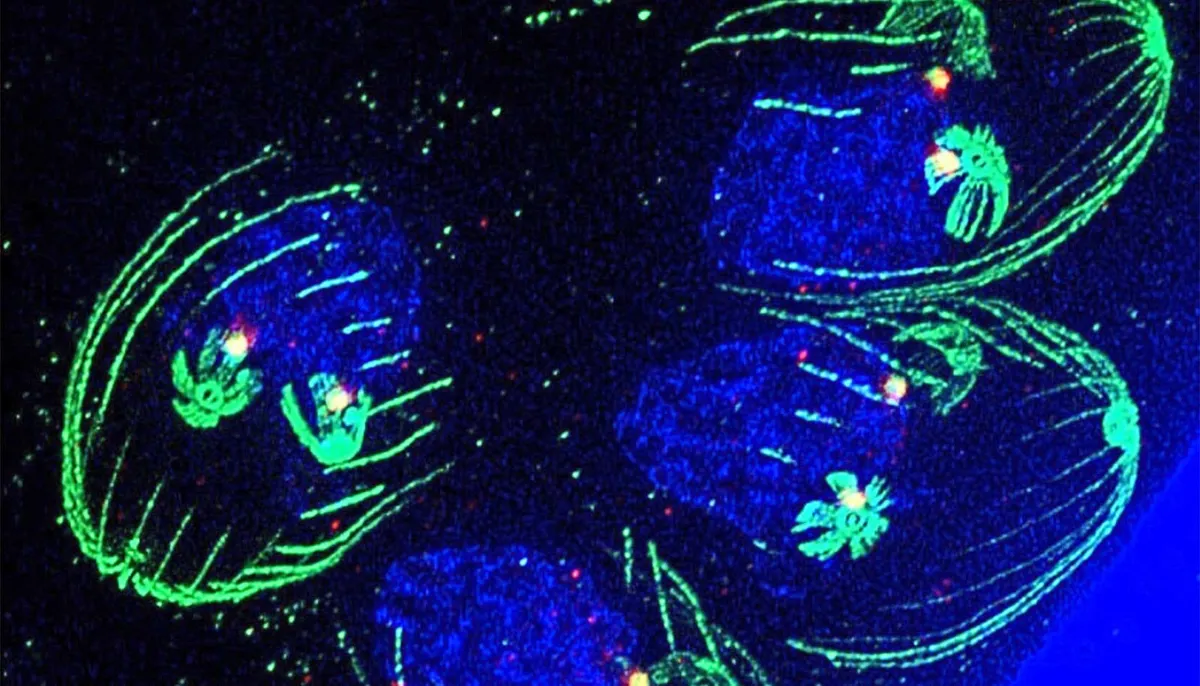
Imagine a tiny parasite that infects nearly one-third of everyone on Earth. Now imagine scientists can finally watch it grow, live, right before their eyes. That's exactly what just happened. Researchers figured out how to make this sneaky bug glow, revealing its weird growth secrets and, more importantly, its hidden vulnerabilities.
This microscopic invader is called Toxoplasma gondii. It's often picked up from undercooked meat or contaminated veggies. For most of us, it's a mild sickness. But for pregnant women or anyone with a weak immune system, it can be serious. Catch it early, and drugs can help. But if it settles in, it becomes chronic, hiding in brain cysts, and there's currently no cure.
The Parasite's Sneaky Strategy
For a long time, figuring out how to stop Toxoplasma was tough because its growth is just plain weird. Most cells grow, copy their DNA, then split neatly into two. Not Toxoplasma.
We're a new kind of news feed.
Regular news is designed to drain you. We're a non-profit built to restore you. Every story we publish is scored for impact, progress, and hope.
Start Your News DetoxMrinalini Batra, a research scientist, explained that nobody really knew how its growth stages worked or how they compared to human cells. This made it a nightmare to target with drugs.
So, the team set out to map its entire life cycle, hoping to find a way to hit the brakes on its multiplication.
Making the Invisible Glow
Their clever trick? Using a fluorescent imaging system, usually for human cells, to light up the parasite. They needed specific proteins inside Toxoplasma that would shine brightly during different growth stages, especially in big structures like the cell's control center, the nucleus.
Since Toxoplasma is so different from human cells, finding the right glowing markers was a huge challenge. They tried tons of combinations. Finally, they found a protein called PCNA1 in the parasite's nucleus that naturally changes as it grows.
Batra said they slapped two super-bright neon green tags onto PCNA1. Boom. The signal was clear. They could watch the glowing protein change, revealing exactly what stage the parasite was in. It was the first time anyone had clearly mapped Toxoplasma's full cell cycle.
What they saw was pretty nuts. The parasite's growth starts normally, but then its later stages all overlap. Researcher Suvorova described it like a fork: one handle, then several prongs branching off. This means up to three growth phases can happen at once! This wild, multi-tasking growth helps it multiply super fast and dodge our immune system before it forms those hard-to-reach brain cysts.
Now that scientists finally have this detailed map, they're already looking for weak spots. They're testing drugs to see how they mess with specific stages of this weird growth cycle. The goal? Safer, more effective treatments to finally stop this widespread invader. It's like they just found the instruction manual for the enemy's secret weapon.