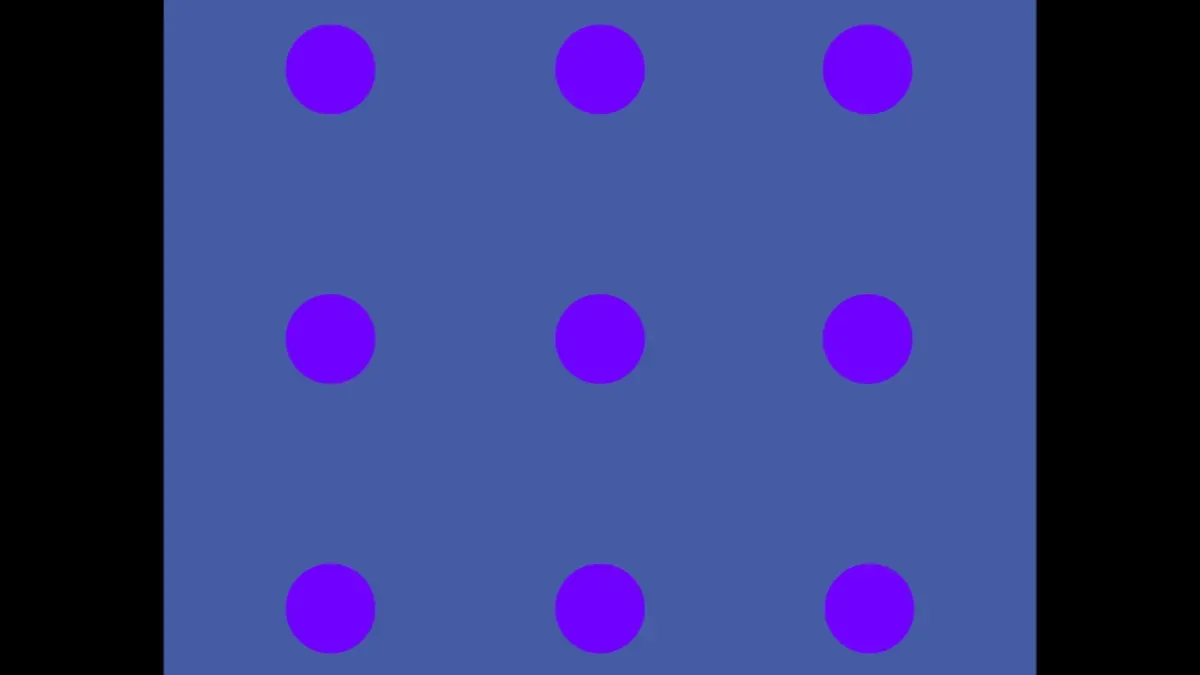
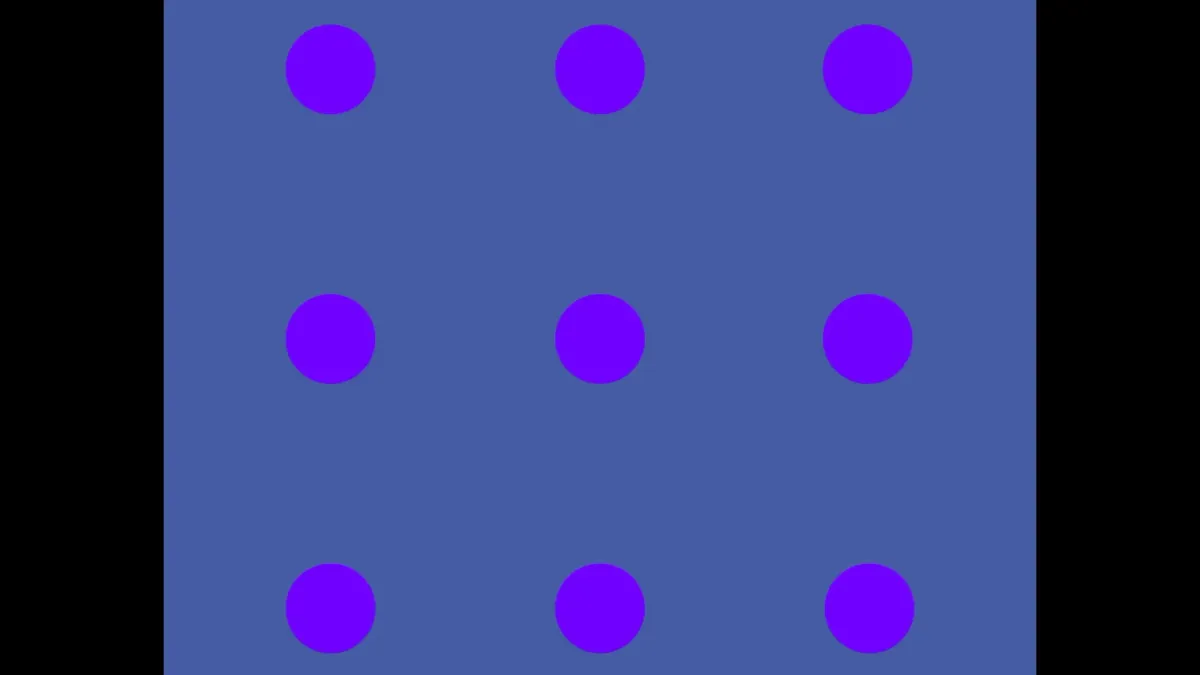
Get ready for your brain to play a trick on you. A new optical illusion has popped up, and it's making everyone see purple when there's only blue. Seriously, it's like "The Dress" all over again, but with dots.
This clever illusion asks you to count the purple dots. But here's the wild part: every single dot is actually the exact same shade of blue. Your eyes are telling you one thing, but the science says another.
Why Your Brain Sees Purple
Our eyes and brains are a team when it comes to seeing color. Light hits your eye, and tiny cells called cones send signals to your brain. There are three types of cones, each tuned to different colors:
We're a new kind of news feed.
Regular news is designed to drain you. We're a non-profit built to restore you. Every story we publish is scored for impact, progress, and hope.
Start Your News Detox- L-cones pick up reds.
- M-cones handle greens and yellows.
- S-cones are for blues.
Here's the kicker: you have way fewer S-cones than the others. In fact, the super-sharp center of your vision, called the fovea, barely has any S-cones at all. Hinnerk Schulz-Hildebrandt, a researcher at Harvard Medical Center, pointed this out in his study. He noted that only 8–12% of all cones are S-cones, and they're pretty much absent from the fovea's center.
This setup makes blue a really tricky color for your brain to nail down, especially when you're looking right at it. That's where the illusion gets its power.
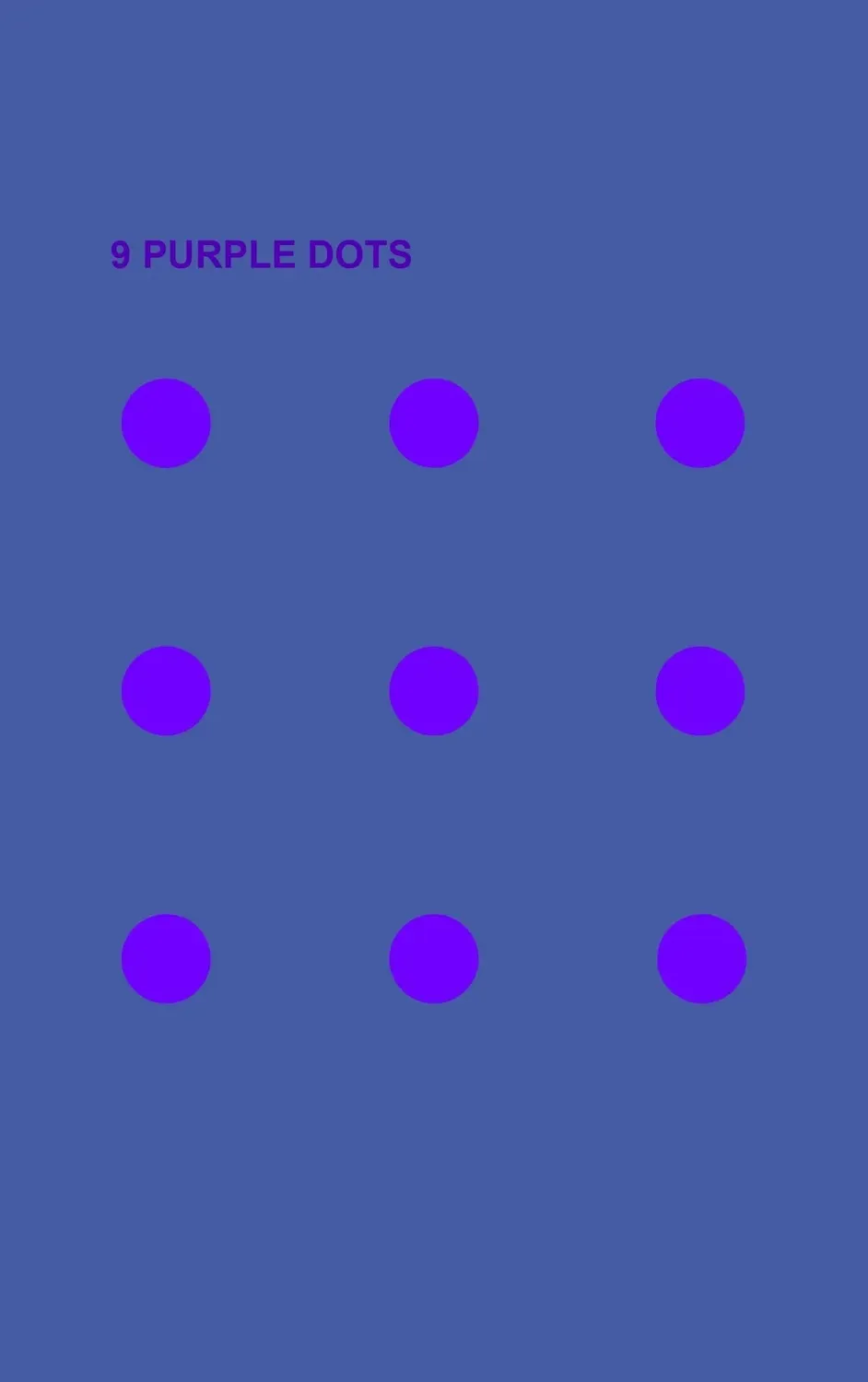
Schulz-Hildebrandt's nine-dot illusion uses something called simultaneous contrast. Essentially, your brain wants colors to stand out, so it messes with what you see. Each dot is blue, but the background has a touch more purple.
This creates a tug-of-war in your brain. The dot you focus on looks purple, while your brain tries to make it less blue. At the same time, it tries to make the dots around it look more blue. This whole chaotic mix makes the dots appear to be different colors, even though they're all the exact same blue.
It's a wild example of how we don't see colors in a vacuum. What's around an object totally changes how your brain interprets it. And the coolest part? Even knowing how it works, your brain will still play the trick on you.