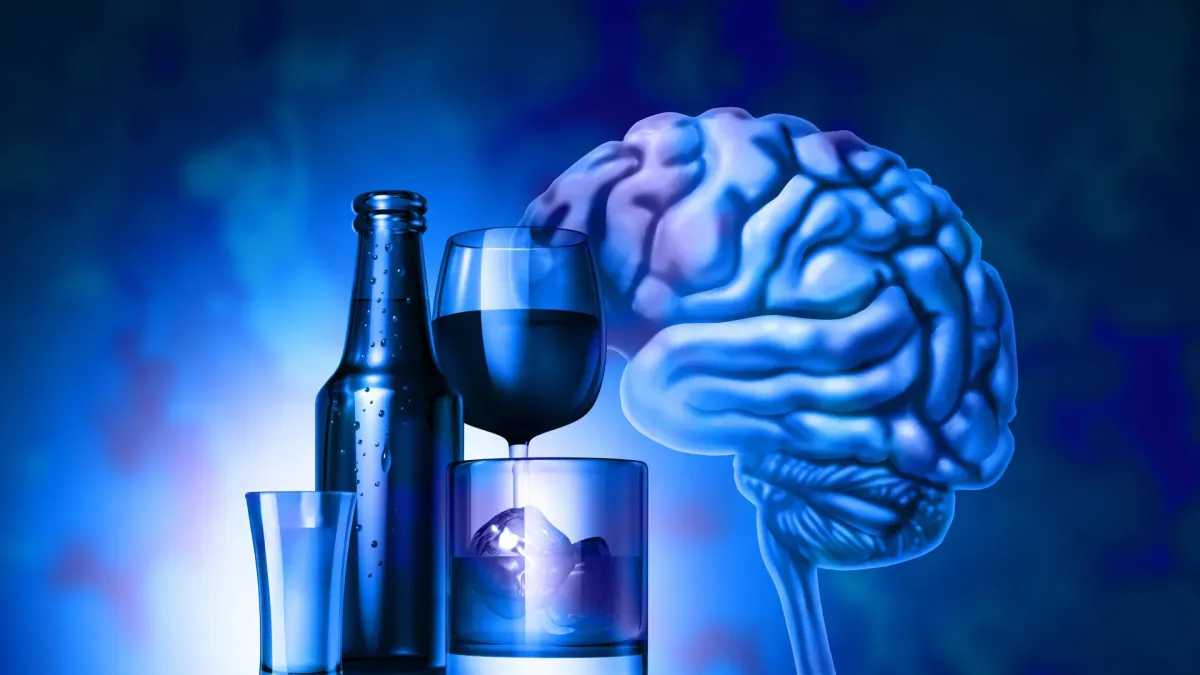
A monkey study reveals something unsettling: the seeds of problematic drinking may be planted before birth, written into the brain's reward system long before a person ever touches a glass.
Researchers at Oregon Health & Science University exposed pregnant rhesus monkeys to moderate amounts of alcohol, mild stress, or both. When the offspring reached adulthood, the scientists measured their brain chemistry and watched how quickly they consumed alcohol. The results were striking. Monkeys exposed to alcohol in the womb drank significantly faster as adults—and here's the crucial part: changes in their dopamine system, visible on brain scans before they'd ever had a drink, accurately predicted this behavior.
Dopamine is the brain's motivation molecule. It's not just about pleasure; it's about wanting, seeking, the pull toward something. When prenatal alcohol exposure reshapes this system, it appears to alter how the brain values and pursues alcohol later on. The study also found that prenatal stress alone changed the dopamine system, though it didn't directly predict faster drinking—suggesting different pathways to vulnerability.
We're a new kind of news feed.
Regular news is designed to drain you. We're a non-profit built to restore you. Every story we publish is scored for impact, progress, and hope.
Start Your News DetoxThe Brain Keeps Changing
What happened next was equally revealing. As the adult monkeys drank, their dopamine systems changed again—but not uniformly. Each animal's brain responded differently to alcohol, and these individual patterns influenced how much they drank overall. This variation hints at why some people slide into alcohol use disorder while others don't, even when exposed to the same stressors or opportunities.
The researchers emphasize that their experimental setup mirrors how prenatal alcohol and stress actually occur in humans. Pregnant people don't experience controlled laboratory doses; they experience real-world drinking and real-world pressures. The fact that a primate study maps so closely to human conditions strengthens what this research actually tells us.
The takeaway is direct: drinking during pregnancy isn't a minor risk. It's a biological intervention in how the developing brain will process reward and motivation for decades to come. For some children, it may load the dice toward patterns of drinking that become harder to control.
This doesn't mean everyone exposed to prenatal alcohol will develop alcohol use disorder—biology isn't destiny. But it does mean that the vulnerability can be measurable, predictable, and present long before the behavior appears. Understanding this window of vulnerability might eventually help identify and support people at higher risk earlier in life.