On a winter day in Helan village, Yanbian, Lee YJ invited writer Jo Carter into her kitchen to watch something that happens whenever her family gathers — not on holidays or special dates, but whenever relatives find themselves in the same place. They make tsodibi, the Yanbian-style water tofu that tastes nothing like what you buy in shops.
The process takes more than a day, and it belongs to the women. It's a form of cooperation so embedded in the family that it has its own rhythm, its own knowledge passed between hands.
The slow work of knowing
First, soybeans soak overnight. Then they're ground twice — the second grinding is where the richness lives, where you extract what makes this tofu different. The resulting paste is strained through cloth bags, work that demands strength and patience from the older women in Lee's family. They move the liquid to finer mesh, strain again. This isn't efficiency for its own sake; it's the difference between adequate and memorable.
We're a new kind of news feed.
Regular news is designed to drain you. We're a non-profit built to restore you. Every story we publish is scored for impact, progress, and hope.
Start Your News Detox
In their traditional kitchen, a large pot sits above a furnace that does double duty — cooking and heating the floor. Lee's brother lights it (men's role tends toward practical tasks), and as warmth builds, Lee and her sisters fry side dishes on an iron plate: kimchi made from wild plants, prepared with the same unhurried attention. Lee skims foam from the soybean base, adds bittern as a coagulant, and stirs gently. The liquid begins to clump into white curds, cloud-soft and patient.

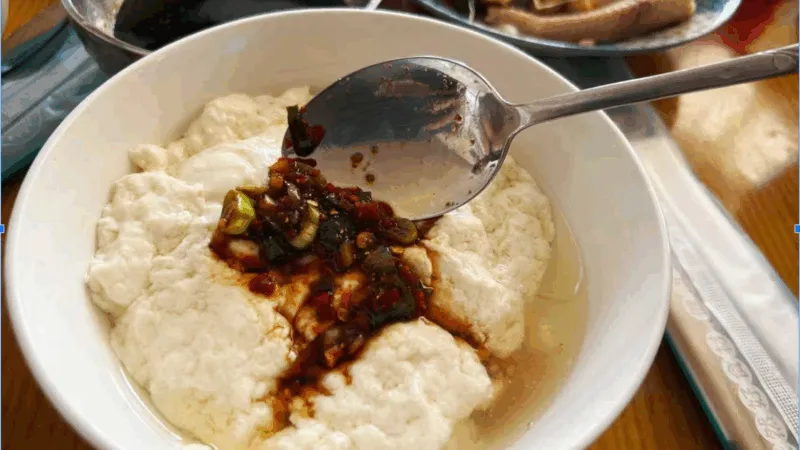
Freshly made tsodibi has a tenderness that store-bought versions simply can't match — rich, nutty, delicate. It needs only a light sauce because the flavor is already complete. Unlike Chinese-style water tofu, which gets stir-fried and spiced into submission, this version asks you to taste what it actually is.

To preserve it, the curds go into a cloth-lined square box and press into a solid block. The name itself tells you something: water tofu. Fluid tenderness with quiet, solid strength underneath.
As winter cold settled outside and the furnace warmed the room, the smell of soybeans filled the kitchen. Carter watched and understood what many have forgotten — that the most nourishing meals rarely come from restaurants. They come from hands that remember where they come from, moving slowly through work that's been done the same way for generations.