When Hurricane Helene slammed into Burnsville, North Carolina, Fire Chief Niles Howell discovered his fire station wasn't just a place for trucks and hoses. It became a helipad, a search-and-rescue base, and even a makeshift field hospital. All powered by a generator, which, if we're honest, is basically a ticking fuel-consumption clock. His biggest worry? Running out of gas when people needed it most.
Good news: Howell's gas-guzzling generator days are numbered. His station is getting a 40-kilowatt-hour solar array and double that in battery storage. It's part of a state-wide microgrid project, turning community hubs into self-sufficient powerhouses. Because, as Howell wisely put it, "the more avenues you have to keep things going, the better off you are." Let that satisfying number sink in.
Buzzing Towards Resilience
Turns out, energy independence is having a moment. Especially in places like the Appalachian mountains, where extreme rain and flash flooding are becoming less an anomaly and more a Tuesday. This has spurred a wave of small-scale energy projects, particularly in western North Carolina communities still recovering from Helene.
We're a new kind of news feed.
Regular news is designed to drain you. We're a non-profit built to restore you. Every story we publish is scored for impact, progress, and hope.
Start Your News DetoxLast August, the state Department of Environmental Quality dropped $5 million into 26 microgrid projects, partnering with nonprofits dedicated to sustainable energy. The goal: 24 fixed microgrids and two mobile ones. Five sites were announced in June, and the future is looking decidedly brighter.
This isn't just a North Carolina thing. After Hurricane Ida, New Orleans churches and community centers became "lighthouses" with privately funded microgrids. And in Puerto Rico, microgrid networks have been a literal lifeline through hurricanes and an aging power grid that, let's just say, has seen better days.
So, how do these tiny power grids work their magic? Solar microgrids can power a single building or a whole cluster. Some even send surplus electricity back to the main grid. Crucially, they come with hefty batteries, keeping the lights on for days, even when the sun decides to play hide-and-seek. Fixed microgrids are great for hospitals and fire stations. There are also mobile versions that can be towed right where they're needed. Which, if you think about it, is both impressive and slightly terrifying.
Naturally, all this self-sufficiency comes with a price tag. Most of the fixed microgrids for western North Carolina are clocking in at over $100,000 — a sum that would make a small community group's accountant spontaneously combust.
Enter the 'Solar Bees'
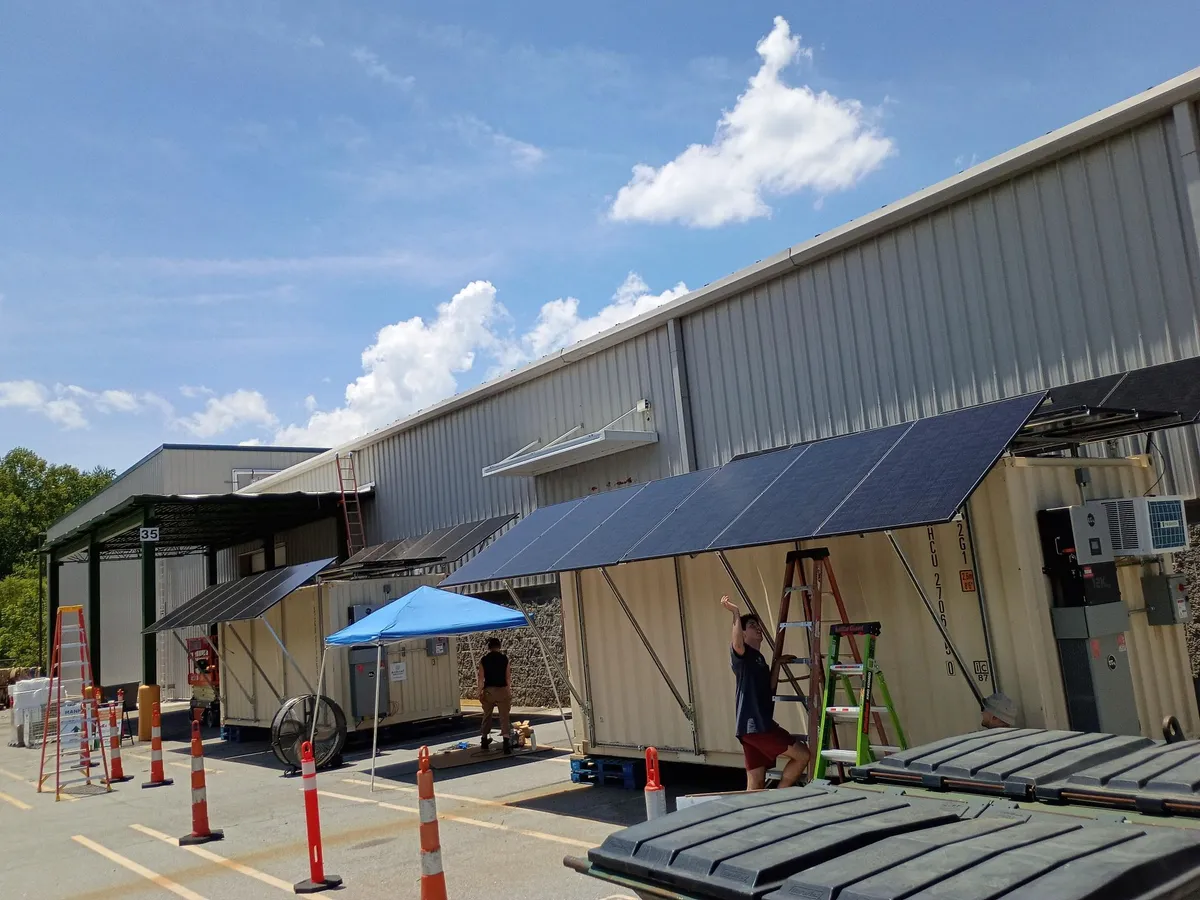
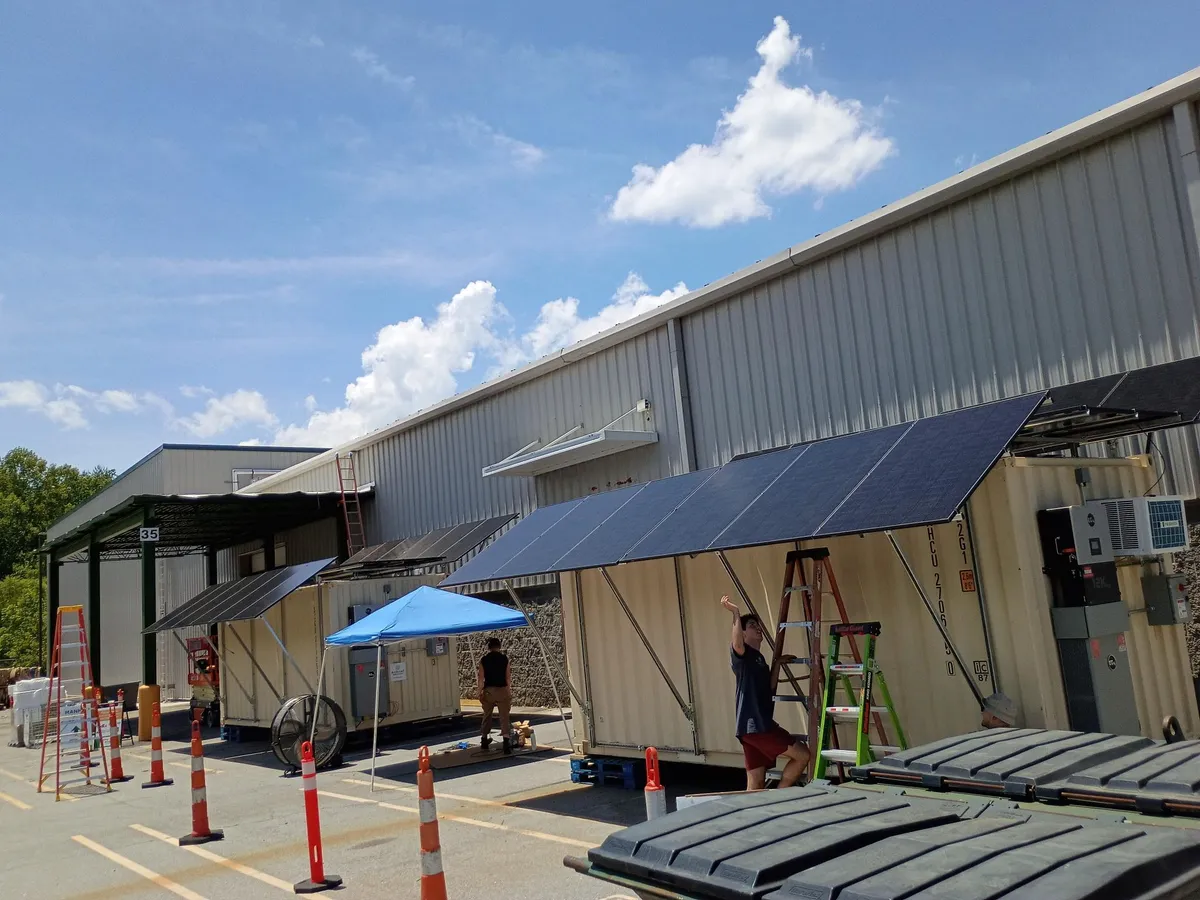
This is where The Footprint Project, a nonprofit with a flair for naming things, comes in. They call their small, portable, trailer-mounted systems "beehives." These battery-packed systems work in both sun and clouds, because apparently, even solar energy needs a backup plan.
- "Cooler bees" keep medicine and food fresh with fridges and freezers.
- "Power bees" are basically super-sized phone charging stations.
- "Water bees" filter, well, water. Because apparently that's where we are now.
Footprint Project CEO Will Heegaard says these mobile "bees" can be swiftly deployed to disaster zones, providing up to 100 kilowatt-hours of energy — enough to power a large building for ten hours. They're being installed at food banks, fire stations, community centers, and libraries, transforming them into resilient hubs that can store supplies and keep communities connected when everything else goes dark.
Two mobile solar power trailers are set to be operational by 2027, with five fixed sites kicking off installations this summer. Sara Nichols from the Land of Sky Regional Council hopes this project proves that a bit of combined funding can truly ignite small-scale renewables. Reid Wilson, who leads the Department of Environmental Quality, is already dreaming bigger, hoping federal funding might one day expand these microgrid efforts across the entire state. Because if there's one thing we've learned, it's that a little bit of independence goes a long way.