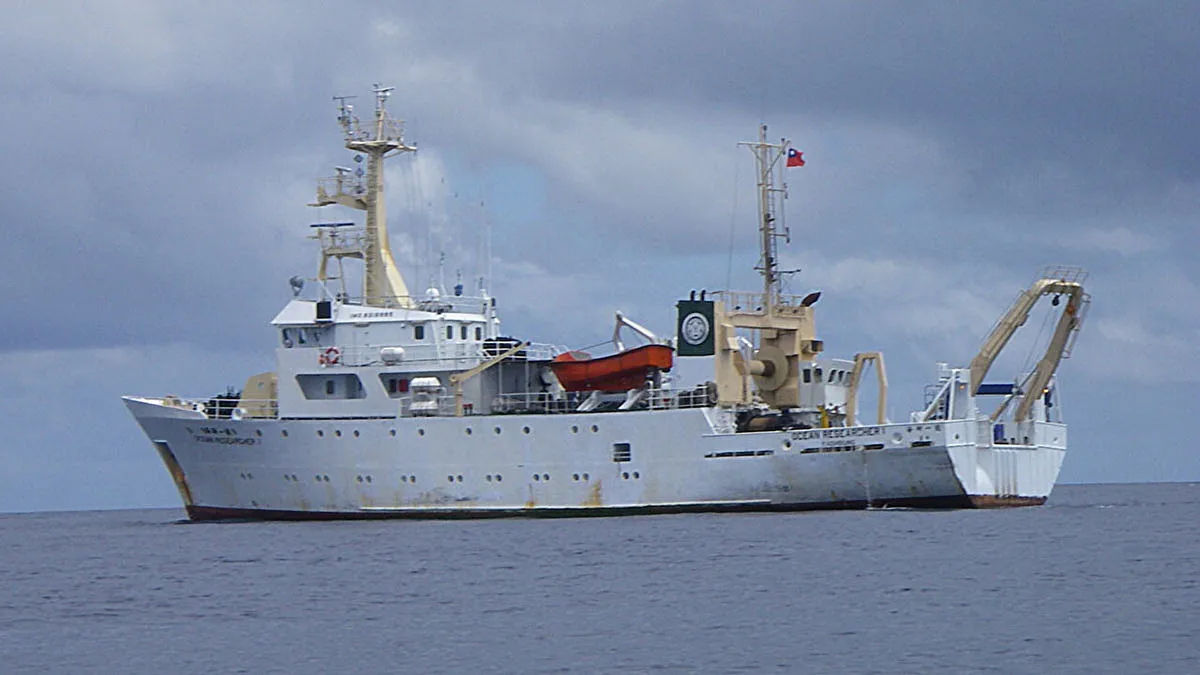
Imagine you're on a research cruise, diligently collecting samples, when suddenly — whoosh — a Category 5 typhoon decides to crash your party. Most people would batten down the hatches and curse their luck. These scientists? They grabbed more test tubes.
Typhoons, those swirling behemoths of wind and water, are getting stronger and more frequent. Thanks, climate change. And while we know they wreak havoc on land, their impact on the ocean's microscopic world has been a bit of a mystery. Specifically, how do these short, violent events mess with the ocean's bacteria and its chemistry?
See, a typhoon is like a giant blender for the ocean. It whips up layers of water, dragging nutrients from the deep up to the surface and scattering tiny organisms everywhere. It also plays havoc with water temperature and saltiness. Past studies hinted that this mixing could shake up bacterial communities and give ocean productivity a temporary boost, shifting the food web and even how much carbon the ocean absorbs.
We're a new kind of news feed.
Regular news is designed to drain you. We're a non-profit built to restore you. Every story we publish is scored for impact, progress, and hope.
Start Your News DetoxThe catch? Getting before and after data is incredibly tricky. Most studies relied on samples taken months apart, often just before and after typhoon season, and usually in coastal areas. This left a giant gap in our understanding of how quickly things change in the open ocean and how long it takes for things to go back to… well, normal-ish.
The Unexpected Experiment
Enter the year 2018. A team of researchers, led by a scientist named Lo, was out in the East China Sea when Typhoon Maria decided to make a dramatic entrance. Instead of retreating, they saw an unprecedented opportunity. For the first time ever, they collected samples throughout the water column right before and right after a major storm.
For three days before Maria hit, and then four days after she'd churned through, the team gathered environmental data and bacterial samples from four different depths. Talk about turning a crisis into a scientific goldmine.
And what did they find? As expected, nutrient levels, primary production (the ocean's base food source), and bacterial activity all spiked after the typhoon. It was a microscopic party.
But here's the kicker: while the types of bacteria shifted, with nutrient-loving microbes thriving and their low-nutrient counterparts dwindling, the overall diversity of bacteria surprisingly held steady. What did change was that the bacterial communities across different depths became more uniform, like the storm had given everyone a good shake-up and mixed the guest list.
These insights are crucial. As these storms become the new normal, understanding how they supercharge the ocean's microbial-driven chemical cycles could change how we view the ocean's role in the global carbon cycle. Is it a carbon sink or a carbon source after a good typhoon? Turns out, it's complicated. And now, thanks to some intrepid scientists and an ill-timed storm, we're a little closer to finding out.